
India Reviews $30 Billion Sulphur-Cutting Program for Coal Plants
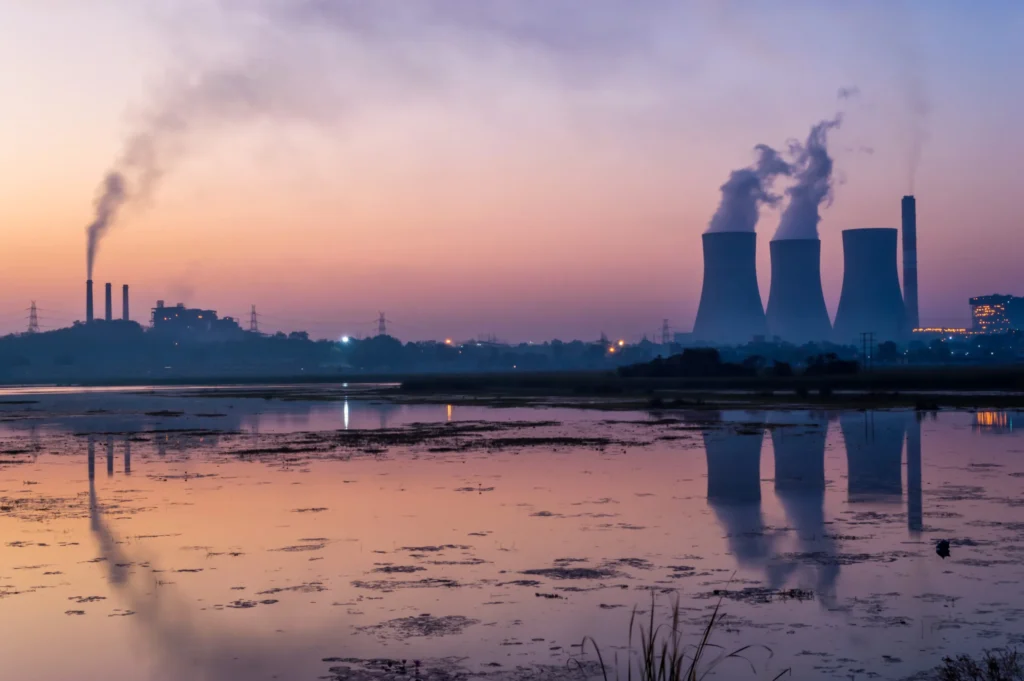
- Shift in Focus: Government proposes cheaper local solutions to reduce particulate matter instead of costly sulphur-reduction systems.
- Low Sulphur Coal: Studies reveal Indian coal’s sulphur content is too low to justify flue-gas desulphurization (FGD) systems.
- Policy Delays: Deadline for FGD installation may extend to 2029, highlighting challenges in meeting original targets.
What’s happening:
India is reconsidering its decade-old, $30 billion program requiring coal-fired power plants to install flue-gas desulphurization (FGD) systems. Only 8% of the 540 targeted power plant units have adopted the technology, hindered by high costs and operational challenges.
Why it matters:
India’s coal, which powers 92% of the country’s thermal energy, has a sulphur content of just 0.5%, significantly lower than global averages. Government-backed studies found minimal air quality improvements from FGD systems, questioning their necessity.
Related Article: DTE To Retire Coal Plants by 2032, Invest $11 Billion in Clean Energy Push
“There was really never any case for having FGDs in India… All our cities actually suffer from high particulate-matter pollution, not from sulphur dioxide pollution,” said R. Srikanth, head of engineering at NIAS.
The big picture:
- Economic and technical hurdles: Installing FGD systems costs $141,000 per megawatt, with shutdowns of up to 45 days per plant, delaying compliance and capacity expansion.
- Local alternatives: Indian authorities propose electrostatic precipitators, which cost one-fifth as much and are better suited for reducing particulate matter from high-ash Indian coal.
- Environmental stakes: Coal-fired plants account for 80% of industrial sulphur and nitrogen emissions, making policy decisions critical for public health and climate goals.
“The installation of FGD systems and carbon capture technologies should not be used as a smokescreen to justify the continued power generation from these unsustainable, CO2-intensive sources,” stated a report by IIT Delhi.
What’s next:
India’s government is consulting further on the policy shift, with a decision expected soon. Meanwhile, the power ministry has requested a three-year extension to the FGD installation deadline, now potentially pushed to 2029. Environmental groups stress the need for broader reforms to reduce reliance on coal-fired power.
Follow ESG News on LinkedIn

The ESG News Editorial Team is comprised of veteran financial journalists and sustainability analysts dedicated to providing real-time, objective reporting on global ESG regulations, climate finance, and corporate governance. Our desk monitors daily developments from the SEC, IFRS, CSRD and international regulatory bodies to ensure our 1M+ readers receive accurate, data-driven insights into the evolving sustainable investment landscape. Follow the ESG News Editorial Team for expert reporting on global sustainability standards, ESG disclosures, and climate policy. Access over 10,000 investigative reports and real-time updates.