UK Opens Green Financing Framework to Nuclear Power as Global Support Quietly Builds
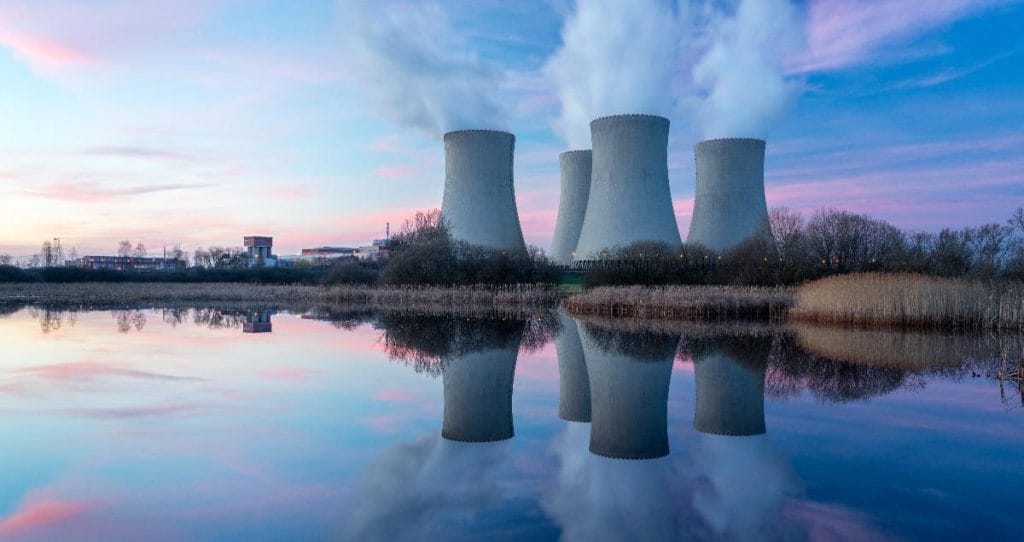
• The UK has added nuclear energy to its green financing framework, allowing green gilt proceeds to fund nuclear projects from November 27.
• The shift comes amid diverging views from financial institutions, with major banks backing nuclear expansion while others warn high costs may curb long-term appetite.
• The move follows a broader global trend: the World Bank has ended its 60-year nuclear financing ban, and European lenders are exploring small modular reactors despite ongoing political and environmental pushback.
The UK government has formally expanded its green financing framework to include nuclear power, opening the door for green gilt and green savings bond proceeds to support a technology long considered off-limits in sustainable finance. The revision, published last week, adds “nuclear energy-related expenditures” to the list of eligible green projects, effective November 27.
The policy puts nuclear within the same pool of green spending as renewable power and energy-efficiency programmes. It also sets the UK apart from many global lenders that have historically refused to classify nuclear as green because of concerns about waste, cost, and operational risk. Investment bank Jefferies described the decision as likely to prove “controversial among environmentalists.”
The debate is not new. Nuclear’s dual identity as a low-carbon energy source with long-lived waste challenges continues to divide policymakers, investors, and regulators. But the UK’s move reflects a changing landscape in which energy-security concerns, rising demand from AI-driven data centres, and the pressure to hit net-zero targets are prompting governments to reconsider nuclear’s role.
Banks and MDBs reassess the economics and politics of nuclear
For decades, most multilateral development banks avoided nuclear entirely. Financing restrictions frequently stemmed from lack of institutional experience and the sheer scale and complexity of nuclear megaprojects. But the industry’s advocacy groups are intensifying efforts to shift investor sentiment. The World Nuclear Association argues that nuclear energy offers a “proven, reliable and low-carbon” source that supports renewable integration and bolsters national energy security.
Momentum has edged upward since COP28, where countries across Europe, the Middle East, the US and Asia endorsed a joint Declaration to Triple Nuclear Energy. Private finance has begun testing the waters as well. At Climate Week NYC last year, 14 major financial institutions — including Bank of America, Barclays, BNP Paribas, Citigroup and Goldman Sachs — expressed support for global nuclear capacity to triple by 2050.
Yet the investment case remains contested. In a June research note, the Atlantic Council cautioned that long construction timelines and high upfront capital requirements “may eventually deter” commercial banks from maintaining robust support.
Europe’s development finance institutions are beginning to adjust their positions. The European Bank for Reconstruction and Development, which historically restricted its involvement to nuclear safety and decommissioning in post-Soviet states, said last month it is now open to financing small modular reactor (SMR) projects if demand materialises. EBRD president Odile Renaud-Basso told The Banker that the institution is “actively monitoring” private-sector interest in smaller, modular technologies viewed as safer and more cost-effective.
RELATED ARTICLE: Capital Power releases inaugural Green Financing Framework
World Bank’s policy reversal reflects political pressure and shifting development needs
The most dramatic turn has come from the World Bank. After maintaining a 60-year ban on nuclear financing, the board reversed its policy earlier this year, adopting an “all of the above” approach for developing-country energy projects. The new strategy allows lending for natural gas, geothermal, hydroelectric, solar, wind and nuclear power.
The pivot followed heavy political pressure from the US administration, which has repeatedly argued that developing countries need a wider portfolio of reliable low-carbon energy sources. Announcing the change, World Bank president Ajay Banga said “we must help countries deliver reliable, affordable power. That’s why we’re embracing nuclear energy as part of the solution — and re-embracing it as part of the mix the World Bank Group can offer developing countries to achieve their ambitions.”

For emerging economies grappling with rising energy demand and limited grid resilience, nuclear now sits alongside renewables as one of several pathways to confront both climate and development challenges.
Europe’s taxonomy debate reaches a decisive legal moment
The UK’s green financing update lands amid ongoing tensions in Europe over whether nuclear should qualify as environmentally sustainable. Several EU countries continue to oppose its inclusion in the bloc’s green taxonomy. But the European General Court recently dismissed Austria’s legal challenge against the inclusion of nuclear and natural gas, clearing a key hurdle for the Commission’s 2022 decision to treat certain activities in both sectors as contributing to climate-change mitigation.
That ruling strengthens the EU’s position that nuclear can be considered sustainable under specific conditions, even if political divisions remain sharp.
What investors and boards should be watching
The UK decision effectively aligns its sovereign green financing with a broader global shift — a pragmatic recalibration of energy policy that reflects climate urgency, geopolitical risk, and rising electricity demand across critical sectors. But it also introduces questions that asset managers and corporate boards will need to navigate.
For fixed-income investors, nuclear’s addition to the UK green gilt framework expands the investable green universe but may intensify debates over credibility, impact measurement and lifecycle emissions. For banks, the divergence between aspirational declarations and the economic realities of expensive, complex projects remains unresolved.
Still, the direction of travel is increasingly clear: governments and development banks are preparing for a future in which nuclear occupies a more central role in decarbonisation strategies. Whether capital markets fully embrace that shift — or retreat under the weight of project risk — will shape the global financing landscape long after this policy update.
Follow ESG News on LinkedIn

The ESG News Editorial Team is comprised of veteran financial journalists and sustainability analysts dedicated to providing real-time, objective reporting on global ESG regulations, climate finance, and corporate governance. Our desk monitors daily developments from the SEC, IFRS, CSRD and international regulatory bodies to ensure our 1M+ readers receive accurate, data-driven insights into the evolving sustainable investment landscape. Follow the ESG News Editorial Team for expert reporting on global sustainability standards, ESG disclosures, and climate policy. Access over 10,000 investigative reports and real-time updates.