AURORA Puts Citizens at the Centre of Europe’s Energy Transition With New Carbon Tracking Tool
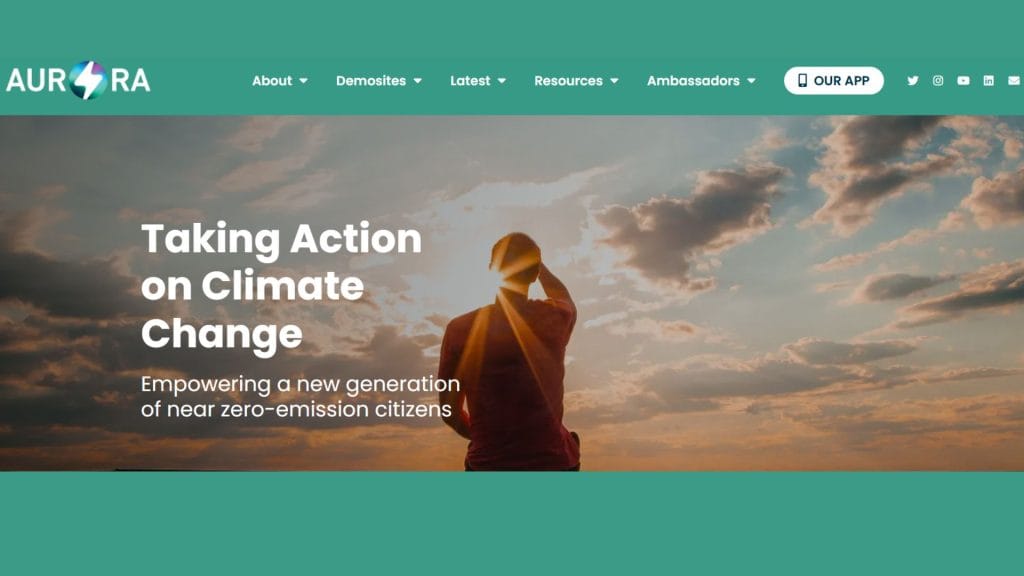
• EU funded AURORA launches a carbon-tracking app that quantifies household and transport emissions and links users to community renewable energy projects.
• Universities in Denmark, Spain, Slovenia, and the UK are piloting citizen-owned solar installations that allow students, staff and residents to invest at yields above standard banking rates.
• AURORA will take its citizen-science model to the UN Environment Assembly in 2025 as it seeks global adoption, including early discussions with India.
A digital push to put people inside the energy transition
A European initiative designed to shift citizens from passive consumers to active energy participants is rolling out a tool that puts individual carbon emissions on full display. The AURORA project, backed by EU funding, has developed an Energy Tracker app that allows people to measure how much carbon their lifestyle choices produce and see, in real time, how community-owned renewable energy can reduce their footprint.
The app, available on Android and iOS, calculates emissions from heating, electricity and transport, and guides users toward reductions through personalised advice. “The Energy Tracker app provides users with an accurate record of the carbon emissions they produce, and presents the results against a carbon labelling scheme,” says Ana Belén Cristóbal López, the project’s coordinator at the Technical University of Madrid. Users can follow their emissions day by day, map changes over time and compare how local solar installations are offsetting their impact.
Community energy at campus scale
The digital tools sit alongside a physical redesign of how universities and local communities engage with the energy system. AURORA helped establish citizen-owned photovoltaic installations across five countries, including a large rooftop solar system at Aarhus University in Denmark. Students, faculty, cooks, cleaners and other community members are able to buy small stakes in the systems, often at rates that outperform traditional bank accounts.
“With AURORA, cooks, cleaners and students can take a stake in the energy transition for little more than the price of a pint of beer, with cheaper energy than that obtained from the energy grid,” Cristóbal López explains.
In Spain, the Colegio Centro Cultural Palomeras became the country’s first school-based community renewable energy project after securing investment from local residents, the Technical University of Madrid and at least one international supporter. Slovenia’s University of Ljubljana and the UK’s Forest of Dean communities are building similar schemes, each navigating their own mix of legal, regulatory and institutional constraints.
That complexity has been a defining lesson. Aarhus University spent more than two years negotiating internal and external requirements. “Full-time support for those putting in place energy communities was essential,” Cristóbal López says. EU funding, she adds, made it possible to hold the course despite lengthy legal procedures and stakeholder coordination.
Behavioural change as infrastructure
AURORA’s designers describe their work not just as an energy project but as a social experiment in ownership and empowerment. Anchoring the initiative in universities was deliberate. “It was important to work with the generation who will be most affected by climate change,” Cristóbal López says. By giving students direct control over data, investment opportunities and the outcomes of their choices, the project aims to embed long-term behavioural change.
Early results suggest that many users begin adjusting habits once they see their own energy data and how quickly small decisions compound. But the team is cautious, describing behavioural change as incremental and shaped by social norms as much as technology.
RELATED ARTICLE: Achilles Launches Real-Time Supply Chain Sustainability Tracking and Reporting Tool
Building a European model for citizen science
The next phase is about scale. AURORA has created a Citizen Science Working Group supported by the European Climate Pact to standardise approaches and accelerate adoption across the EU. The app is being upgraded to incorporate automated data inputs and regional variations in energy systems. Interest from outside Europe is growing as well, with discussions underway to adapt the app for India’s diverse energy landscape.
Martin Brocklehurst, an AURORA partner and chair of the Citizen Science Global Partnership, says momentum is building. “We are building strong support to encourage people to replicate what we have achieved,” he notes. The project will present its model at the 2025 UN Environment Assembly, positioning it within a broader push for public-driven climate action.

What executives and investors should watch
For corporate leaders and institutional investors, AURORA offers a glimpse of how digital engagement, community ownership and behavioural economics can influence the pace of the energy transition. The model links personal data to real financial participation in clean energy assets, a structure that could scale far beyond universities if regulatory conditions allow.
Its approach also intersects with growing demand for transparent climate data, decentralised energy systems and credible pathways for public involvement in climate governance. As countries weigh how to meet 2030 and 2050 targets, citizen-driven schemes may become a necessary complement to utility-scale investments.
By combining grassroots participation with data-driven tools, AURORA is testing whether climate action can become a lived, visible part of everyday life. Its results may help shape future EU policy on distributed energy, community financing and citizen science—while offering a template for regions far beyond Europe.
Follow ESG News on LinkedIn

The ESG News Editorial Team is comprised of veteran financial journalists and sustainability analysts dedicated to providing real-time, objective reporting on global ESG regulations, climate finance, and corporate governance. Our desk monitors daily developments from the SEC, IFRS, CSRD and international regulatory bodies to ensure our 1M+ readers receive accurate, data-driven insights into the evolving sustainable investment landscape. Follow the ESG News Editorial Team for expert reporting on global sustainability standards, ESG disclosures, and climate policy. Access over 10,000 investigative reports and real-time updates.