ICVCM Approves Puro.earth as CCP Eligible Carbon Crediting Programme
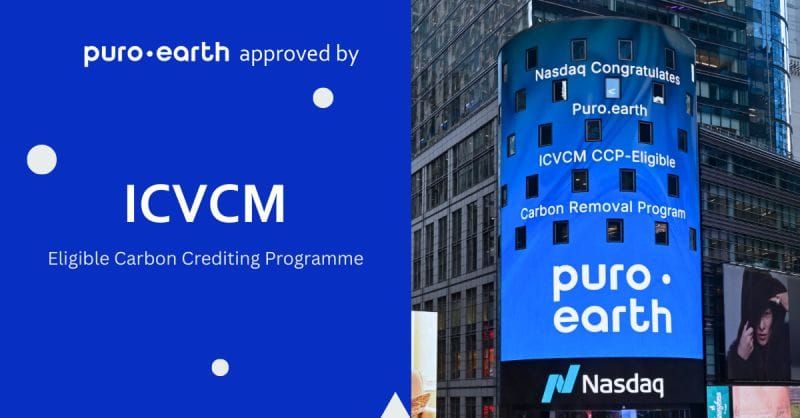
• Puro.earth becomes the eighth carbon crediting programme approved under the Core Carbon Principles, clearing a key integrity hurdle for engineered carbon removals.
• Approval applies to Puro.earth Standard version 4.2, unlocking methodology assessments for biochar, carbonated materials, and geological storage.
• Decision strengthens buyer confidence as scrutiny of voluntary carbon markets intensifies across corporate climate strategies and regulatory frameworks.
H3 Helsinki and London Move the Market
Helsinki based Puro.earth has secured approval from the Integrity Council for the Voluntary Carbon Market, confirming its carbon crediting programme as CCP-Eligible under the Core Carbon Principles. The decision positions Puro.earth among a small and growing group of programmes that meet the ICVCM’s threshold for governance, transparency, independent verification, and safeguards, at a moment when trust and credibility are central to the future of voluntary carbon markets.
The approval applies specifically to version 4.2 of the Puro Standard, the most recent iteration of its General Rules. CCP-Eligible status confirms that the programme itself meets ICVCM requirements, while individual methodologies must still undergo separate assessments before credits can carry the CCP label.
H3 What CCP-Eligible Status Means for Carbon Removal
The Core Carbon Principles are designed to act as a global reference point for high-quality carbon credits. Programmes must demonstrate robust governance structures, transparent registries, rigorous quantification of emissions reductions or removals, and protections against double counting. They must also show credible safeguards for sustainable development and social and environmental integrity.
Puro.earth focuses exclusively on carbon removal, certifying engineered approaches such as biochar, carbonated materials, and geologically stored carbon. These methodologies had not previously been assessed by the ICVCM, meaning programme-level approval is a prerequisite for further scrutiny.
Under the ICVCM’s two-stage assessment process, only credits issued under CCP-Approved methodologies and Puro Standard version 4.2 or later will ultimately be eligible to carry the CCP label.
H3 Governance Reforms and Safeguards
The ICVCM confirmed that approval applies only to version 4.2 of the Puro General Rules, which introduced strengthened provisions to align with CCP requirements. Updates included improvements to stakeholder engagement processes, project documentation standards, and registry operations.
The revised rules also introduced enhanced safeguards and sustainable development provisions, including mandatory auditing of the Environmental and Social Safeguards Questionnaire and expanded protections covering labour rights, gender equality, biodiversity, and the rights of Indigenous Peoples and local communities.
These changes were assessed under ICVCM’s non-CORSIA pathway after Puro.earth’s earlier application to CORSIA, based on version 4.0 of the standard, was deemed partially consistent and invited to reapply.
H3 Industry Reaction and Market Context
Jan-Willem Bode, President of Puro.earth, framed the approval as validation of the platform’s underlying architecture and long-term strategy.
“We welcome the Integrity Council’s approval of Puro.earth Standard 4.2 as a CCP-Eligible Program. This recognition validates the foundation we’ve built: a standard grounded in science and transparency, and infrastructure designed for scale. ICVCM’s approval reinforces the rigorous governance, transparency and independent verification that have guided our approach from the start.”

RELATED ARTICLE: Puro.earth Integrates CCS+ Methodologies to Streamline Carbon Removal Certification
Annette Nazareth, Chair of the Integrity Council for the Voluntary Carbon Market, highlighted the broader implications for market alignment.
“Puro.earth joins the growing list of carbon crediting programs that have embraced the Core Carbon Principles as the global reference point for quality by strengthening their governance and program standards to meet the CCP threshold. We applaud their commitment and warmly welcome them as a CCP-Eligible program.”

H3 Scale, Buyers, and Financial Relevance
Since launching in 2019, Puro.earth has issued more than one million CO₂ Removal Certificates, reflecting growing demand for durable removals among corporates with science-based climate targets. Suppliers across biochar, BECCS, and direct air capture have chosen the platform to certify their projects.
The platform is used by more than 600 end-buyers, including Microsoft, Google, McKinsey, Skandinaviska Enskilda Banken, and Boston Consulting Group, and is majority-owned by Nasdaq. That ownership structure and buyer base place Puro.earth at the intersection of climate infrastructure and financial markets, where expectations around transparency and governance continue to rise.
“This approval provides further assurance to buyers and partners who already place their trust in Puro.earth, now formally recognised as a standard under the Core Carbon Principles,” Bode said.
“As the market matures, we welcome the structure that frameworks like ICVCM bring. We see this approval as a natural evolution of our approach, one that strengthens our foundation whilst preserving the adaptability needed to support continued innovation in the removals space.”
H3 Why It Matters Globally
With regulators, investors, and corporate boards increasingly questioning the credibility of voluntary carbon markets, CCP-Eligible status is becoming a commercial and reputational differentiator. For companies facing hard-to-abate emissions, engineered removals remain one of the few viable options, provided integrity standards hold.
Puro.earth’s approval does not resolve broader debates around carbon markets, but it does move a major removals platform closer to alignment with emerging global norms. As ICVCM methodology assessments proceed, the outcome will shape how capital flows into durable carbon removal at scale, and how credible those claims remain under intensifying scrutiny worldwide.
Follow ESG News on LinkedIn

The ESG News Editorial Team is comprised of veteran financial journalists and sustainability analysts dedicated to providing real-time, objective reporting on global ESG regulations, climate finance, and corporate governance. Our desk monitors daily developments from the SEC, IFRS, CSRD and international regulatory bodies to ensure our 1M+ readers receive accurate, data-driven insights into the evolving sustainable investment landscape. Follow the ESG News Editorial Team for expert reporting on global sustainability standards, ESG disclosures, and climate policy. Access over 10,000 investigative reports and real-time updates.