RWE Commissions Europe’s Largest 100 MW Green Hydrogen Plant in Germany for TotalEnergies Supply
- Europe’s largest green hydrogen facility enters commissioning in Germany, with a 100 MW electrolyser forming the first phase of a planned 300 MW project.
- RWE and TotalEnergies have secured a 15-year offtake agreement for 30,000 tonnes of renewable hydrogen annually from 2030, tied to Germany’s emerging hydrogen backbone.
- High production costs at €7.54 per kg ($8.86 per kg) underline the financial pressure facing Europe’s hydrogen scale-up despite strong policy backing.
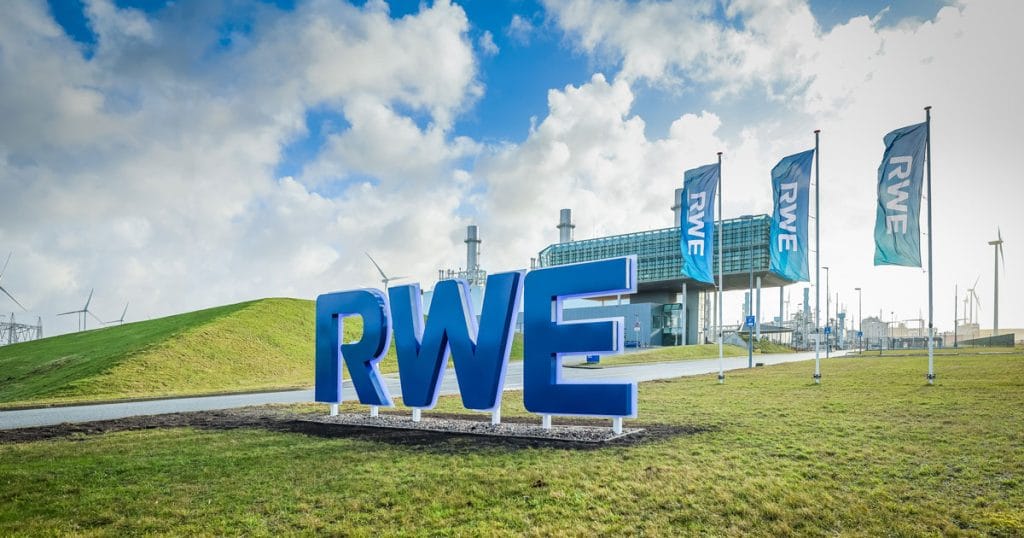
On a former power generation site in Lower Saxony, RWE has begun commissioning Europe’s largest renewable hydrogen production facility, a project designed to anchor Germany’s industrial decarbonization ambitions and lock in long-term demand from heavy industry.
The 100 megawatt electrolyser now undergoing technical testing at Lingen represents the first phase of the GET H2 Nukleus project. Once operational, the facility is expected to begin commercial hydrogen production in 2026. RWE plans to expand total capacity at the site to 300 megawatts by 2027, positioning it well ahead of most comparable European projects in scale and integration.
Supplying industrial demand via Germany’s hydrogen backbone
The Lingen plant has been built with a clear industrial end user in mind. Its hydrogen output is earmarked for delivery to TotalEnergies’ Leuna refinery in eastern Germany, one of the country’s largest refining and chemical hubs.
Hydrogen will be transported via a dedicated 600 kilometre pipeline that will form part of Germany’s planned core hydrogen network, which is currently under construction. This infrastructure is central to Berlin’s hydrogen strategy, designed to connect renewable hydrogen production sites in the north and west with industrial demand centres across the country.
Under a long-term offtake agreement, RWE will supply TotalEnergies with 30,000 tonnes of green hydrogen per year starting in 2030. The contract runs for 15 years and is intended to displace fossil-based hydrogen currently used in fuel production processes at Leuna, reducing the refinery’s Scope 1 emissions footprint.
Storage as a system stabiliser
One of the critical challenges for large-scale green hydrogen is ensuring reliable supply despite the variability of wind and solar power. To address this, RWE plans to draw on underground hydrogen storage capacity at Gronau-Epe, a salt cavern site scheduled to come online in 2027.
This storage solution is designed to smooth supply during periods of low renewable generation and provide industrial customers with predictable delivery volumes. For policymakers and system operators, projects that combine production, storage, and transport are increasingly viewed as essential to building a credible hydrogen market rather than isolated pilot plants.
Early equipment orders accelerate delivery
RWE’s ability to move into commissioning ahead of many peers reflects early investment decisions made before public funding frameworks were finalised. The company placed its initial equipment orders in 2022, well before receiving confirmation of state support.
The first two 100 MW electrolysers were ordered from a consortium led by Linde and ITM Power, while a third electrolyser based on alkaline technology was ordered from German manufacturer Sunfire. By locking in supply chains early, RWE reduced exposure to equipment bottlenecks that have slowed several European hydrogen projects.
If the full build-out proceeds as planned, the Lingen facility will significantly exceed the scale of other operational projects, including BASF’s 54 MW electrolyser commissioned in Ludwigshafen earlier this year.
RELATED ARTICLE: RWE to Commission Casa Valdes Solar Farm Near Madrid
Cost pressures remain a structural risk
Despite the scale and integration of the project, economics remain a central constraint. The cost of producing EU-compliant green hydrogen in Germany via alkaline electrolysis, using renewable power purchase agreements, was assessed at €7.54 per kilogram, or about $8.86 per kilogram, in mid-December.
These costs remain well above fossil-based hydrogen and highlight why long-term offtake agreements and policy support are critical to unlocking investment. RWE has pointed to the technical maturity of the GET H2 Nukleus project and the associated storage infrastructure as factors that enabled it to secure favourable long-term terms with TotalEnergies.
What executives and investors should take away
For industrial groups, the Lingen project demonstrates how hydrogen supply at scale is beginning to move from concept to contracted reality, supported by physical infrastructure rather than isolated assets. For investors, it underscores the importance of integrated projects that combine production, transport, storage, and bankable demand.
At a policy level, the commissioning reinforces Germany’s role as a cornerstone of Europe’s hydrogen strategy. As the core hydrogen network takes shape, projects like Lingen will test whether Europe can close the gap between climate ambition and commercial viability, while competing with lower-cost hydrogen developments emerging in the Middle East and the Americas.
The next phase, bringing the full 300 MW capacity online, will be watched closely as a signal of whether large-scale green hydrogen can secure both industrial trust and financial sustainability in Europe’s decarbonizing economy.
Follow ESG News on LinkedIn

The ESG News Editorial Team is comprised of veteran financial journalists and sustainability analysts dedicated to providing real-time, objective reporting on global ESG regulations, climate finance, and corporate governance. Our desk monitors daily developments from the SEC, IFRS, CSRD and international regulatory bodies to ensure our 1M+ readers receive accurate, data-driven insights into the evolving sustainable investment landscape. Follow the ESG News Editorial Team for expert reporting on global sustainability standards, ESG disclosures, and climate policy. Access over 10,000 investigative reports and real-time updates.