
US Judge Allows Orsted to Resume $5 Billion Rhode Island Offshore Wind Project Halted by Trump
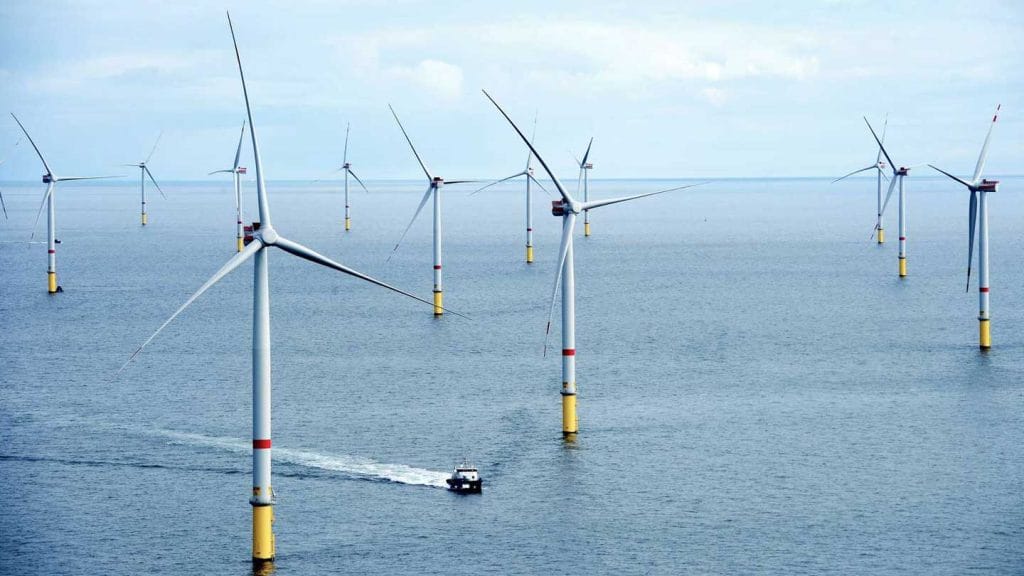
- Court order permits work to restart on Revolution Wind while litigation proceeds
- Ruling questions Trump administration’s national security rationale for pausing five offshore wind leases
- Outcome carries implications for US clean power buildout, investor certainty and supply chain planning
A federal judge has cleared Danish developer Orsted to restart work on its nearly completed Revolution Wind project after the Trump administration suspended construction last month. The decision injects legal momentum into a sector facing political headwinds as the White House reassesses national security implications of offshore wind in federal waters.
Revolution Wind is a $5 billion development co-owned by Orsted that aims to deliver renewable power to Rhode Island and Connecticut. It is the first of five offshore wind projects paused by Interior Secretary Doug Burgum in late December over what officials described as radar interference risks identified by the Department of Defense.
Legal Setback for Trump and a Litmus Test for the Pause
US District Judge Royce Lamberth issued a temporary order blocking the stop-work directive, concluding that the project would suffer irreparable economic harm if forced to remain idle. The court also questioned whether the administration’s national security justification satisfied procedural requirements.
Lamberth pressed government attorneys during the hearing, asking: “You want to stop everything in place, costing them one-and-a-half million a day, while you decide what you want to do?” He also noted discomfort with the Interior Secretary’s public criticism of offshore wind on grounds unrelated to defense. In recent interviews, Burgum called offshore wind expensive, unreliable, reliant on foreign equipment and harmful to marine life.

The Interior Department did not comment following the ruling.
Revolution Wind’s injunction request is one of several challenges filed by developers and state governments since the suspension. Hearings later this week will address Equinor’s Empire Wind project off New York and Dominion Energy’s Coastal Virginia Offshore Wind facility. Together, the paused projects sit at the intersection of clean power targets, federal leasing policy and US industrial planning for a sector racing to compete with Europe and China.
Stakeholders Seek Predictability for Capital and Supply Chains
Orsted said it intends to resume work quickly while the litigation advances. “Revolution Wind will determine how best it may be possible to work with the US Administration to achieve an expeditious and durable resolution,” the company said in a statement.
Government lawyers maintained the pause was warranted due to newly classified information shared by the Pentagon in November. Developers argued the move violated administrative law and due process by withholding the assessment from affected parties. Janice Schneider, attorney for Revolution Wind, told the court: “This Court should be very skeptical of the government’s true motives here.”

For investors and utilities, the case highlights the extent of regulatory and political risk tied to US offshore wind buildout. Cancellations and renegotiated power purchase agreements in 2023 and 2024 reshaped financial expectations for the sector, while the latest federal pause introduced uncertainty around project timelines, procurement and local content commitments.
RELATED ARTICLE: Orsted Secures Nearly $1 B from Equinor to Stabilize Offshore Wind Ambitions
Governance and Climate Stakes for the US Power System
The US has set multi-gigawatt offshore wind ambitions in pursuit of climate targets, regional manufacturing and grid diversification. The Trump administration has taken a more adversarial stance toward offshore wind, with President Trump frequently criticizing turbines as unaesthetic and inefficient. State governments in the Northeast continue to drive demand through solicitations and procurement mandates, leveraging offshore wind to meet climate laws and stimulate port, vessel and cable investments.
National security concerns related to radar and maritime surveillance have been longstanding in the sector, though typically addressed through project-specific mitigation. Classified assessments complicate conventional stakeholder processes and raise governance questions over how federal agencies balance defense prerogatives against climate and industrial policy.
Global Ramifications
The outcome of the litigation will be watched by European and Asian utilities that have invested heavily in the early US market. The United Kingdom, Germany, Denmark and Taiwan have used regulatory stability and pipelines to nurture domestic manufacturing and finance structures for offshore wind. The US market’s trajectory now depends on how the administration reconciles defense priorities with state-level climate goals and investor demands for predictability.
For climate planners, the case matters beyond the coast of Rhode Island. Offshore wind is one of the few scalable zero carbon technologies that can deliver large volumes of power to densely populated load centers. A prolonged federal pause could slow emissions progress across multiple states and challenge the credibility of US clean energy commitments at a time when Europe and China are accelerating deployment.
As Revolution Wind restarts, the hearings for Empire Wind and Coastal Virginia Offshore Wind will reveal whether the courts provide a broader pathway for stalled projects. The sector’s immediate question is not only whether construction proceeds, but whether the United States can establish consistent governance for a technology central to its climate and industrial strategy.
Follow ESG News on LinkedIn

The ESG News Editorial Team is comprised of veteran financial journalists and sustainability analysts dedicated to providing real-time, objective reporting on global ESG regulations, climate finance, and corporate governance. Our desk monitors daily developments from the SEC, IFRS, CSRD and international regulatory bodies to ensure our 1M+ readers receive accurate, data-driven insights into the evolving sustainable investment landscape. Follow the ESG News Editorial Team for expert reporting on global sustainability standards, ESG disclosures, and climate policy. Access over 10,000 investigative reports and real-time updates.