
Mercedes AMG Petronas F1 Accelerates Logistics, Materials Innovation to Cut Emissions in 2025 Season
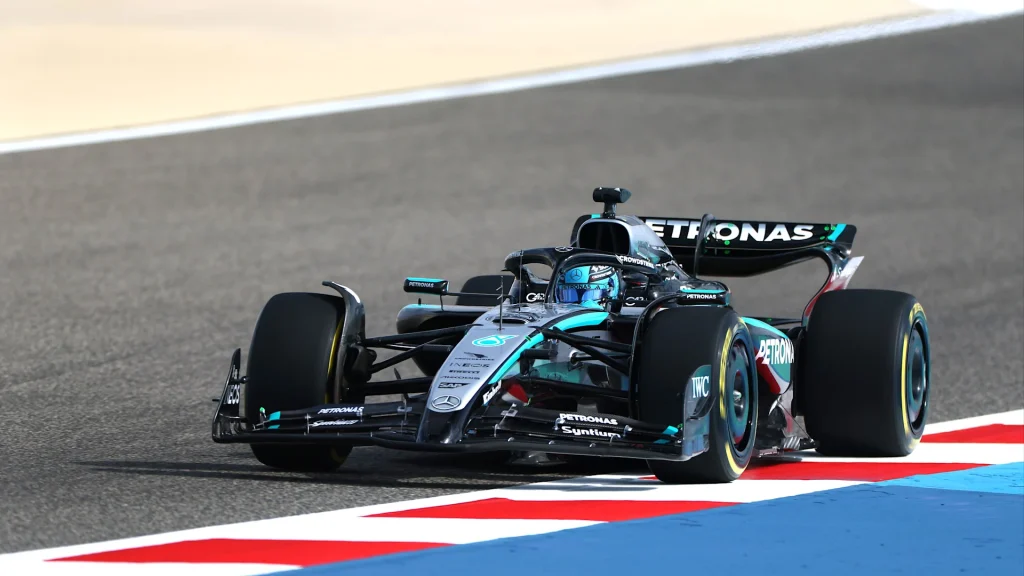
- First electric freight deployment to deliver Formula One race cars to a European Grand Prix
- Biofuel use across the European season avoided more than 410 tonnes of CO2e
- Bio based carbon fibre composite completed 7,000 km of competitive running
Mercedes AMG Petronas Formula One Team reported a year of rapid sustainability gains across the 2025 season, both on and off the track, as the sport intensifies efforts to cut emissions, reform logistics and transition its supply chains. The team framed its progress as part of a longer arc toward becoming one of the world’s most sustainable professional sports teams, with 2026 rules and fuels seen as a critical inflection point for Formula One’s climate strategy.
Circuits, Logistics and a Shift in Sportwide Expectations
Formula One’s footprint is dominated by international freight, business travel and energy use during race weeks. In that context, the team’s logistics changes stood out. For the Dutch Grand Prix, its W16 race cars were delivered using a fully electric Mercedes Benz eActros 600, marking the first time a Formula One team transported race cars to a European event without combustion powered haulage. Electric trucking remains at a pilot stage for heavy freight, but Formula One’s tightly sequenced logistics calendar gave the demonstration additional credibility that resonated across the paddock.
Throughout the European season, the team expanded its use of HVO100 biofuel across support fleets and generators. That avoided more than 410 tonnes of CO2e. The team linked that figure to natural sequestration by noting the equivalent annual capacity of roughly 33,600 mature mangrove trees, aligning with broader efforts to make emissions relatable for fans, regulators and commercial partners.
Away from the circuit, commuting became a surprising source of quantifiable reductions. Staff at the team’s Brackley headquarters in the United Kingdom cut about 360,000 miles of commuting through an internal car sharing program. In racing terms, the distance equals roughly 99,000 laps of Silverstone. While commuting emissions are small relative to global scheduling and freight, the move demonstrated that incremental changes can compound when adopted across a high skill workforce.
A Materials Breakthrough at Racing Speeds
On track, hardware innovation proved arguably more consequential. The team debuted a bio based carbon fibre composite on the rear brake duct wheel shields of the number 63 W16 at the Azerbaijan Grand Prix. The part survived more than 7,000 kilometres of race conditions, including a win in Singapore, a podium in Las Vegas and top three Sprint Race results in Austin, São Paulo and Qatar.
For a sport that has defined performance engineering for decades, the demonstration mattered less as symbolic messaging and more as a stress test for alternative materials in extreme heat, vibration and aerodynamic environments. The composites were developed with the team’s suppliers, showing how sustainability requirements are passing from corporate strategy into procurement and technical specifications.
Head of Sustainability Alice Ashpitel said the application of bio based carbon fibre to a competitive car carried significant weight for the team. She argued that durable sustainable components will need to scale across motorsport if the sector intends to maintain technical credibility while lowering emissions.
RELATED ARTICLE: Mercedes-AMG PETRONAS F1 Partners with Chestnut Carbon to Restore 200 Hectares of Biodiverse Forest
Nature Based Projects and Fuel Transitions
The team also launched the Blue Carbon Collective with Petronas to support mangrove restoration research in Brazil and Malaysia. Mangroves have become central to carbon accounting markets because they capture CO2 at higher rates than many terrestrial ecosystems and provide storm resilience for coastal communities. The initiative adds to a growing list of nature based programs backed by corporate sponsors seeking both climate outcomes and social co benefits.
In parallel, the team partnered with Motorsport UK to introduce sustainable fuel into British karting. The shift cut emissions by roughly 55 percent in one championship class. For motorsport, karting is strategically important because it sets expectations for young drivers, mechanics and engineers and shapes the future technical culture of the sport.
Implications for Investors, Partners and Sport Governance
Formula One’s commercial model is built on sponsorships, broadcast rights, advertising and technology partnerships. For investors and brands, sustainability performance is no longer peripheral. It informs reputational risk, fan engagement and increasingly the ability to attract capital tied to corporate sustainability goals. The governing environment is also evolving. National governments are tying motorsport to advanced manufacturing policy, synthetic fuel development and electric mobility, making sustainability performance relevant to policy alliances and industrial strategy.
Team Representative Bradley Lord said the team was “energised by what is to come in 2026” and described sustainability, inclusion and social impact as converging priorities for the next cycle of regulations. The closing phase of the 2025 season therefore served as a preview for coming competition where engineering performance and environmental performance are no longer separate domains.

Global Significance
The sport’s journey to lower emissions will remain complex, given its global schedule and high transport intensity. Yet the moves by Mercedes AMG Petronas indicate how sustainability is becoming an engineering challenge rather than a marketing exercise. If replicated by peers and scaled across suppliers, fuels, materials and logistics systems, the 2025 season could mark a decisive stage in Formula One’s transition from proof of concept initiatives to operational practice with broader industrial relevance.
Follow ESG News on LinkedIn

The ESG News Editorial Team is comprised of veteran financial journalists and sustainability analysts dedicated to providing real-time, objective reporting on global ESG regulations, climate finance, and corporate governance. Our desk monitors daily developments from the SEC, IFRS, CSRD and international regulatory bodies to ensure our 1M+ readers receive accurate, data-driven insights into the evolving sustainable investment landscape. Follow the ESG News Editorial Team for expert reporting on global sustainability standards, ESG disclosures, and climate policy. Access over 10,000 investigative reports and real-time updates.