
Lunar Energy Secures $232 Million To Scale Home Battery Systems, AI Virtual Power Plant Software
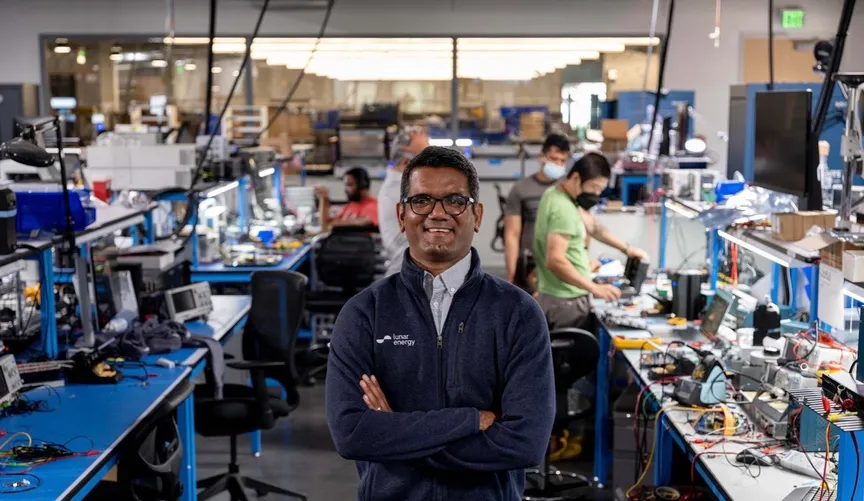
- $232 million in combined Series C and oversubscribed Series D financing positions Lunar Energy to accelerate residential battery deployments and AI-driven grid optimization.
- Investors including B Capital, Prelude Ventures and Activate Capital are backing integrated hardware and software platforms as distributed energy becomes critical infrastructure.
- Expansion of virtual power plant technology highlights growing policy and market demand for flexible, decentralized energy resources amid rising electricity demand.
California-based startup targets national expansion of distributed energy
Lunar Energy has secured $232 million in new financing to accelerate deployment of residential battery systems and expand its AI-powered virtual power plant software, reflecting intensifying investor interest in distributed energy infrastructure.
The funding includes a $102 million oversubscribed Series D round led by B Capital and Prelude Ventures, alongside a previously undisclosed $130 million Series C led by Activate Capital. Additional investors include DCVC, Piva Capital, Leitmotif, Sunrun, Itochu Corporation and Q Capital Partners.
Founded by former Tesla Energy executive Kunal Girotra, Lunar Energy focuses on combining intelligent hardware with software designed to turn households into flexible grid assets. The company plans to scale its home battery platform beyond California while expanding Lunar Gridshare, its distributed energy management software already operating some of the largest virtual power plant programs in the United States.
“This financing validates the reason we started this company,” said Kunal Girotra, Founder and CEO of Lunar Energy. “Five years ago, we believed the energy transition wouldn’t be solved by hardware alone or software alone. We built Lunar Energy to bring the best of hardware and software together, and this financing allows us to scale that model, helping homes electrify and become active participants in a smarter, more resilient grid.”

Investors bet on integrated hardware and AI-driven energy management
The financing comes at a time when electricity demand is rising sharply, driven by electrification, data center growth and increasingly volatile weather patterns. Distributed energy systems and virtual power plants are becoming central to energy security strategies across multiple regions.
Jeff Johnson, General Partner at B Capital, said: “The residential battery storage industry is at an inflection point, and Lunar’s integrated hardware-software offering is setting a new standard. Lunar’s fully integrated approach combining modular BESS hardware, advanced AI-driven optimization and a proven ability to deliver value to both homeowners and the grid sets the company apart. By not just storing energy but intelligently learning each home’s unique consumption patterns, Lunar maximizes solar production, ensures reliability and drives energy affordability. We’re excited to support Kunal and the team as they continue building the resilience infrastructure the modern grid now requires, while accelerating the adoption of VPPs at scale.”

Prelude Ventures also highlighted the growing role of AI in managing rising household energy costs. Tim Woodward, Managing Director at Prelude Ventures, said: “The combination of Lunar’s DC architecture, intelligent hardware, and ease of installation differentiates its residential battery from others in the industry and has led to significant market traction in 2025. Lunar uses sophisticated energy optimization intelligence to help homeowners manage rising home electricity bills. We’re excited to partner with the company as it shapes the next generation of decentralized grid operations.”

RELATED ARTICLE: Base Power Secures $1B to scale U.S. Home Battery Network
Virtual power plants emerge as key infrastructure for modern grids
Lunar’s Gridshare platform already manages distributed energy resources across multiple continents and is used by utilities, community energy aggregators and companies such as Sunrun to operate virtual power plants in markets including New England, Hawaii and Puerto Rico. The company reports thousands of systems deployed and about 650 MW of devices under management.
The strategy aligns with policy shifts that favor distributed resources capable of supporting grid stability while reducing reliance on centralized infrastructure. Raj Atluru, Managing Partner of Activate Capital, said: “Lunar brings together two powerful insights: first, that the future of solar is integrated solar and storage to deliver truly resilient homes; and second, that flexibility at the edge is becoming increasingly valuable for both grid stability and household resilience. As power shortages and grid instability become the new normal driven by surging data center demand and aging infrastructure exacerbated by climate impacts, we are seeing unprecedented demand from consumers, utilities, and governments for storage solutions like Lunar as critical infrastructure.”

For customers, the company says its AI-driven platform generated average earnings of $464 through virtual power plant participation last year, while saving an additional $338 compared with standard battery operation modes.
What executives and investors should watch
Lunar’s latest financing highlights a broader shift in how capital markets view residential energy technologies. Distributed assets are moving from niche consumer products to system-level infrastructure capable of supporting grid reliability, energy affordability and climate targets.
For corporate energy buyers, utilities and investors, the model points to a future where software-driven aggregation of small-scale assets competes with traditional power generation. Governments and regulators are increasingly exploring frameworks that reward flexibility and demand response, creating new revenue streams for companies operating virtual power plant platforms.
As electrification accelerates and power markets face growing strain, integrated hardware and software solutions like Lunar’s are drawing attention not only as consumer energy tools but as a strategic component of national energy systems. The scale of this financing reflects a wider industry recalibration toward decentralized, AI-optimized energy networks designed to meet rising demand while advancing global climate and resilience goals.
Follow ESG News on LinkedIn

The ESG News Editorial Team is comprised of veteran financial journalists and sustainability analysts dedicated to providing real-time, objective reporting on global ESG regulations, climate finance, and corporate governance. Our desk monitors daily developments from the SEC, IFRS, CSRD and international regulatory bodies to ensure our 1M+ readers receive accurate, data-driven insights into the evolving sustainable investment landscape. Follow the ESG News Editorial Team for expert reporting on global sustainability standards, ESG disclosures, and climate policy. Access over 10,000 investigative reports and real-time updates.