LG Energy Solution Buys Out Stellantis Stake In Canada Battery Venture Amid EV Reset
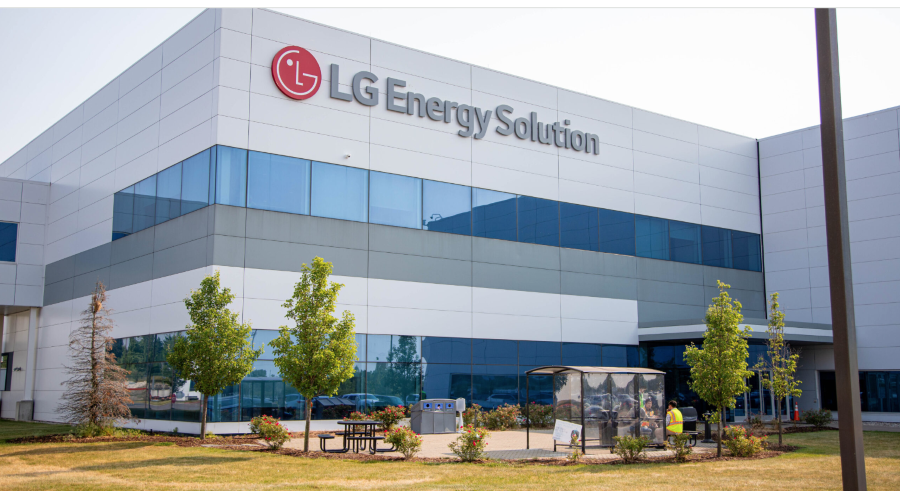
- LG Energy Solution will acquire Stellantis’ 49% stake in a Canadian battery joint venture for $100, consolidating control over a facility that has already attracted more than C$5 billion ($3.65 billion) in investment.
- The deal reflects shifting governance and policy dynamics as U.S. EV incentives weaken and automakers reassess electrification timelines amid softer demand.
- For investors, the transaction highlights rising balance sheet pressure on battery suppliers and a strategic pivot toward long term asset ownership in North America.
LG Energy Solution said Friday it plans to acquire the 49% stake held by Stellantis in their Canadian battery joint venture for a nominal $100, a move that illustrates the sharp recalibration underway across the electric vehicle supply chain.
The transaction gives LG full control of a facility that has already absorbed more than C$5 billion ($3.65 billion) in investment. Once positioned as a cornerstone of Stellantis’ electrification strategy, the plant now reflects a broader industry shift as legacy automakers scale back EV expansion plans and reassess capital deployment.
The agreement comes amid changing political and economic conditions that have altered demand forecasts, policy incentives, and investor expectations around EV adoption across North America.
Policy Shifts Reshape EV Economics
LG Energy Solution launched several battery joint ventures with major automakers during the administration of former U.S. President Joe Biden, a period marked by aggressive incentives aimed at accelerating domestic battery manufacturing and EV uptake. Those partnerships were built on expectations of sustained consumer subsidies and rapid electrification timelines.
The landscape has changed. The administration of U.S. President Donald Trump has scrapped the $7,500 consumer tax credit for EV purchases, reshaping affordability dynamics and slowing momentum in certain vehicle segments. Automakers, including Stellantis, have begun moderating production targets and revising capital commitments in response.
For governance watchers, the deal highlights how industrial policy continues to dictate supply chain structures. Battery manufacturers that once relied on automaker partnerships to share risk are increasingly absorbing ownership as policy support fluctuates.
Stellantis Retreat Reflects Industry Wide Realignment
Stellantis, parent company of Chrysler, had originally announced the Canadian joint venture with LG Energy Solution in 2022 as part of an ambitious electrification push. At the time, automakers were racing to secure battery capacity to meet projected EV demand and regulatory targets.
Now, that expansion cycle is being tempered by slower sales growth, rising financing costs, and uncertain policy direction. Stellantis’ exit mirrors decisions across the industry, where manufacturers are prioritizing profitability and hybrid strategies over aggressive full battery electric rollouts.
LG Energy Solution has already navigated similar restructuring. Last year, the South Korean battery maker agreed with General Motors to purchase the automaker’s stake in their joint venture battery plant in Lansing, Michigan, another sign of shifting risk allocation between OEMs and suppliers.
RELATED ARTICLE: LG Energy Solution Aims to Achieve RE100 in All Global Production Sites by 2025
Financial Pressure Mounts For Battery Suppliers
While consolidating ownership may strengthen LG’s strategic control, it also increases exposure at a time when the company faces mounting headwinds. The cancellation of major battery contracts, including a multi billion dollar agreement with Ford, has forced suppliers to rethink growth assumptions made during the peak of EV optimism.
From a finance perspective, the $100 purchase price reflects not only Stellantis’ strategic retreat but also the evolving valuation dynamics of EV infrastructure assets. Facilities once viewed as guaranteed growth engines are now tied closely to policy signals, consumer sentiment, and regional demand trajectories.
For institutional investors and C suite executives, the transaction underscores a new phase in the energy transition. Battery makers are moving from joint venture expansion toward consolidation and operational efficiency, while automakers seek flexibility amid uncertain market conditions.
What The Deal Means For Global ESG Strategy
The acquisition highlights how climate ambitions are increasingly shaped by geopolitical priorities and fiscal policy rather than pure technological momentum. North America remains a critical hub for localized battery production, driven by supply chain security and national industrial strategies.
At the same time, the shift places greater responsibility on battery manufacturers to sustain investment momentum even as automakers pause or restructure commitments. The outcome will influence how capital flows into clean manufacturing projects globally and how quickly electrification targets can be achieved.
As governments recalibrate incentives and companies adjust timelines, the LG Energy Solution and Stellantis deal offers a clear signal to markets: the transition to electric mobility is entering a more complex phase, where governance decisions, financial resilience, and strategic ownership will define the next chapter of the global energy transition.
Follow ESG News on LinkedIn

The ESG News Editorial Team is comprised of veteran financial journalists and sustainability analysts dedicated to providing real-time, objective reporting on global ESG regulations, climate finance, and corporate governance. Our desk monitors daily developments from the SEC, IFRS, CSRD and international regulatory bodies to ensure our 1M+ readers receive accurate, data-driven insights into the evolving sustainable investment landscape. Follow the ESG News Editorial Team for expert reporting on global sustainability standards, ESG disclosures, and climate policy. Access over 10,000 investigative reports and real-time updates.