
Brazil Awards First Amazon Reforestation Concession To Re.green In Carbon Finance Push
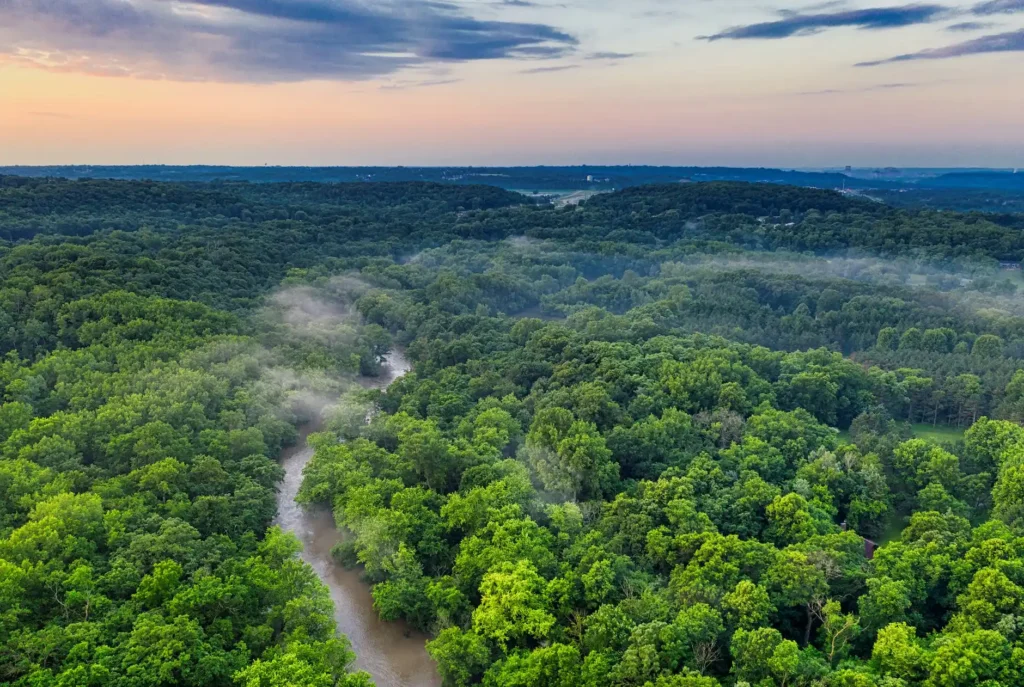
• Brazil grants a 40-year concession covering 145,000 acres of Amazon land, introducing a market-based model for ecosystem restoration
• Project ties forest regeneration to carbon credit revenues, with expected annual proceeds of about $2 million and a 0.7% government share
• Move anchors Brazil’s broader plan to restore 3.2 million acres, positioning carbon markets as a core financing tool for conservation
In a decisive shift toward market-driven conservation, Brazil has awarded its first public land concession dedicated to large-scale forest restoration, handing a 40-year contract to Re.green to rehabilitate degraded areas of the Amazon rainforest.
The concession covers approximately 145,000 acres within the Bom Futuro National Forest and marks the first time the government has auctioned protected land explicitly for reforestation backed by carbon finance. The deal introduces a new governance model that blends public land stewardship with private capital and long term revenue generation.
A New Model For Forest Governance
The project signals a structural change in how Brazil approaches conservation. Rather than relying solely on public funding or enforcement, the government is creating financial incentives for restoration through carbon markets.
Under the agreement, Re.green will restore native vegetation across heavily degraded land while generating carbon credits tied to verified emissions removals. The company committed to sharing 0.7% of its carbon credit revenue with the state, with annual proceeds estimated at around $2 million.
Environment Minister Marina Silva framed the initiative as a transformation of environmental liabilities into economic assets. “We are managing to turn something that is extremely negative… into something positive.”

The concession model effectively converts degraded forest into a revenue-generating asset class, aligning climate objectives with financial returns. For policymakers, it offers a scalable template for mobilizing private investment without relinquishing public ownership.
Scaling Carbon Finance In The Amazon
The Bom Futuro project sits within a broader national strategy to expand restoration efforts across millions of hectares. Officials have identified roughly 3.2 million acres of degraded protected land requiring intervention.
According to the Brazilian Forest Service, the government plans to offer up to 750,000 acres under similar concessions by 2027. The aim is to build a pipeline of projects capable of attracting institutional capital into nature-based solutions.
The initiative also reflects growing confidence in carbon markets as a financing mechanism. By linking restoration outcomes to tradable credits, Brazil is positioning itself to supply high-integrity carbon offsets at scale, a segment increasingly scrutinized by global investors.
At the same time, the auction revealed early-stage market constraints. A second plot within the same reserve failed to attract bids, highlighting the perceived risks around long-term project execution, verification standards, and carbon price volatility.
RELATED ARTICLE: Brazil Cuts Amazon Deforestation to 11-Year Low Ahead of COP30
Authorities nonetheless described the outcome as a successful proof of concept.
Balancing Ecology, Communities And Capital
Beyond carbon metrics, the project incorporates social and ecological dimensions that are becoming central to ESG aligned investments. Re.green’s approach includes engagement with local communities and a focus on restoring native biodiversity rather than monoculture plantations.
This aligns with evolving expectations from corporate buyers of carbon credits, many of whom now require stronger guarantees around environmental integrity and community impact.
For executives and investors, the concession offers a live case study in how nature-based assets can be structured. It demonstrates the integration of governance frameworks, revenue-sharing mechanisms, and long-term ecological commitments into a single investment model.
Why Restoration Is Now Critical
The timing is significant. Scientists increasingly warn that halting deforestation alone will not be sufficient to preserve the Amazon’s ecological stability. Large-scale restoration is now viewed as essential to maintaining the forest’s carbon sink function and preventing tipping points.
Brazil’s move acknowledges this shift. By creating a system that incentivizes reforestation at scale, the government is addressing both climate mitigation and biodiversity loss while testing new financial pathways.
For global markets, the implications extend beyond Brazil. If replicated, concession-based restoration could unlock vast tracts of degraded land worldwide, turning conservation into an investable category.
The Bom Futuro deal is an early step, but it establishes a framework that links policy, finance, and climate outcomes in a way few jurisdictions have attempted. As carbon markets mature and scrutiny intensifies, the success or failure of projects like this will shape the credibility of nature-based solutions globally.
Follow ESG News on LinkedIn

The ESG News Editorial Team is comprised of veteran financial journalists and sustainability analysts dedicated to providing real-time, objective reporting on global ESG regulations, climate finance, and corporate governance. Our desk monitors daily developments from the SEC, IFRS, CSRD and international regulatory bodies to ensure our 1M+ readers receive accurate, data-driven insights into the evolving sustainable investment landscape. Follow the ESG News Editorial Team for expert reporting on global sustainability standards, ESG disclosures, and climate policy. Access over 10,000 investigative reports and real-time updates.