France Launches 12 GW Renewable Tenders to Boost Energy Security, Domestic Industry
- 12 GW of new renewable tenders aim to accelerate France’s energy independence and reduce exposure to volatile fossil fuel imports
- New “resilience criteria” prioritize European supply chains, limiting reliance on Chinese components across wind and solar projects
- Policy aligns with France’s 2035 offshore wind targets and broader EU industrial strategy, linking climate goals with economic sovereignty
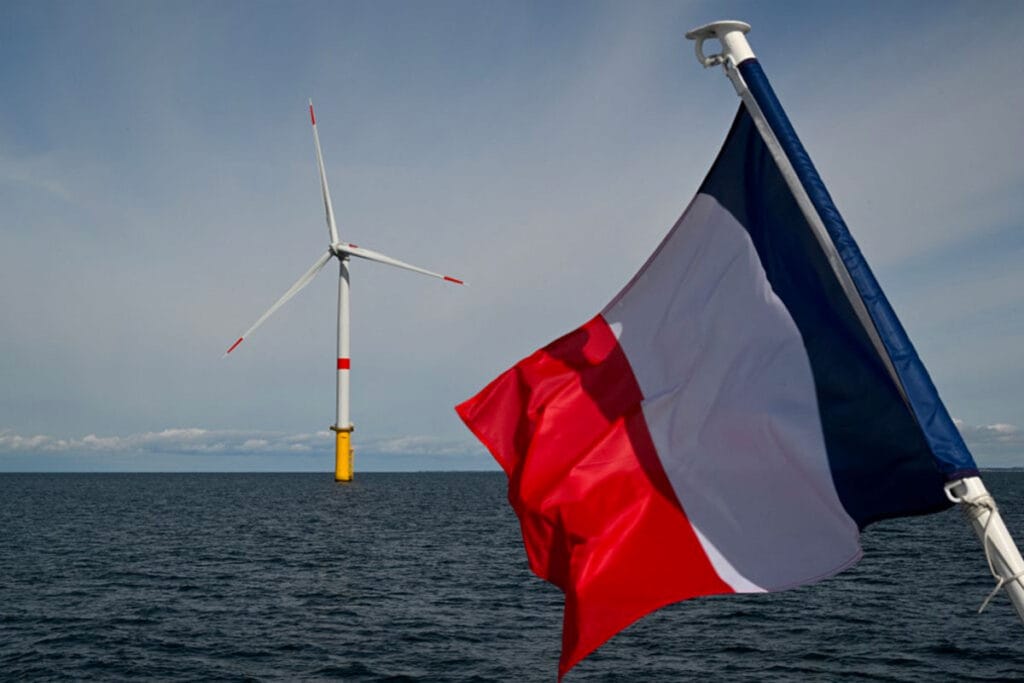
France has launched a sweeping new round of renewable energy tenders totaling 12 gigawatts, combining large-scale offshore wind with solar and onshore projects in a bid to strengthen energy security and industrial resilience.
The announcement includes seven offshore wind projects accounting for 10 GW, alongside 1.2 GW of solar and 0.8 GW of onshore wind capacity. The move comes after a two-year delay tied to political disputes over renewable financing, reflecting the tension between fiscal constraints and climate commitments in one of Europe’s largest economies.
The timing is not incidental. Ongoing geopolitical instability, including disruptions to energy shipments through the Strait of Hormuz, has driven up global energy prices, with European markets expected to feel increasing pressure in the coming months.
Finance Minister Roland Lescure positioned the tenders as part of a broader strategic pivot.
“Thanks to the energy policies France has adopted over the past 50 years, notably developing our nuclear fleet, we entered the current crisis better prepared and less exposed than Japan,” Lescure told journalists. “The idea now is to continue on this path and accelerate.”
Energy Sovereignty Meets Industrial Policy
Beyond capacity expansion, the tenders embed a clear industrial strategy. France is prioritizing domestic and European manufacturing capabilities as part of a wider effort to reduce dependence on foreign supply chains, particularly from China.
“We want these bids to be done as much as possible with our technologies, our factories, our employees,” Lescure said.
Under newly introduced “resilience criteria,” bids will be evaluated based on the origin of key components. For offshore wind projects, no more than four of nine strategic components may be sourced from China, and the share of Chinese permanent magnets in turbines will be capped at 50%.
Solar tenders will also incorporate stricter requirements on photovoltaic cells and modules, reinforcing local production capacity.
This framework anticipates the European Union’s upcoming Industrial Accelerator Act, which will formalize a “Made in Europe” approach from 2030. France’s early adoption signals a shift toward aligning climate policy with industrial competitiveness and supply chain security.
Scaling Toward 2035 Targets
The tenders form a critical step toward France’s long-term energy planning law, passed earlier this year, which targets 15 GW of offshore wind capacity by 2035. Current installed capacity remains below 2 GW, highlighting the scale of expansion required.
By accelerating project pipelines now, France aims to close that gap while maintaining its relatively low electricity prices compared to European peers.
French households currently pay electricity prices “30% to 35% lower than our Italian neighbors,” Lescure noted, pointing to the stabilizing role of the country’s nuclear fleet even as it diversifies into renewables.
Future tender rounds are expected to incorporate additional sustainability and cybersecurity criteria, further tightening governance standards around critical energy infrastructure.
Strategic Supply Chains and Regional Industry
The government has also highlighted specific domestic players expected to benefit from the policy shift, spanning the renewable value chain. These include photovoltaic manufacturing, cable production, rare earth processing, and turbine assembly, reinforcing regional industrial ecosystems.
“This is a long-term strategy to secure our industrial supply chains,” Lescure said.
The approach reflects a broader European trend where energy transition policies are increasingly tied to economic security, job creation, and technological sovereignty.
What This Means for Executives and Investors
For energy developers and investors, France’s tender pipeline offers substantial opportunities, particularly in offshore wind, one of Europe’s fastest-growing renewable segments. However, stricter local content requirements will reshape procurement strategies and potentially increase upfront costs.
For manufacturers, the policy creates a clearer demand signal for European-based production, particularly in high-value components historically dominated by Asian suppliers.
From a governance perspective, the integration of resilience, sustainability, and cybersecurity criteria marks a tightening of regulatory expectations across energy infrastructure projects.
France’s move underscores a broader shift in global energy markets. Decarbonization is no longer pursued in isolation. It is now tightly interwoven with geopolitical risk management, industrial policy, and economic resilience.
As Europe navigates an increasingly volatile energy landscape, France’s 12 GW tender program offers a blueprint for aligning climate ambition with strategic autonomy.
Follow ESG News on LinkedIn

The ESG News Editorial Team is comprised of veteran financial journalists and sustainability analysts dedicated to providing real-time, objective reporting on global ESG regulations, climate finance, and corporate governance. Our desk monitors daily developments from the SEC, IFRS, CSRD and international regulatory bodies to ensure our 1M+ readers receive accurate, data-driven insights into the evolving sustainable investment landscape. Follow the ESG News Editorial Team for expert reporting on global sustainability standards, ESG disclosures, and climate policy. Access over 10,000 investigative reports and real-time updates.