Austrian Firms Step Up Green And Digital Investment Amid Rising Economic Pressures
• Ninety percent of Austrian firms invested in 2025, outpacing the EU and shifting capital toward replacement and upgrades as uncertainty grows.
• Nearly all firms have taken emission-reduction steps, with more than half investing in energy efficiency and one third viewing net-zero as a commercial opportunity.
• Digitalisation is advancing at scale, with 87 percent using advanced technologies and 45 percent deploying AI tools, well above EU averages.
Austrian companies are maintaining one of the highest investment intensities in Europe, even as the broader outlook turns more cautious. New findings from the EIB Investment Survey 2025 show that nine in ten firms continued to invest this year, a level that exceeds the EU average and reflects Austria’s long-standing emphasis on competitiveness, productivity and technological renewal.
The composition of that investment is now changing. Firms are redirecting capital from expansion to replacement and upgrades as global volatility, high energy prices and skills shortages reshape business priorities.
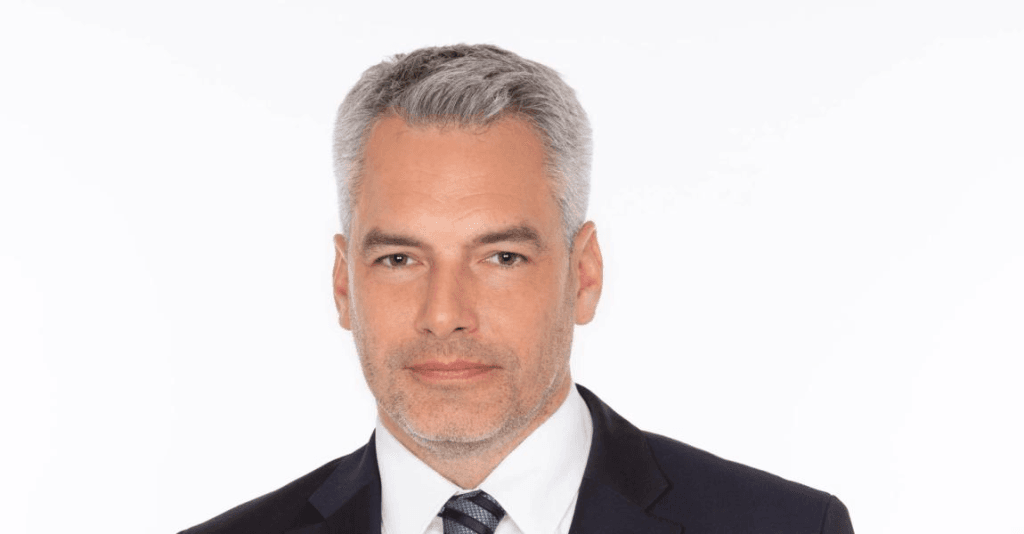
“Austrian companies are showing exactly the kind of leadership Europe needs right now: they are investing today to secure tomorrow’s prosperity. The new EIB Investment Survey reveals a business landscape that is cutting emissions, rolling out advanced digital technologies and artificial intelligence, and staying competitive on global markets. This mix of climate ambition and innovation is Austria’s recipe for safeguarding quality jobs, strengthening resilience and turning uncertainty into new opportunities,” said Karl Nehammer, EIB Vice-President.
Despite the more defensive posture on capacity expansion, Austrian firms continue to report comparatively favourable access to finance, low constraint levels and strong reliance on internal capital.
“Austrian firms are part of a broader European story: companies across the EU are investing, despite the high level of uncertainty, to stay competitive. The EIB Investment Survey shows that, while high energy costs, skills shortages and global regulatory concerns remain real constraints, Europe’s firms are not standing still – they are innovating, cutting emissions and deploying new technologies at scale. The challenge now is to match this private sector dynamism with policies to deepen the single market and crowd in the long-term investment Europe needs to secure sustainable growth and strategic autonomy,” said Debora Revoltella, EIB Chief Economist.
Digitalisation Accelerates As AI Tools Enter Daily Operations
Digital transformation is moving at pace across Austria. Eighty-seven percent of firms have already adopted at least one advanced digital technology and 60 percent use multiple tools, placing the country among the most digitalised in the EU.
Artificial intelligence adoption is particularly strong. Forty-five percent of Austrian companies deploy AI in at least one business area, compared to 37 percent across the bloc. Early adopters report using generative AI to streamline internal processes, sharpen marketing and sales operations, and enhance customer service capacity.
For technology investors and policymakers, this shift confirms Austria’s position as a frontrunner in Europe’s digital economy, with a private sector able to integrate new technologies without requiring the extensive market-corrective interventions seen elsewhere in the EU.
Energy Efficiency And Climate Resilience Dominate Investment Motives
Climate action is now embedded in corporate strategy. Nearly all Austrian firms report taking steps to cut emissions and more than half invested in energy efficiency in 2025, again outperforming the EU average.
Firms also feel the pressure of climate impacts. Three quarters say they have been affected by climate change, adding urgency to adaptation measures and resource-efficiency investments.
A growing share see climate action not only as compliance but as opportunity. Thirty-three percent view the net-zero transition as a potential commercial advantage, citing the expansion of greentech manufacturing, clean energy deployment and green products.
This perspective aligns with broader EU policy pressures as the bloc strengthens industrial decarbonisation rules, expands carbon pricing and seeks domestic capacity in clean technologies.
RELATED ARTICLE: Austria Commits $50 Million for Climate ‘Loss and Damage’ at COP27
Skills, Energy Costs And Regulation Hold Back Growth
Even as firms invest, structural barriers continue to weigh on long-term planning. Skills shortages remain acute. High energy costs persist well above historical levels. Business and labour regulations are cited as material constraints, adding complexity to expansion and capital-intensive projects.
Despite this, Austrian firms report somewhat fewer frictions within the EU single market than their peers. Tariff and customs concerns affect 39 percent of companies, below the EU average of 48 percent, and three quarters remain active in international trade.
Gender balance in senior leadership is gradually strengthening as well. A rising share of firms report women holding at least 40 percent of senior management roles, with the sharpest progress in services and among SMEs.
Financing Remains Accessible As Firms Lean On Internal Funds
Financial conditions remain supportive. Only 4 percent of firms are classified as finance constrained, well below the EU average. Internal funds cover roughly 70 percent of investment, with the remainder supported by bank finance, grants and concessional instruments.
This funding mix positions Austria to continue investing through uncertainty, though the pace of growth will depend on EU-level market integration, energy market reform and labour-market interventions that address chronic skills shortages.
What Leaders Should Take Away
The Austrian findings offer a detailed snapshot of how a mid-sized EU economy is navigating the twin demands of green and digital transition while managing global volatility. For C-suite executives, policymakers and investors, three dynamics stand out:
• Firms are investing even when expansion slows, which suggests resilience but also points to pressure on productivity and ageing assets.
• Austria’s rapid AI adoption reflects a private sector capable of scaling digital tools without heavy subsidy dependence.
• Climate action is no longer peripheral. It shapes investment decisions, risk assessments and market strategy across sectors.
The EIB Investment Survey is based on interviews with approximately 13,000 firms across the EU and the United States. The 2025 Austrian sample includes 492 companies across manufacturing, services, construction and infrastructure, mirroring the structure of the national economy.
The findings place Austria among the EU’s most active investors in green and digital transformation. Whether that momentum endures will depend on how effectively European policy keeps pace with private-sector activity in an era of tight energy markets, trade tension and fast-moving technology cycles.
Follow ESG News on LinkedIn