Avalanche Energy Raises $29 Million To Advance Compact Fusion Commercialisation, Licensing Path
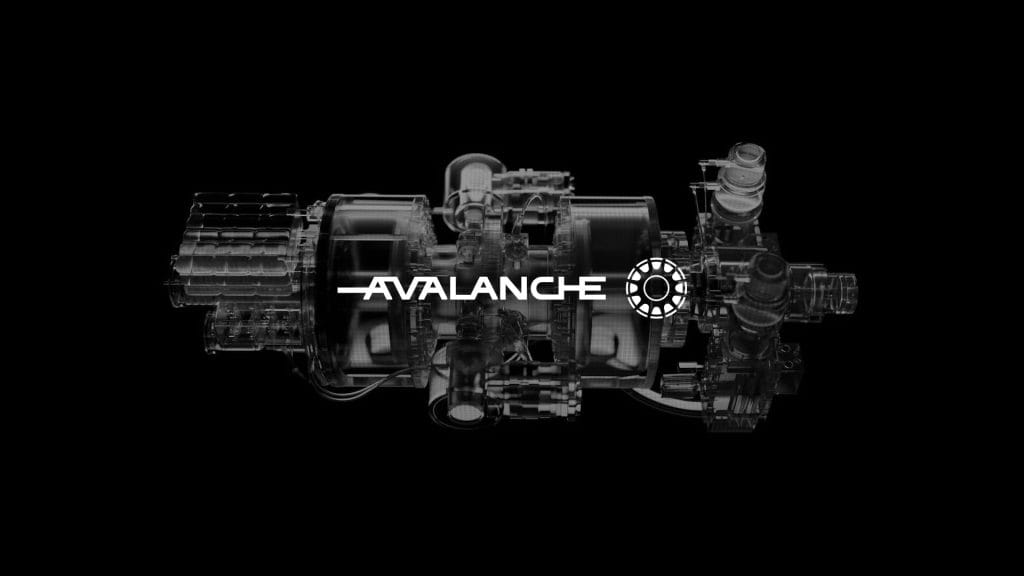
- $29 million funding round led by RA Capital Management supports commercial-scale fusion licensing, equipment buildout, and workforce expansion
- Capital unlocks private matching funds for a $10 million Washington State green jobs grant, linking public policy with private investment momentum
- FusionWERX test facility positions Avalanche to pursue net-energy compact fusion and early commercial applications across grid, defense, and space markets
Funding Targets Commercial Fusion Readiness
Avalanche Energy has secured $29 million in new funding led by RA Capital Management as the fusion startup pushes toward commercial licensing and real-world deployment of compact fusion systems. New investors include 8090 Industries and Overlay Capital, while Congruent Ventures, Founders Fund, Lowercarbon Capital, and Toyota Ventures increased their commitments, reflecting growing investor confidence in a sector still navigating scientific risk and regulatory uncertainty.
The financing arrives alongside a $10 million grant from the Washington State Department of Commerce Green Jobs Grant Program, with the private round providing required matching capital. The blend of public and private funding illustrates how state-level policy support is beginning to shape the next wave of advanced energy infrastructure, particularly in technologies that remain years from grid-scale maturity.
“We’ve achieved significant breakthroughs on the plasma physics side that have kept us intensely focused on advancing our technology over the past six months,” said Robin Langtry, CEO and co-founder of Avalanche Energy. “The new funding will enable us to accelerate the company to the next phase – achieving licensing for commercial-scale fusion operations and preparing for our Deuterium-Tritium Q>1 test program. The strong support from both existing and new investors validates the technical progress we’re making toward practical fusion energy.”

FusionWERX Facility Anchors Commercial Strategy
Much of the capital will be directed toward scaling FusionWERX, Avalanche’s commercial-scale fusion test facility launched in April 2025. Designed to operate under a broad-scope radioactive materials license, the site is expected to reach full operational status by 2027 with advanced tritium handling capabilities.
The facility is positioned not only as Avalanche’s internal testing platform but as infrastructure for the wider fusion ecosystem, offering materials testing, workforce training, and technology validation. For policymakers and investors, the project reflects a growing shift from purely experimental fusion research toward industrial infrastructure capable of supporting future supply chains.
Funding will also support procurement of long-lead equipment, including superconducting magnets, and expansion of the company’s technical workforce. Avalanche says its next-generation compact fusion machines are being designed for multiple use cases beyond electricity generation, including material irradiation, mobile power systems, and off-grid energy applications.
“Avalanche is unique among companies in the fusion space in its ability to rapidly iterate to improve and advance its compact modular technology as well as its ability to generate near-term revenue prior to energy break-even,” said Kyle Teamey, Managing Partner, Planetary Health at RA Capital Management. “We’re excited to support the Avalanche team as they move efficiently towards crucial mobile, stationary, and space power-generation markets with massive potential.”

RELATED ARTICLE: Toyota Pumps $300 Million into Early-Stage Tech and Climate Solutions
Technical Breakthroughs Shape Investor Confidence
The funding round follows a series of technical milestones that the company says strengthen its path toward net-energy fusion. In 2025, Avalanche achieved a vacuum high-voltage breakthrough, operating its fusion system at 300,000 volts, a performance level tied to improved efficiency in magneto-electrostatic fusion.
The company has also published multiple peer-reviewed papers on its Orbitron plasma confinement approach, reinforcing a strategy that blends academic validation with rapid engineering iteration. Avalanche’s development model prioritises faster design cycles, testing new configurations within days rather than the multi-year timelines typical in large fusion projects.
“What drew us to Avalanche is their focus on commercial systems, not just experiments,” said Rayyan Islam co-founder and General Partner of 8090 Industries. “FusionWERX, modular fusion machines, isotopes and rapid iteration — this is a team building commercial infrastructure from the beginning. They are creating the industrial backbone that fusion has always needed to move out of the lab and into the real economy and they have a clear path from physics to commercial product. We are excited for Avalanche’s future and equally excited for how they will accelerate the commerciality of the fusion market at large.“

Governance, Finance And Climate Implications
For investors and corporate energy buyers, Avalanche’s strategy highlights a broader transition underway in the fusion sector. Rather than waiting for large-scale power plants, startups are targeting near-term commercial markets such as defense, space propulsion, and remote energy systems, areas where smaller modular devices may achieve earlier revenue streams.
Regulatory licensing remains a central challenge. Achieving approvals for tritium handling and radioactive materials operations will test governance frameworks that were not originally built for privately funded fusion companies. At the same time, climate-focused investors are increasingly positioning fusion within long-term decarbonisation portfolios, viewing early infrastructure projects as strategic bets on future energy security.
Avalanche’s approach reflects an emerging narrative across advanced energy markets: capital is beginning to flow toward platforms that promise both technological progress and scalable industrial ecosystems. As governments explore new clean power pathways alongside renewables and nuclear fission, compact fusion systems are moving from theoretical promise toward structured commercial roadmaps, reshaping how the energy transition may unfold over the coming decades.
Follow ESG News on LinkedIn

The ESG News Editorial Team is comprised of veteran financial journalists and sustainability analysts dedicated to providing real-time, objective reporting on global ESG regulations, climate finance, and corporate governance. Our desk monitors daily developments from the SEC, IFRS, CSRD and international regulatory bodies to ensure our 1M+ readers receive accurate, data-driven insights into the evolving sustainable investment landscape. Follow the ESG News Editorial Team for expert reporting on global sustainability standards, ESG disclosures, and climate policy. Access over 10,000 investigative reports and real-time updates.