
BII Invests $33 Million in GreenCell to Scale Electric Bus Fleet for India’s Clean Transport Push
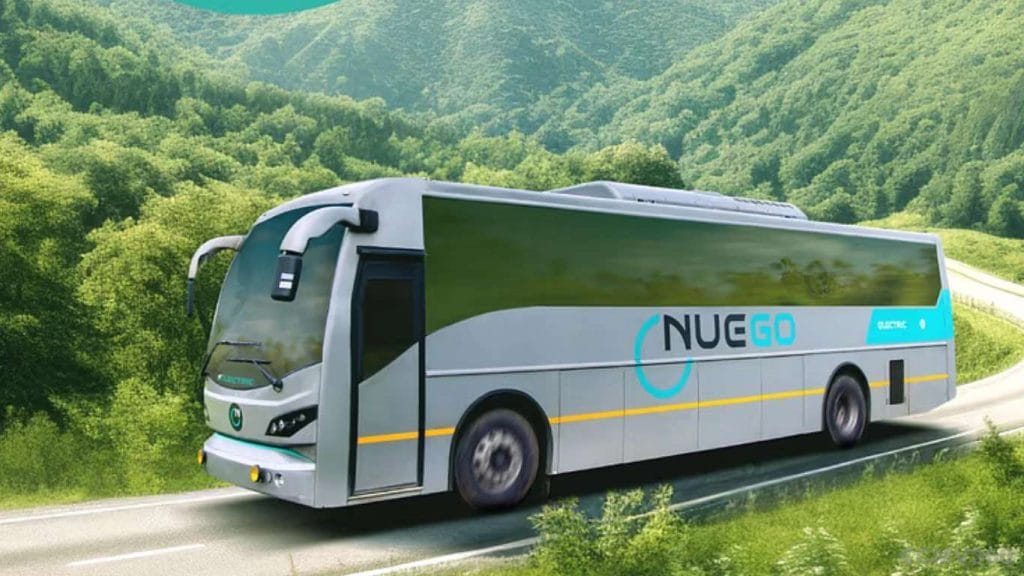
- $89 million mezzanine package from BII, IFC and Tata Capital to expand India’s e-bus fleet
- Fleet expected to grow from 1,200 to 3,700 buses under national electrification programs
- Investment aligns with India’s 2030 EV penetration target and public health priorities
British International Investment has committed $33 million to GreenCell Mobility as India accelerates the shift from diesel fleets to zero emission public transport. The financing forms part of an $89 million mezzanine package provided alongside the International Finance Corporation and Tata Capital.
India’s transport sector emits roughly 12 percent of the country’s energy related greenhouse gases. Pollution levels have become a health and productivity concern for major cities, shaping both government policy and investor interest in clean mobility. The Government of India has set a national target of 30 percent electric vehicle penetration by 2030. That target reinforces the urgency to electrify mass transit where emissions and particulate exposure are most concentrated.
Scaling Electric Buses Through Mezzanine Finance
GreenCell Mobility is backed by Eversource Capital and operates India’s largest manufacturer agnostic electric bus platform. Its current fleet of more than 1,200 e buses serves intra city and intercity routes and is supported by more than 270 charging stations across the country. The new financing is intended to expand the fleet to 3,700 buses and extend services across Delhi, Madhya Pradesh, Andhra Pradesh, Bihar and Puducherry.
The expansion will run through the National E Bus Program and PM Seva E Mobility initiative. These schemes illustrate New Delhi’s preference for combining concessional capital, blended finance, and public procurement to accelerate early stage energy transition technologies with network effects. E buses are viewed as a critical test case for India’s climate industrial policy because of the technology’s operational complexity, infrastructure requirements and the potential to reduce urban air pollution.
RELATED ARTICLE: British International Investment Deploys $150M to FirstRand to Cut Industrial Emissions
Climate Strategy and Development Finance Mandates
British International Investment views electric mobility as a core pillar of its climate investment strategy in India. By using mezzanine instruments, development finance institutions can share risk and attract additional private investors into less mature sectors. The structure also allows project developers to scale faster than they could through senior debt alone.
Shilpa Kumar, Managing Director and Head of India at BII said, “Climate action is a key priority for BII in India, with electric mobility as a key pillar of our climate investment strategy. Getting more electric buses on the roads is an effective way to decarbonise public transport at scale. Our investment in GreenCell Mobility reflects our commitment to supporting proven platforms that accelerate clean mobility.”
Implications for Investors and Operators
For investors, the GreenCell transaction demonstrates how public health, climate and industrial priorities are converging in India’s urban transport sector. The deal aligns with municipal ambitions to meet air quality standards while reducing fuel import dependence and improving the reliability of intercity travel. Blended finance is emerging as a practical mechanism to support the sector’s transition from pilot scale to commercially viable networks.
Operators face challenges related to charging infrastructure, range, and maintenance costs. However, national programs are beginning to standardise procurement and tariffs, which can lower counterparty risk and improve financing conditions. As India’s grid integrates more renewable power, the carbon intensity of electric travel is expected to fall further, strengthening the climate case for e buses.
National and Global Stakes
India’s approach to mobility electrification is drawing international attention because of the scale of its transport demand and the country’s role in global climate negotiations. Successful demonstration of electric bus fleets at national scale could influence emerging market policy design and investment flows across Asia, Africa and Latin America. It also reinforces that public transit fleets can be early movers in decarbonisation when national governments pair policy targets with blended finance and clear procurement pathways.
BII’s investment in GreenCell builds on its wider support for India’s EV ecosystem. The institution has been expanding its exposure to climate mitigating initiatives and green technology platforms that can speed the country’s energy transition. For India, the strategy combines health, mobility and industrial goals, and positions electric buses as a practical bridge between climate ambition and on the ground implementation.
If you want a second pass with a shorter lede, a more financial framing, or more geopolitical color around India’s 2030 climate posture, tell me which angle you want to elevate.
Follow ESG News on LinkedIn