China Issues Climate Disclosure Standard Aligned With ISSB, Laying Groundwork For Mandatory Corporate Reporting
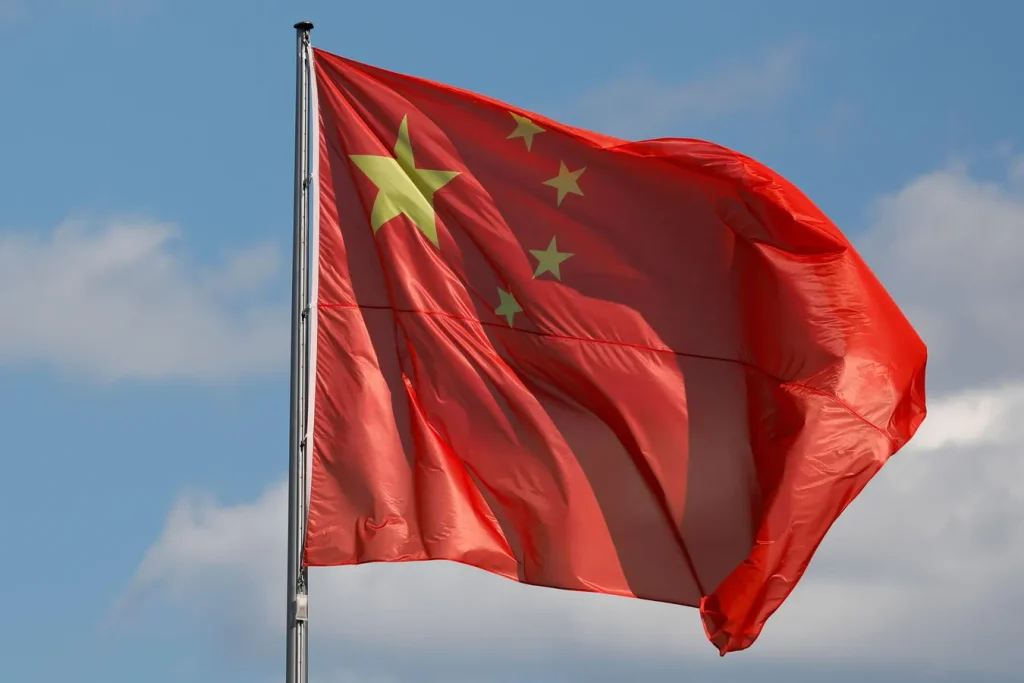
- China has released a national climate disclosure standard aligned with the ISSB framework, positioning climate risk reporting as a core element of capital allocation and corporate governance.
- The standard is voluntary at launch but is designed to expand across listed and non listed firms, large enterprises and SMEs, with mandatory requirements expected over time.
- Industry specific guidance for high emitting sectors including power, steel, cement, fossil fuels and automobiles is already in development, signalling rapid operationalization.
China has formally released its first national corporate climate disclosure standard, marking a decisive step toward embedding climate risk, opportunity and impact reporting into the country’s financial and regulatory system. The Ministry of Finance announced the publication of Corporate Sustainable Disclosure Standard No. 1 Climate Trial in coordination with multiple central ministries, regulators and the central bank, confirming that climate reporting will become a foundational element of China’s green transition strategy.
The standard is positioned as voluntary in its initial phase, but the Ministry of Finance made clear that it is designed as a transitional framework. Application will expand progressively in scope and depth, moving from qualitative to quantitative disclosures, from listed companies to non listed firms, from large enterprises to small and medium sized businesses, and ultimately from voluntary adoption to mandatory compliance.
A policy tool for China’s green transition
According to the ministry, the climate standard is intended to serve as a core mechanism for advancing China’s green and low carbon economic transformation. Officials said the framework will help address climate change while improving the quality and credibility of corporate disclosures, reducing greenwashing risks, and directing capital toward low carbon activities.
The ministry stated that the guidelines will “establish a transparent, comparable, and reliable climate information disclosure system, strengthen the supply of standards to support green and low carbon development, help guide market expectations, regulate corporate behavior, and scientifically assess the progress of transformation, and provide key policy tools and institutional infrastructure for transforming the ‘dual carbon’ target from a national macro strategy to corporate micro actions.”
China has committed to peak carbon emissions before 2030 and achieve carbon neutrality by 2060. Translating those national goals into corporate level action has become a central focus for policymakers, particularly as climate risk increasingly intersects with financial stability, industrial policy and global trade.
Structural alignment with ISSB standards
The climate disclosure standard is closely aligned with the IFRS Foundation’s International Sustainability Standards Board climate framework, known as IFRS S2. The Ministry of Finance said the Chinese standard is designed to “structurally converge” with international rules while incorporating domestic priorities.
The framework mirrors the core pillars of IFRS S2, including Governance, Strategy, Risk and Opportunity Management, and Metrics and Targets. However, Chinese regulators introduced additional requirements that go beyond the international baseline.
Most notably, companies are required to disclose climate related impact information. This includes the actual and foreseeable impacts of business activities and value chain operations on climate change, not only the financial risks posed to the company. This expansion reflects China’s emphasis on real economy transformation alongside financial risk management.
PwC noted in a recent analysis that the standard is “intended to produce functionally equivalent results” to the ISSB framework, although “in selected areas, the level of granularity and specificity is beyond what IFRS 2 requires”.
RELATED ARTICLE: China Drives $80 Billion in Overseas Clean Technology Expansion
Sector guidance signals rapid rollout
While the published standard sets common disclosure requirements across industries, Chinese authorities confirmed that detailed sector specific guidance is already under development. Priority sectors include power generation, steel, coal, petroleum, cement, fertilizers, aluminium, hydrogen and automobiles.
The Ministry of Finance said this approach will create a full chain application system combining basic guidelines, specific disclosure requirements and industry level implementation rules. For high emitting and strategically important sectors, this is expected to accelerate consistent data production and enable regulators and investors to assess transition progress with greater precision.
From voluntary to mandatory disclosure
Although companies are not yet required to comply, the policy direction is explicit. The ministry said implementation will be prioritised in key areas before expanding nationwide, with mandatory disclosure requirements to be introduced once scope and technical readiness are established.
A timeline for mandatory adoption has not yet been announced, but the breadth of regulatory coordination suggests that climate reporting will soon become a standard expectation for Chinese corporates, particularly those accessing public markets or policy linked financing.
For global investors and multinational firms operating in China, the standard strengthens regulatory alignment with international sustainability frameworks while reinforcing China’s distinct emphasis on transition outcomes. As climate disclosure becomes embedded in corporate governance, capital markets and industrial policy, the framework signals that climate data will increasingly shape how risk, performance and long term value are assessed in the world’s second largest economy.
Follow ESG News on LinkedIn