Equitable Earth Raises $13.8 Million to Scale Certification of Nature-Based Carbon Projects

- Financing round lifts total funding above EUR 25 million for nature-based carbon certification
- Certified methodologies recognized against ICVCM Core Carbon Principles
- Capital focused on technology, methodologies, and accelerating global supply
Equitable Earth has secured EUR 12.6 million to expand globally as demand intensifies for trusted, high-integrity nature-based carbon credits. The round was led by a United States family office with participation from existing investors including AENU, noa and Localglobe, bringing total funding above EUR 25 million. Executives said the capital will accelerate certification capacity, bolster technology and data systems, and extend methodologies into new ecosystems.
The company has emerged as one of the most closely watched providers of digital-first certification in the voluntary carbon market. Its programme has been recognized as eligible under the Integrity Council for the Voluntary Carbon Market’s Core Carbon Principles, currently the highest benchmark for quality. Independent carbon ratings firm Sylvera has cited Equitable Earth’s Afforestation, Reforestation and Revegetation methodology as among the most rigorous in the market, and analysts expect similar assessments for its REDD+ methodology released this year.
A Market Seeking Speed, Trust and Scale
Investment flows into nature-based climate solutions continue to lag scientific and policy priorities even though reforestation, avoided deforestation, peatland restoration and landscape conservation are among the fastest, most cost-effective climate interventions available. The constraint has not only been finance, but also confidence in credit quality, permanence, additionality and community benefit.
Equitable Earth’s model attempts to close that trust gap by standardizing accounting and deploying digital measurement, reporting and verification tools. Its integrated platform brings carbon accounting and risk modelling in-house, reducing developer uncertainty and avoiding fragmented third-party processes that have historically slowed project timelines.
The firm’s approach also requires projects to deliver measurable outcomes across climate, nature and livelihoods. That differs from legacy models that treated community and biodiversity benefits as secondary or optional. The company embeds structured requirements for participation and equitable benefit sharing with Indigenous Peoples and Local Communities, an area that has drawn heightened scrutiny from buyers, ratings agencies and NGOs.
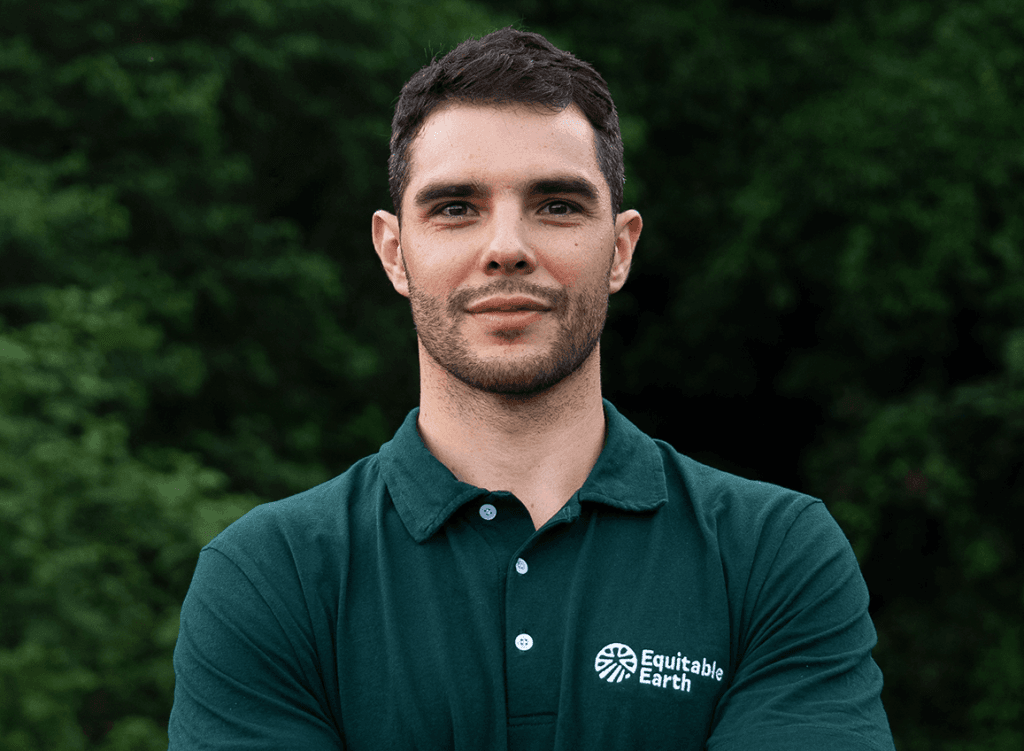
“Equitable Earth continues to focus on enabling organisations to protect and restore the natural world by certifying projects in a trusted, scalable way. This new round of funding allows us to continue to grow and establish ourselves as the global standard for nature-based projects,” said Thibault Sorret, Chief Executive of Equitable Earth.
“The carbon markets need scalable, reliable projects that deliver real climate, ecological, and social outcomes. This funding helps Equitable Earth to meet that demand, cementing its position as a market leader in high-integrity, nature-based certification,” said Arjun Jairaj of noa.

RELATED ARTICLE: Iberdrola Launches Carbon2Nature, Nature-Based Carbon Reduction Project
Deployment Priorities and Market Momentum
Executives said funding will be directed toward expanding data architecture, modelling capabilities and user-centric tools to speed certification and improve transparency. Hiring across engineering, research and development, commercial and certification teams is planned to maintain throughput as the pipeline of projects grows. The firm aims to certify millions of additional hectares and broaden methodologies to cover more ecosystems.
For buyers, the appeal lies in both scientific rigor and clearer governance. Corporate offtakers seeking to meet Science Based Targets or net-zero commitments have become more selective, with reputational and regulatory risk rising around low-quality credits. The emergence of ICVCM’s Core Carbon Principles, alongside workstreams at the Voluntary Carbon Markets Integrity initiative, has catalysed a shift toward standard-setting and verified social and ecological outcomes.
Global Stakes for Carbon Markets
For C-suite leaders, asset managers and insurers, the broader context is a carbon market entering a pivotal period. COP processes continue to debate market rules under Article 6, while national authorities weigh guardrails for voluntary markets within domestic climate strategies. As quality norms tighten, natural climate solutions are expected to capture more of the financing stack, provided certification and monitoring systems keep pace.
The implications are significant for frontier economies where biodiversity and deforestation pressures collide with limited fiscal space. Standardised, high-integrity nature-based credits can unlock climate finance at speed, channel benefits to communities, and protect ecosystems with high carbon and biodiversity value. If Equitable Earth’s model scales as planned, it could influence how developers structure projects, how corporations source credits, and how regulators think about interoperability between voluntary and compliance regimes.
The market remains in transition, yet the direction is clear. Quality is becoming investable, verification is becoming digital, and community outcomes are becoming central to integrity claims. Nature-based carbon credits are unlikely to meet global demand without new certification infrastructure and measurable social and ecological performance.
Equitable Earth’s latest financing reflects investor conviction that these capabilities can be built. What remains to be tested is how rapidly supply can scale, how buyers respond as standards tighten, and how governance frameworks evolve across borders. The answers will shape whether nature-based solutions fulfil their global climate potential.
Follow ESG News on LinkedIn

The ESG News Editorial Team is comprised of veteran financial journalists and sustainability analysts dedicated to providing real-time, objective reporting on global ESG regulations, climate finance, and corporate governance. Our desk monitors daily developments from the SEC, IFRS, CSRD and international regulatory bodies to ensure our 1M+ readers receive accurate, data-driven insights into the evolving sustainable investment landscape. Follow the ESG News Editorial Team for expert reporting on global sustainability standards, ESG disclosures, and climate policy. Access over 10,000 investigative reports and real-time updates.