Fortescue, China Baowu Launch Hydrogen Based Trial to Cut Steelmaking Emissions
• Partnership targets hydrogen-based, plasma-enhanced green iron technology capable of bypassing sintering, pelletising and coking.
• Industrial trial line planned to produce 5,000 tonnes of hot metal, with Fortescue providing project capital.
• Collaboration advances decarbonization in a sector responsible for roughly 7 percent of global CO₂ emissions, with implications for iron ore supply quality and trade flows.
Perth and Beijing Move to Test a New Route for Green Steel
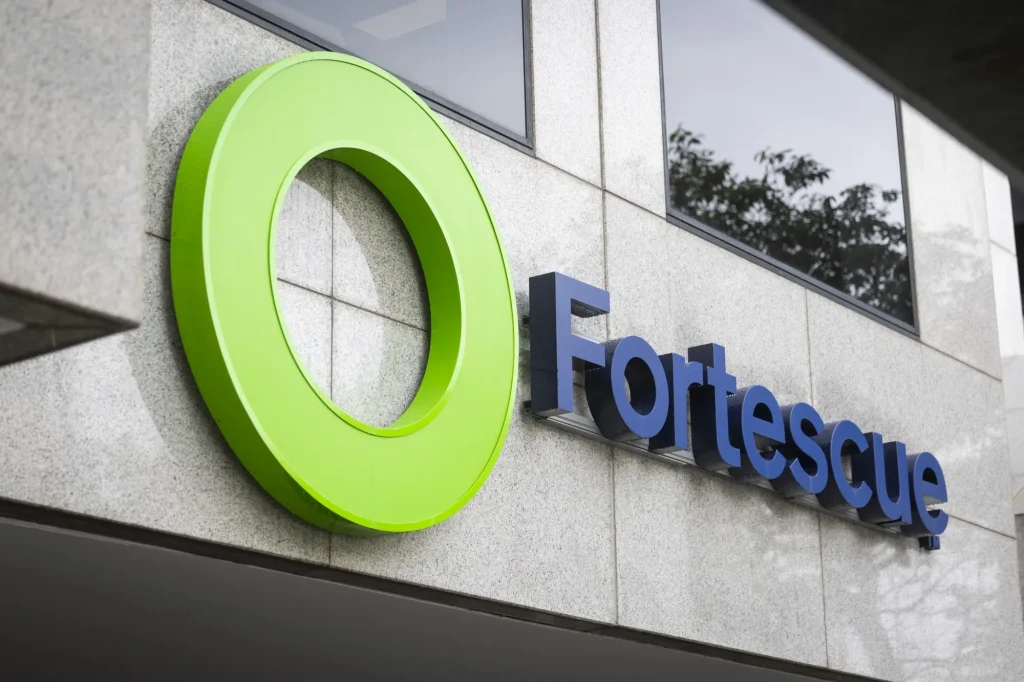
Perth and Beijing are preparing for a fresh phase of low-carbon steel experimentation as Fortescue confirmed a cooperation agreement with Taiyuan Iron and Steel Group, a subsidiary of China Baowu, the world’s largest steelmaker. Announced in a company statement shared on Fortescue’s WeChat account, the partnership focuses on hydrogen-based, plasma-enhanced smelting that could remove some of the most emissions-intensive steps in the steel value chain.
The agreement, signed in late November, positions Australia’s fourth-largest iron ore exporter alongside China’s most influential steelmaking group at a moment when global producers are under pressure to find commercial pathways for near-zero steel. The work will begin with a shared trial project aimed at producing 5,000 tonnes of hot metal through a process that avoids sintering, pelletising and coking—three stages that collectively generate a significant carbon burden.
Agustin Gus Pichot, Fortescue’s chief executive for growth and energy, framed the effort as both an innovation challenge and a test of the company’s core product. “We are exploring the technology for green smelting using Fortescue’s Pilbara iron ore,” he said.

Technology Aimed at Removing One of Steelmaking’s Dirtiest Steps
Sintering, pelletising and coking remain the most carbon-heavy elements of traditional blast furnace operations. By investigating a hydrogen-based plasma route that could skip these steps entirely, both companies are attempting to crack a long-standing barrier: how to scale green iron production without relying on ultra-high-grade ore, expensive preprocessing, or a complete rebuild of existing steel plants.
The pilot line, which the companies plan to design, build and operate jointly, is intended to demonstrate whether the process can produce industrial quantities of hot metal at consistent quality. While the 5,000-tonne target is modest relative to commercial blast furnace output, the project is seen in Beijing and Canberra as a necessary bridge between lab-scale testing and market-ready deployment.
Fortescue said it will provide capital for the project, though the company did not disclose the financial size of the investment. The move aligns with its broader pivot into green energy and decarbonisation technologies, including its push for hydrogen production and green iron projects within Australia.
RELATED ARTICLE: Fortescue Secures $2 Billion Yuan Loan to Advance Decarbonization Push
Implications for Iron Ore Markets and Australian Miners
The steel sector’s decarbonisation push has already heightened demand for high-grade ore suited to direct reduced iron (DRI) technologies. Australian miners, heavily weighted toward low- and medium-grade Pilbara ores, face a structural challenge as steelmakers seek to maximise efficiency in low-carbon furnaces.
The Fortescue–TISCO partnership suggests a parallel strategy: rather than relying solely on upgrading ore quality, develop technologies that allow current iron ore characteristics to work in green smelting applications. If successful, the plasma-enhanced hydrogen route could widen the spectrum of ores usable in low-carbon steelmaking, offering an alternative to the expensive beneficiation investments some producers are now contemplating.
For China, the collaboration aligns with national priorities to accelerate industrial decarbonisation while maintaining energy security and reducing reliance on imported metallurgical coal. For Australia, it reinforces the strategic need to keep iron ore relevant in a market rapidly shifting toward climate-aligned production.
What Executives and Investors Should Watch
The cooperation arrives as global steelmakers weigh multi-billion-dollar decarbonization pathways ahead of tightening regulations in Europe, the United States and parts of Asia. Hydrogen-based technologies, including DRI and emerging plasma systems, are considered central to achieving net-zero steel, but face cost, infrastructure and energy-availability hurdles.
Investors will pay close attention to whether the Fortescue–TISCO trial can demonstrate stable yields at commercially credible energy inputs. The project’s learning curve could influence the pace of investment decisions across Asia, where most of the world’s blast furnaces sit and where retrofitting remains more feasible than full replacement.
The collaboration also highlights a broader geopolitical dimension: the future of Australia–China industrial cooperation in an era of climate-driven industrial policy. Green steel technologies may become one of the few contested, yet mutually beneficial, areas of alignment.
A Sector Facing Pressure to Prove Its Path to Net Zero
Steel accounts for roughly 7 percent of global emissions and remains one of the hardest industries to decarbonise. With demand expected to rise as emerging economies urbanise and infrastructure needs expand, the urgency for new low-carbon production routes is intensifying.
If the Fortescue–TISCO project validates a path that uses mainstream ore without high-emissions preprocessing, it could broaden access to green steel technologies for producers across Asia, Africa and Latin America. That outcome would reshape trade patterns, iron ore pricing dynamics and emissions trajectories across a sector central to global economic development.
The trial’s results will matter well beyond Australia and China. A successful demonstration could accelerate adoption of hydrogen-based smelting across the world’s steel belt, pushing the industry closer to a credible net-zero pathway at a time when policymakers, financiers and heavy industry leaders are demanding a clearer route forward.
Follow ESG News on LinkedIn

The ESG News Editorial Team is comprised of veteran financial journalists and sustainability analysts dedicated to providing real-time, objective reporting on global ESG regulations, climate finance, and corporate governance. Our desk monitors daily developments from the SEC, IFRS, CSRD and international regulatory bodies to ensure our 1M+ readers receive accurate, data-driven insights into the evolving sustainable investment landscape. Follow the ESG News Editorial Team for expert reporting on global sustainability standards, ESG disclosures, and climate policy. Access over 10,000 investigative reports and real-time updates.