
Global Regulators Meet in Abu Dhabi to Tackle Risks in Expanding Private Credit Market
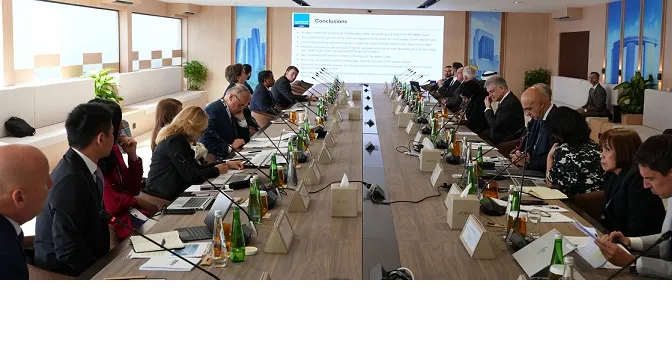
• Regulators from MENA, Europe, Asia and the US met under closed door conditions to assess risks in the fast growing private credit sector.
• Discussions focused on leverage, liquidity, retail exposure and the wider implications for Non-Bank Financial Intermediation.
• Outcomes will shape future governance priorities as global financial systems adapt to rapid expansion of private lending.
Abu Dhabi Hosts High-Level Regulatory Gathering
Senior regulators from the Middle East, Europe, Asia and the United States convened in the UAE capital for the fourth Global Financial Regulators Summit, held during Abu Dhabi Finance Week 2025. Hosted by the Financial Services Regulatory Authority of Abu Dhabi Global Market, the closed-door forum has become one of the most influential annual meetings for supervisors confronting structural shifts across global finance.
The session drew leaders from jurisdictions facing increasing pressure to re-evaluate how fast-growing capital pools, new technologies and shifting risk profiles are reshaping markets. Organisers described the gathering as a platform designed to advance “high-level collaboration on regulatory innovation, emerging challenges, and evolving financial frameworks,” with the shared objective of protecting the resilience and integrity of financial systems undergoing rapid change.
Private Credit Takes Center Stage
The rise of private credit dominated the agenda. Once a niche strategy, private credit funds have grown into one of the most dynamic pockets of the global financial system, surpassing trillions in assets and expanding well beyond traditional institutional channels. That growth has accelerated discussions around the role of Non-Bank Financial Intermediation and the pace at which regulatory frameworks must adapt.
Regulators highlighted that rapid expansion has drawn heightened scrutiny worldwide. Concerns ranged from leverage levels and liquidity management to the degree of interconnectedness with the broader financial system. Another area gaining attention is increasing retail appetite for private credit-linked products, raising questions about suitability, transparency and market access.
One official noted that market participants have been unusually vocal in recent months, urging regulators to provide guardrails without constraining capital formation. “Industry views matter, but the pace of growth requires thoughtful oversight,” the official said. “We are dealing with an ecosystem that is evolving faster than many regimes were designed to accommodate.”
Assessing Emerging Risks
Two closed-door roundtables shaped the core of the summit. The first examined recent market developments, mapping concentrations of risk and identifying stress points that would matter in a downturn. Supervisors exchanged observations on fund leverage structures, cross-border exposures, and the growing influence of private lenders in corporate finance.
The second session assessed regulatory approaches to emerging vulnerabilities. Participants debated liquidity requirements for vehicles that promise predictable returns but hold illiquid assets, and the tools required to track interconnected exposures. Several delegates referenced lessons from banking supervision, while emphasising that NBFI oversight requires distinct approaches.
A regulator from a major Asian market reflected the tone of the discussion: “Private credit is now central to corporate financing in many jurisdictions. As supervisors, our challenge is to ensure that innovation thrives while systemic risk does not accumulate out of sight.”
RELATED ARTICLE: Abu Dhabi Finance Week Advances Global Asset Management Strategy
From Closed Door Dialogue to Public Forum
Although the summit is designed as an exclusive platform for candid dialogue, core insights were later shared with the wider Abu Dhabi Finance Week audience. The decision to convey outcomes publicly reflected rising interest from investors, asset managers and policymakers in understanding how global regulators are shaping the next phase of private credit oversight.
Attendees from the broader industry welcomed the visibility. One US participant remarked that cross-regional cooperation will be essential as capital increasingly flows across borders. “No jurisdiction can deal with these risks alone. The system is too integrated, and the market has outgrown domestic boundaries,” he said.
Implications for Global Finance Leaders
For C-suite executives, investors and governance specialists, the summit’s focus confirms that private credit will remain a priority for supervisory regimes over the coming year. Questions around transparency, liquidity planning, and retail participation are likely to influence new rulemaking, stress-testing approaches and reporting expectations.
The gathering also reinforced Abu Dhabi’s position as a convening hub for financial governance. With ADGM’s regulatory regime attracting expanding cross-border activity, the FSRA is positioning itself as a bridge between regional and global market priorities.
As financial systems continue to shift toward non-bank channels, the discussions in Abu Dhabi carry broader significance. The world’s regulators are beginning to align on the need to anticipate risks in markets where growth has outpaced oversight. How they translate these conversations into policy will shape the next phase of global credit markets and the resilience of the wider financial architecture.
Follow ESG News on LinkedIn