
Jupiter Power Expands Credit Facility to $500 Million to Accelerate U.S. Battery Storage Buildout
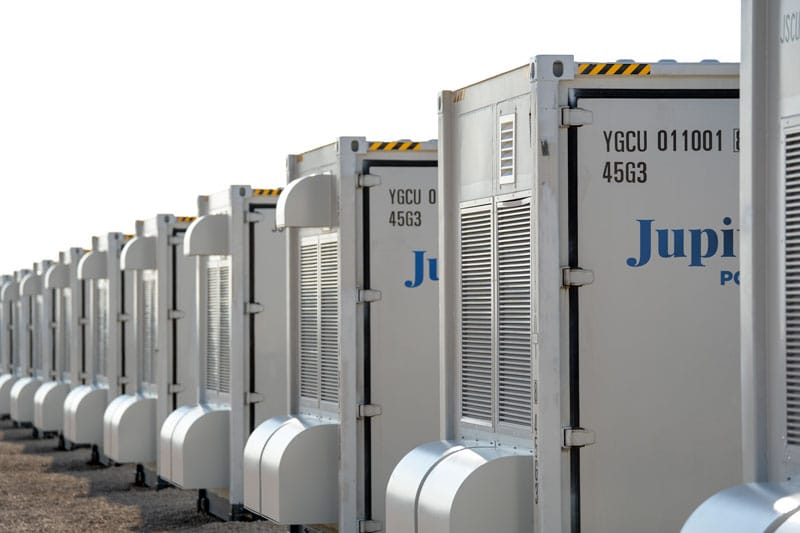
- $500 million senior secured green revolving facility strengthens balance sheet flexibility for U.S. battery energy storage deployment
- Financing backs nearly 8,000 MWh of operating, contracted, or in-construction projects and a development pipeline exceeding 12 GW
- Signals sustained bank appetite for grid-scale storage as a core infrastructure asset supporting energy security and decarbonisation
Jupiter Power has secured a $500 million Senior Secured Green Revolving Loan and Letter of Credit Facility, significantly expanding its financial capacity to advance utility-scale battery energy storage projects across the United States. The facility upsizes an earlier $225 million credit line closed in September 2024 and positions the company to move faster on construction, procurement, and development activity at a moment when grid reliability and flexibility have become national priorities.
The expanded facility provides Jupiter Power with access to revolving borrowings and letters of credit, giving the company the balance sheet agility required to manage multiple large-scale projects simultaneously. In an energy system increasingly shaped by intermittent renewable generation, battery energy storage systems have become essential to stabilising power markets, managing peak demand, and supporting transmission-constrained regions.
Banking Syndicate Reflects Infrastructure-Grade Confidence
The financing was arranged by a syndicate of global banks led by Barclays Bank PLC, HSBC Bank USA, ING Capital, Société Générale, and SMBC, acting as Coordinating Lead Arrangers. HSBC Bank USA also serves as Administrative Agent and Collateral Agent. Legal counsel was provided by Kirkland & Ellis for the borrower and Latham & Watkins for the lenders.
The breadth and depth of the lender group reflect growing institutional confidence in battery storage as a bankable asset class, particularly when backed by long-term contracted revenues. Storage projects are increasingly financed alongside traditional energy infrastructure, rather than treated as experimental or niche investments.
“This upsizing represents another big step in Jupiter Power’s growth and underscores the confidence our banking partners have in our ability to continue delivering high-quality BESS projects with long-term contracted cash flows,” said Jesse Campbell, Chief Financial Officer at Jupiter Power. “This additional liquidity launches us into our post-OBBBA growth phase, supporting not just the major new domestic BESS procurement recently closed but also numerous projects proceeding into construction and major advancement of our development pipeline.”

Scale Matters as Storage Becomes System-Critical
Jupiter Power currently has nearly 8,000 MWh of battery storage projects that are operating, under construction, or under contract. Beyond that, its development pipeline exceeds 12 GW nationwide, placing the company among the largest pure-play storage developers in the U.S. market.
That scale is increasingly relevant as grid operators confront tighter reserve margins, more frequent extreme weather events, and the rapid build-out of renewable generation. Battery storage has moved from a supporting role to a system-critical one, helping utilities manage volatility while deferring costly network upgrades.
From a policy standpoint, storage has also emerged as a cornerstone of U.S. energy security strategy. Federal and state-level incentives have accelerated project pipelines, while procurement programs are pushing developers to deliver at speed and at scale.
RELATED ARTICLE: Redwood Raises $350M to Expand U.S. Energy Storage and Critical Materials Supply
Strategic Importance for Energy Security and Finance
For lenders, the deal highlights how storage platforms with diversified portfolios and contracted cash flows are becoming attractive long-term infrastructure investments. The revolving nature of the facility allows Jupiter Power to recycle capital efficiently as projects reach commercial operation, a structure that aligns with investor expectations for disciplined growth.
“HSBC is proud to support Jupiter Power’s continued growth, as this expanded facility reflects both the strength of their platform and our shared commitment to scaling critical energy storage infrastructure and support energy security across the United States,” said Paul Snow, Head of Renewables, Americas at HSBC Bank USA.

“Energy storage is a critical component of the continued enhancement of grid infrastructure, and Jupiter Power has demonstrated their leadership in this sector. We are proud to partner with the company as they accelerate their build-out,” added Paul Jun, Group Head, Power and New Energies North America at SMBC.
Why This Matters Beyond One Company
Jupiter Power’s expanded credit facility illustrates a broader shift in energy finance. Battery storage is no longer viewed as an adjunct to renewables, but as core infrastructure underpinning decarbonisation, grid resilience, and market stability. As capital flows into storage at scale, developers with execution track records and strong banking relationships are likely to consolidate their positions.
For policymakers, investors, and energy executives, the message is clear. Storage is now central to the energy transition, and the financial system is increasingly structured to support its rapid deployment across the United States and beyond.
Follow ESG News on LinkedIn

The ESG News Editorial Team is comprised of veteran financial journalists and sustainability analysts dedicated to providing real-time, objective reporting on global ESG regulations, climate finance, and corporate governance. Our desk monitors daily developments from the SEC, IFRS, CSRD and international regulatory bodies to ensure our 1M+ readers receive accurate, data-driven insights into the evolving sustainable investment landscape. Follow the ESG News Editorial Team for expert reporting on global sustainability standards, ESG disclosures, and climate policy. Access over 10,000 investigative reports and real-time updates.