
In Golf. Through Golf. LIV’s New Framework Puts Impact at the Centre of Professional Sport.
This is the second in a two-part series on LIV Golf’s sustainability and community impact. Read Part One: Beyond the Fairway: How LIV Golf Is Rewriting the Playbook on Sustainability and Community Impact.
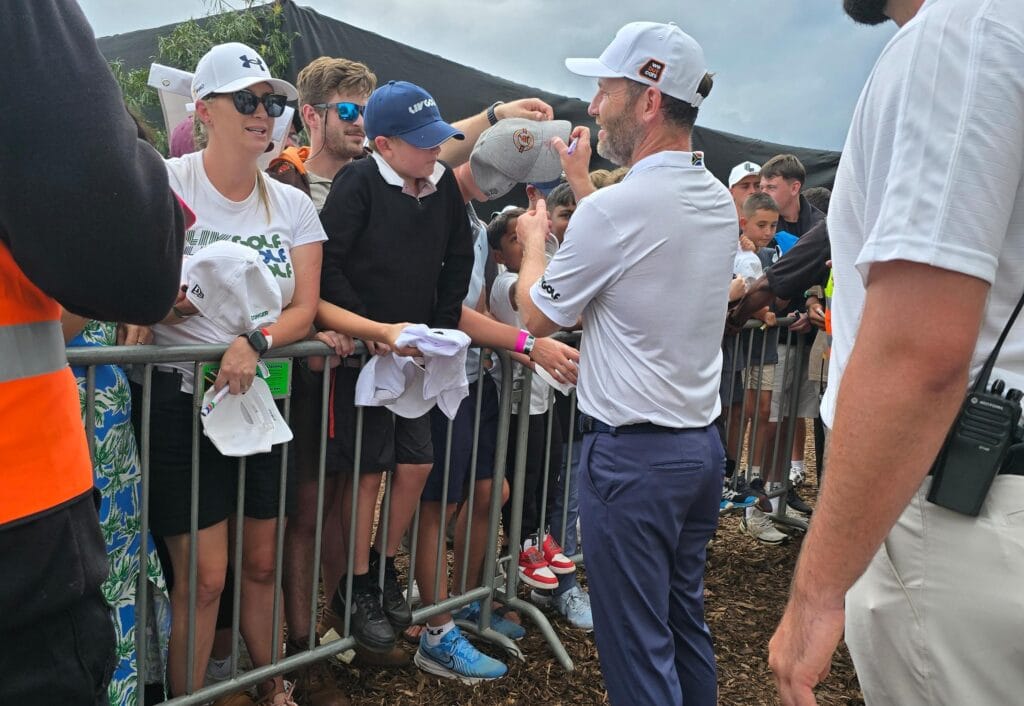
After the final groups came off the course on Saturday at Steyn City, Branden Grace did not head straight to the clubhouse. The Southern Guards GC player stopped outside the media centre and spent the better part of an hour signing autographs for the kids who had gathered hoping for exactly that moment. No cameras were directed at him. No announcement was made. He just stayed.
It is a small moment. But it is also, in a very direct sense, what LIV Golf’s new impact and sustainability framework is built around.
On 31 March 2026, LIV Golf formally announced LIV For Good, a three-pillar platform designed to structure, measure and scale the League’s impact work across its 14 global events in 10 countries. The three pillars are Game, Community and Planet.
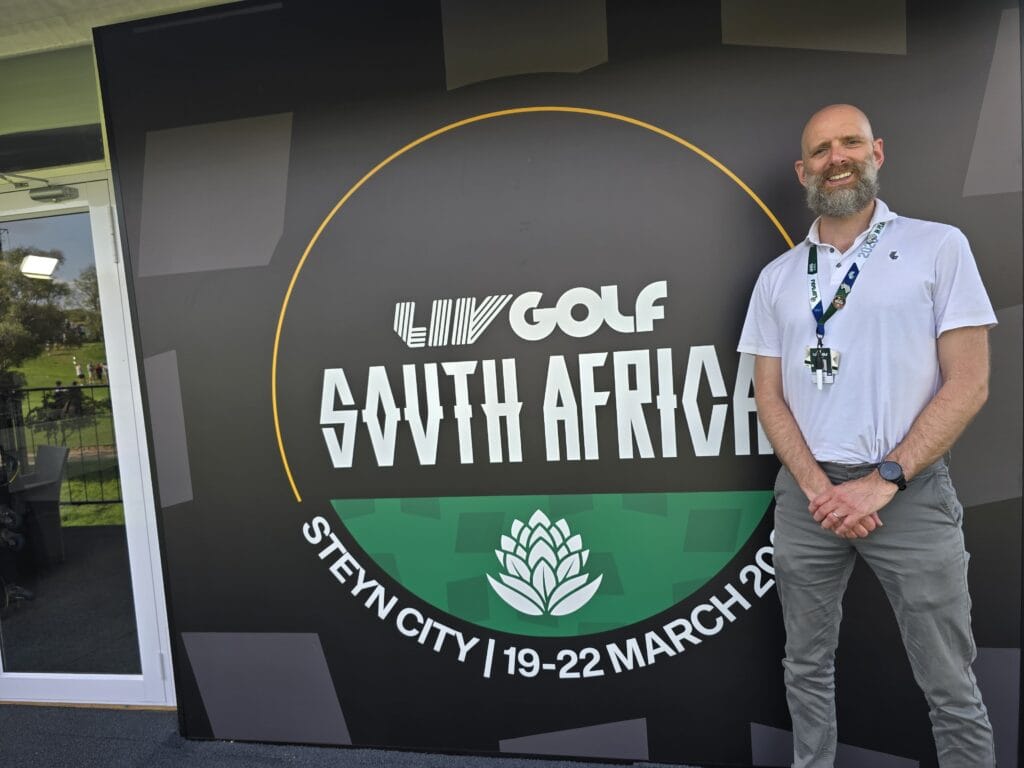
But before it had a name, it had a philosophy. And ESG News was in the room when Jake Jones, SVP of Impact and Sustainability, explained it in his own words on the opening day of LIV Golf South Africa, two weeks before the formal announcement.
“In golf. Through golf.” That was his framing. Four words that explain everything. In golf is about using the game itself to develop people, through playing it, working in it, building a life around it. Through golf is about using the platform of a global sporting tour to drive positive outcomes that extend far beyond the course.
“LIV For Good showcases our commitment to increasing access to golf, setting new environmental standards, and expanding the game’s reach at the grassroots level and beyond the fairways,” said Scott O’Neil, CEO of LIV Golf. “As a global League, we’re able to implement these values across five continents and 10 countries, and I’m excited to continue to deliver on our mission for years to come.”
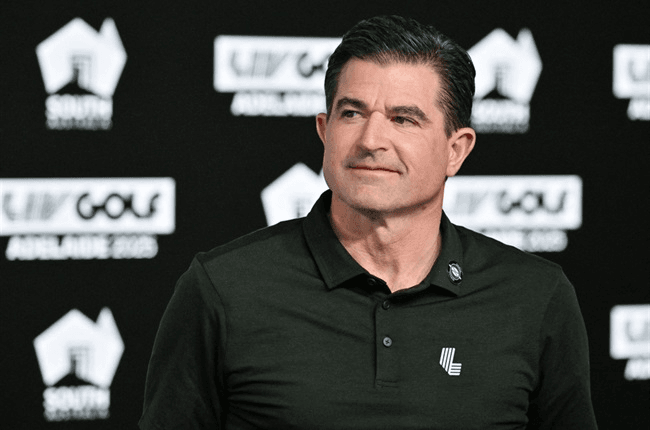
The targets attached to the framework are significant. LIV Golf has pledged to impact five million youth by 2032 and achieve net-zero status by 2040. These are not aspirational statements without structure. They come with KPIs, timelines and transparent reporting.
Game: Clubs in Hands, Doors Left Open
The Game pillar is the most straightforward of the three to explain, and perhaps the most ambitious in scope. Its goal is to grow golf, genuinely and sustainably, by removing the barriers that have historically kept it as a sport of the privileged few.
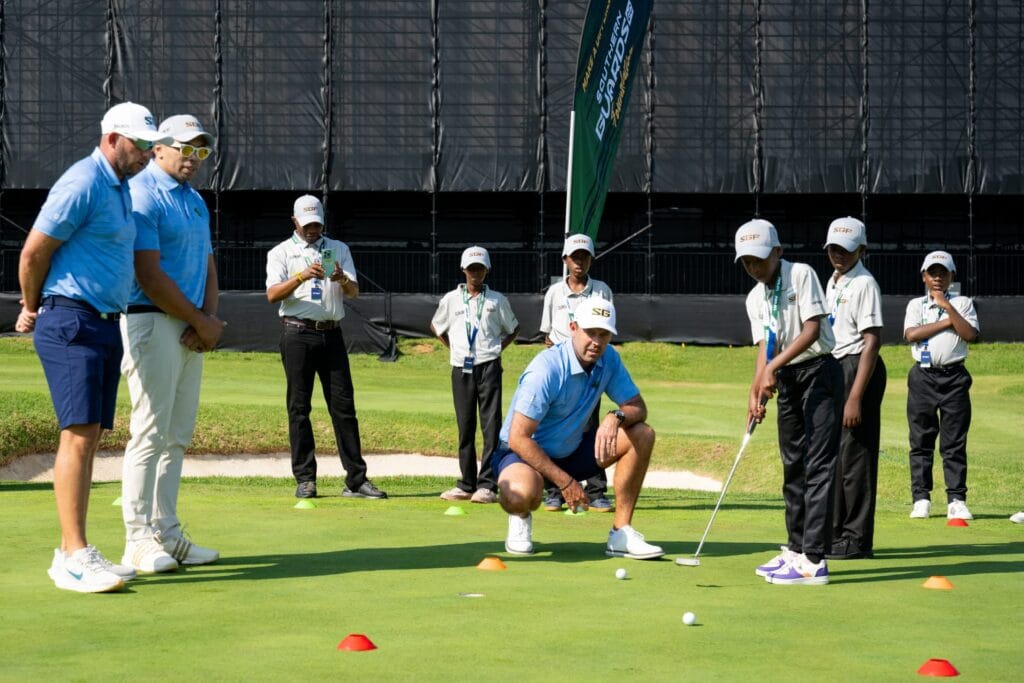
Jones described it plainly in Johannesburg: “Game, as you can imagine, is how do we get more clubs in kids hands, particularly marginalised youth. It might be simulator golf or playful golf with plastic clubs and aerated balls. But give them those principles of just getting the basics of the sport.”
Each year, LIV Golf will introduce 15,000 youth around the world to the game for the first time. That goal will be supported through global partnerships including the R&A’s Women in Golf charter, the Muslim Golf Association, Midnight Golf and ROSHN Rising Stars, as well as through individual team programmes such as the Southern Guards GC Academy Programme and Little Sticks by Majesticks Golf Club.
But the Game pillar extends beyond playing. Jones is equally focused on employment and apprenticeship pathways into the industry. “You don’t have to play to work in golf and there are lots and lots of jobs that you can do in golf. You could be a rigger putting up scaffolding for one of our structures. But it’s still a job, and it’s still in golf.”
Branden Grace staying behind for that hour of autographs is the Game pillar in its most human form. For a child watching golf for the first time, the distance between the spectator and the player matters. Close it, even for one afternoon, and you change the calculus of who the game is for.
Community: Golf as a Development Tool
The Community pillar carries the most ambitious annual target: 400,000 youth impacted through educational programmes and initiatives each year. It is also where Jones becomes most personal in his thinking.
He shared a story from Ecuador that illustrates the philosophy better than any KPI. Working with refugee communities in partnership with the UN Refugee Agency, his team introduced children to playful golf, plastic clubs, simple shots. Three basics: a chip, a long shot, a putt.
“We learned really, really quickly that they started to concentrate, because hitting a static ball requires concentration. And the coaches next to us were like, Wow! these kids are concentrating. So we can apply that concentration into education. If they can concentrate for fifteen seconds on hitting a ball, they can take those fifteen seconds and say, that’s enough for you to learn the first two sentences of this book. And you build it slowly from there.”
It is not a story about golf. It is a story about what golf can unlock in a child who has never had access to structured sport, mentoring or patience.
The Community pillar is led by two anchor global partnerships. The first is with Discovery Education, which co-produces educational resources helping youth explore STEM subjects through the lens of golf. The second is with the UN Refugee Agency, which co-developed the first Golf for Protection Playbook, creating safe spaces and delivering sport-based programming to help individuals and communities recover from trauma.
At the local level, the Southern Guards Foundation Academy Development Programme in Diepsloot, which ESG News covered in Part One of this series, sits squarely within this pillar. Forty children, fifty-two weeks of golf and life skills coaching, with the players themselves showing up alongside them.
Planet: Raising the Standard for Sustainable Sport
The Planet pillar is where LIV Golf’s credentials are strongest on paper, and where the honest work of continuous improvement is most visible.
As the first golf league, tour or major body in the world to achieve ISO 20121 certification for Sustainable Event Management from the British Standards Institution, and with 13 GEO certifications already attained across its events, LIV Golf enters the LIV For Good era with a credible baseline. The annual target is sustainable certification for at least five events per season.
Jones described the ambition on the ground in South Africa the week before the launch: “How do we make sure that the club, the community, the members, the government, the local population can feel proud that we’ve rolled in, we might have caused a bit of disturbance just by being here, but when we’ve gone, you can see that we’ve left minimal footprint.”
The practical mechanisms are detailed. LIV Golf works with BSI and independent auditors to track carbon emissions across all 14 events. It donates repurposable materials to local organisations after every event. It is progressing toward zero-waste events and the long-term commitment to net-zero by 2040.
As Jones told ESG News last week: energy, supply chain, food, waste, community footprint. Every lever is being pulled, at different rates, across markets with vastly different infrastructure and capability. The framework does not pretend otherwise. It just commits to moving further every year.
A Framework Built to Last
What distinguishes LIV For Good from a standard corporate sustainability announcement is the specificity of its commitments and the evidence already behind them. One million youth impacted before the framework even had a name. ISO 20121 achieved. Thirteen GEO certifications completed. A UN partnership. A Golf for Protection Playbook already in use in refugee communities.
“These are not aspirations,” Jones said in the formal announcement. “They are targets with timelines and transparent reporting that push our League, our industry, and the sports landscape as a whole to do more.”
The five million youth target by 2032. Net-zero by 2040. Fifteen thousand new players are introduced to golf every year. Four hundred thousand young lives are touched through community programmes annually.
In golf. Through golf. And now, under a framework that gives that ambition a structure, a timeline and a name.
Outside the media centre at Steyn City on Saturday afternoon, Branden Grace was still signing autographs.
RELATED ARTICLE: LIV Golf Indianapolis Achieves 84% Waste Diversion, Moves Toward Zero Waste By 2026