ORPC Targets Great Lakes Expansion As Rising Power Demand Drives New Hydropower Investment
- Submersible hydropower projects in the Great Lakes could unlock 60–90 MW of new capacity in key urban corridors
- Electricity price increases across New York, Michigan, and Ohio are accelerating interest in localized, baseload clean energy
- Regulatory delays in the US remain a critical barrier, with hydropower projects taking up to eight years to secure licensing
Montreal is positioning itself at the center of a new phase in North American hydropower, as river-based generation technologies move from remote deployments to urban energy systems.
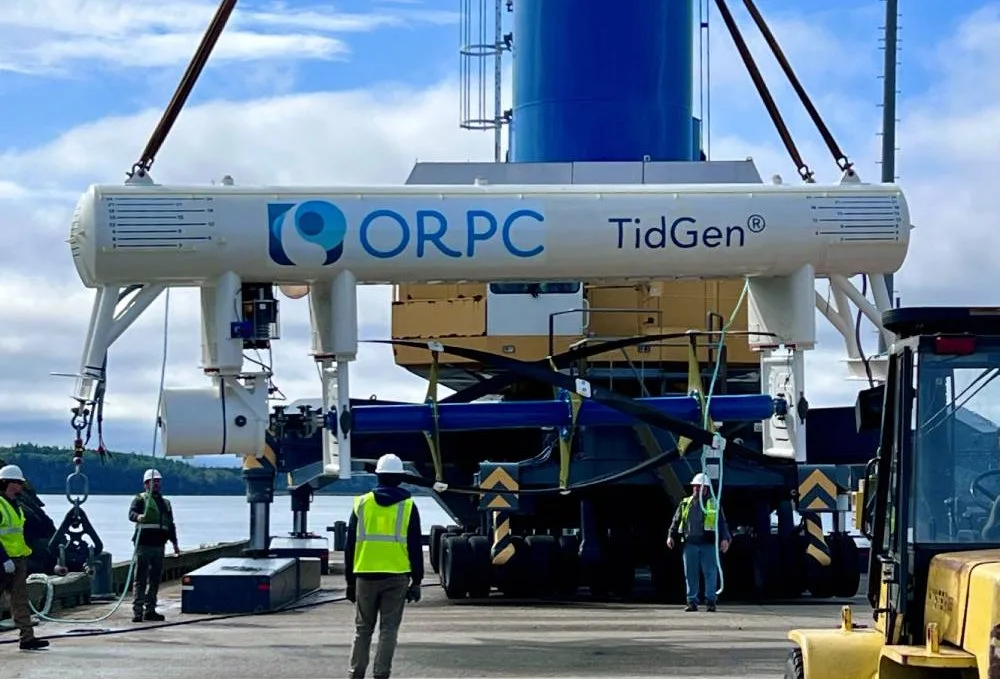
Ocean Renewable Power Company (ORPC) is preparing to install two submersible hydroelectric devices in the St Lawrence River, marking its first urban project after years of operating in Alaska and Maine. The initiative comes as electricity demand rises sharply across the Great Lakes region, driven by population density, industrial growth, and the rapid expansion of data infrastructure.
Urban Hydropower Moves Into Strategic Focus
The Great Lakes region holds one of the largest freshwater systems globally, anchoring major cities including Chicago, Toronto, Montreal, and Detroit. While the lakes themselves lack strong tidal movement, connecting waterways such as the St Lawrence and Niagara rivers provide consistent, high-velocity flows suited to next-generation hydropower.
“The St Lawrence River is one of the best opportunities in North America for our technology because it has consistent, high-velocity water for hundreds of miles. In the Montreal area, there’s 60-90 megawatts of resource potential alone,” said Stuart Davies, ORPC’s chief executive officer. “The Niagara River, the St Lawrence River are big powerful rivers driven by the hydrology of the lakes draining out.”

The company’s turbines, built from carbon fiber and designed to operate fully submerged, generate power from continuous river flow rather than relying on dams or large-scale infrastructure.
Rising Energy Costs Reshape Investment Case
The timing of these deployments is closely tied to pricing pressures across US energy markets. Electricity rates in western New York have already increased following regulatory approval of higher delivery charges, with additional hikes scheduled through 2027. Similar tensions are emerging in Michigan and Ohio, where surging demand from data centers is placing strain on local grids.
For corporate energy buyers, particularly those linked to AI and data storage, reliability is becoming as critical as decarbonization.
“If you’re an industrial customer and you’re thinking about the growth of AI … We can be that 24/7 electricity resource that’s part of a baseload in normal times and if the grid goes down for some reason, that river still runs,” Davies said. “You’re going to have that level of emergency power.”
This positioning aligns hydropower with a broader shift toward distributed, resilient energy systems that can support both climate targets and operational continuity.
RELATED ARTICLE: India Plans $77B Hydropower Expansion as Strategic Buffer to China’s Upstream Dams
Global Momentum Builds Around Marine Energy
Marine and current-based hydropower technologies are gaining traction globally. Scotland has deployed tidal systems capable of powering thousands of homes, while South Korea’s Sihwa Lake facility generates approximately 550 GWh annually.
North America is now beginning to scale similar solutions. ORPC is planning a second Great Lakes installation in Buffalo, New York, while other developers are targeting high-flow marine environments such as Canada’s Bay of Fundy.
The shift reflects a growing recognition among policymakers and investors that hydropower, particularly non-dam technologies, can complement intermittent renewables like wind and solar by providing stable, predictable output.
Governance And Regulatory Barriers Persist
Despite strong resource potential, regulatory timelines in the United States remain a significant constraint. Hydropower projects typically require up to eight years to secure full licensing, creating uncertainty for developers and investors.
This stands in contrast to Quebec, where a long-standing hydropower framework has enabled lower-cost electricity and faster deployment cycles. The divergence highlights the role of governance in shaping clean energy adoption, particularly for emerging technologies.
For executives and investors, the implications are clear. Hydropower in the Great Lakes offers a scalable, resilient energy source aligned with both decarbonization and energy security goals. However, unlocking its full potential will depend on regulatory reform, infrastructure investment, and alignment between state and federal energy strategies.
As electricity demand accelerates alongside AI-driven growth and industrial electrification, river-based generation is moving from niche innovation to a strategic component of North America’s energy transition.
Follow ESG News on LinkedIn

The ESG News Editorial Team is comprised of veteran financial journalists and sustainability analysts dedicated to providing real-time, objective reporting on global ESG regulations, climate finance, and corporate governance. Our desk monitors daily developments from the SEC, IFRS, CSRD and international regulatory bodies to ensure our 1M+ readers receive accurate, data-driven insights into the evolving sustainable investment landscape. Follow the ESG News Editorial Team for expert reporting on global sustainability standards, ESG disclosures, and climate policy. Access over 10,000 investigative reports and real-time updates.