
Ørsted Takes US Government to Court Over Halted $5 Billion Offshore Wind Project Weeks From Power Generation
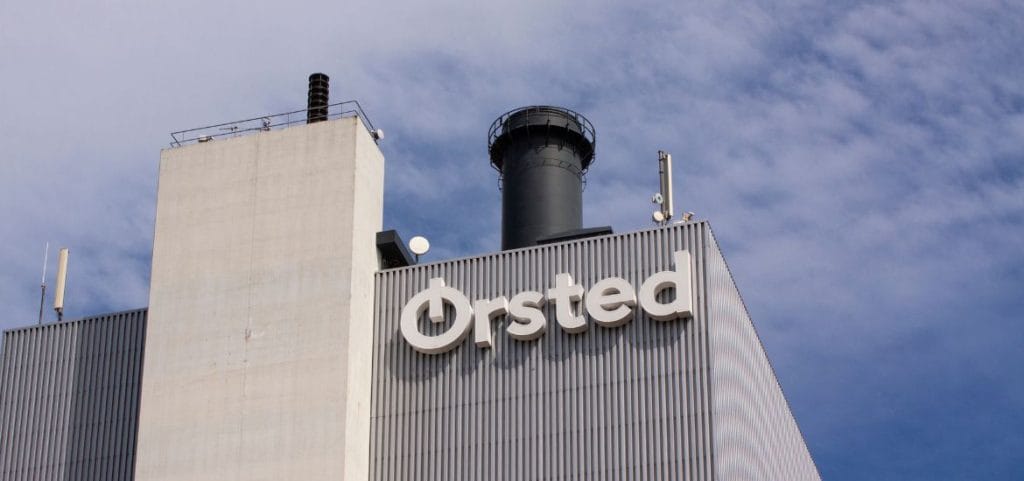
- A Trump administration order has frozen five offshore wind projects nearing completion, affecting almost 6 GW of capacity along the US East Coast.
- Ørsted is seeking a court injunction to restart work on its 87 percent complete Revolution Wind project, citing billions already spent under approved federal and state permits.
- The dispute raises governance and investor risk questions for US offshore wind, power purchase agreements, and long term clean energy planning.
A Legal Challenge as Turbines Near Completion
Denmark based Ørsted has launched a legal challenge against the US government after federal authorities ordered construction to halt on its nearly completed Revolution Wind offshore project, a $5 billion development expected to begin generating electricity within weeks.
The company confirmed it is seeking an injunction in US District Court for the District of Columbia to overturn the lease suspension imposed by the Trump administration in late December. Revolution Wind, located off the coast of Rhode Island, is approximately 87 percent complete and had been scheduled to start producing power as soon as January 2026.
Revolution Wind LLC is a 50 50 joint venture between Ørsted and Skyborn Renewables, which is owned by BlackRock’s infrastructure investment arm Global Infrastructure Partners. The partners said they have already spent or committed roughly $5 billion to the project.
National Security Claims and Industry Pushback
The lease suspension was part of a broader administration decision to pause all large scale offshore wind projects under construction in US federal waters, citing national security concerns. According to the US Department of the Interior, the Pentagon raised objections that turbine blade movements and highly reflective towers could interfere with radar systems used to detect and track security threats.
The order affects five projects along the East Coast, representing nearly 6 GW of capacity scheduled to come online over the next two years. The decision sent shares of offshore wind developers sharply lower, with Ørsted’s stock falling 13 percent following the announcement.
State officials, Democratic lawmakers, and industry groups have sharply criticized the move as unjustified and disruptive to state clean energy mandates and grid planning.
Permits, Process, and Prior Court Rulings
In announcing its legal action, Ørsted emphasized that Revolution Wind completed all required federal and state approvals in 2023 after years of consultation with multiple agencies. The company highlighted its engagement with the US Department of Defense Military Aviation and Installation Assurance Siting Clearinghouse and the execution of formal mitigation agreements with the Department of War and the Department of the Air Force.
The project also received approvals from the US Coast Guard, the US Army Corps of Engineers, the National Marine Fisheries Service, and other regulators.
Ørsted said in its statement:
“Revolution Wind has spent and committed billions of dollars in reliance upon, and has met the requests of, a thorough review process.”
RELATED ARTICLE: Ørsted Deploys AI to Boost Renewable Energy Asset Performance
The December suspension marked the second attempt by federal authorities to stop the project. An earlier construction halt ordered by the Bureau of Ocean Energy Management in August 2025 was overturned by a federal court the following month. More broadly, a presidential memorandum issued by Donald Trump on his first day back in office to freeze federal wind approvals was recently struck down by a US court as arbitrary and contrary to law.
Power Supply, PPAs, and Investor Exposure
Revolution Wind is a 704 MW project expected to supply electricity to more than 350,000 homes through 20 year power purchase agreements with utilities in Connecticut and Rhode Island. For state regulators and utilities, prolonged uncertainty threatens procurement schedules and clean energy targets tied to legally binding climate goals.
For investors, the case highlights policy and execution risk in US offshore wind at a time when projects are already under pressure from inflation, higher interest rates, supply chain delays, and regulatory complexity. Ørsted last year raised 60 billion Danish crowns, about $9.4 billion, in a heavily discounted share issue to stabilize its balance sheet.
Broader Implications for US Offshore Wind
Ørsted also confirmed that Sunrise Wind, its wholly owned offshore project off New York, is subject to the same lease suspension and that it is evaluating all options, including potential legal action.
The outcome of Ørsted’s lawsuit will be closely watched across the sector. Beyond the fate of a single project, the dispute cuts to the credibility of US permitting processes, the durability of federal approvals, and the willingness of global capital to back multi billion dollar clean energy infrastructure in politically volatile environments. For utilities, investors, and state governments, the case may shape offshore wind development in the US for years to come.
Follow ESG News on LinkedIn

The ESG News Editorial Team is comprised of veteran financial journalists and sustainability analysts dedicated to providing real-time, objective reporting on global ESG regulations, climate finance, and corporate governance. Our desk monitors daily developments from the SEC, IFRS, CSRD and international regulatory bodies to ensure our 1M+ readers receive accurate, data-driven insights into the evolving sustainable investment landscape. Follow the ESG News Editorial Team for expert reporting on global sustainability standards, ESG disclosures, and climate policy. Access over 10,000 investigative reports and real-time updates.