S&P Global Outlines 2026 Clean Energy Pressures Driven by AI Growth, Geopolitical Shifts

• Global datacenter electricity demand could exceed 2,200 TWh by 2030, straining grids and testing corporate sustainability commitments.
• China’s policy shifts drive the first year-on-year decline in global solar additions, redirecting supply chains and financing assumptions.
• Grid modernisation emerges as a central determinant of energy security, competitiveness and the pace of decarbonisation.
AI’s Rapid Expansion Redefines Power Demand
S&P Global Energy released its 2026 Top Trends assessment with a stark view of how artificial intelligence, geopolitics and climate pressures are reshaping global clean energy markets. The Horizons research team frames AI’s power needs as a decisive structural challenge for utilities, regulators and corporate buyers.
Eduard Sala de Vedruna, Vice President and Head of Research for Horizons, described a sector confronting hard limits. “In 2026, AI’s surging power demand growth will be testing grid limits, revenue models and sustainability goals,” he said. “The pace of progress will depend on unlocking new capacity and flexibility, with grid modernization a key constraint on energy security and competitiveness.”

S&P Global Energy projects global datacenter electricity use rising 17 percent by 2026 and growing 14 percent annually through 2030. Potential demand above 2,200 TWh by the end of the decade would place datacenters on par with current power consumption in India. At the same time, 38 percent of companies assessed with datacenter operations still have no net zero commitments, creating a widening gap between digital expansion and corporate climate obligations.
Major technology companies are now searching for ways to reconcile growth with decarbonisation. Microsoft, Alphabet and Meta are exploring new procurement structures, generation partnerships and emerging technologies to manage rising load without weakening climate goals. Aggregate US datacenter capital spending is expected to approach 500 billion dollars in 2026.
Solar Market Slows as Policy Shifts Take Hold
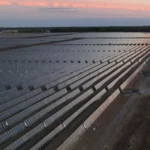
The report points to a structural reset in renewables, driven largely by China’s policy transition from fixed pricing to competitive bidding. Additions are expected to fall from roughly 300 GW in 2025 to about 200 GW in 2026. Given China’s historic role as the source of half of global solar capacity growth over the past decade, the slowdown triggers the first projected year-on-year decline in new solar installations worldwide.
Even with the contraction, cumulative PV capacity is expected to double over the next five years as emerging markets accelerate deployment, supported by cheaper modules, expanding supply chains and rapid advances in battery storage.
Grid Modernisation Becomes a Central Economic Constraint
Grid investment emerges as one of the most urgent global priorities. In Europe, 40 percent of grids are more than four decades old, and the European Commission estimates 584 billion euros of investment will be required by 2030 to support electrification and decarbonisation. The United States faces a similar challenge. Without major upgrades, S&P Global Energy warns the country may struggle to deliver sufficient power for AI-driven datacenter expansion, shifting grid readiness into the realm of national competitiveness.
Leanne Todd, Senior Vice President and Global Head of Horizons, tied these structural issues together. “The interplay of AI-driven demand, grid bottlenecks, evolving procurement strategies, and rising climate risks highlights how energy expansion and sustainability are not parallel ambitions, but intertwined imperatives,” she said.
Corporate Procurement Adapts to Volatility
Price swings across power markets are driving the rise of flexible power purchase agreements that incorporate multiple technologies, storage and downside protections. Traditional long-term fixed PPAs are being replaced with shorter, more dynamic structures.
Datacenters remain the dominant buyers, accounting for 27 GW of the 63 GW of total corporate procurement through October 2025. Europe’s prolonged period of low PPA index prices has reinforced the shift toward complex hedging strategies.
China Moves Aggressively on Green Hydrogen
While much of the world reassesses hydrogen economics, China is accelerating deployment. The report estimates 1.5 GW of electrolyzers will be installed domestically in 2025 and reach 4.5 GW in 2026. Electrolyzer costs have dropped from 250 dollars per kilowatt in early 2024 to below 100 dollars due to oversupply and intense competition.
China’s ambitions extend beyond technology exportation. At least two Chinese green ammonia facilities have secured EU certification for clean molecule exports, with reported free-on-board prices near 600 dollars per metric ton.
RELATED ARTICLE: S&P Global’s CRISIL launches ESG Risk Analyst course
SAF Capacity Rises as Europe Faces Shortfalls
Sustainable aviation fuel capacity is projected to grow by about one third to 8 million metric tons in 2026, with more than half of global supply located in Asia. Producers are targeting European buyers facing tightening regulation and supply deficits. Beyond 2026, capacity could climb to 42 million metric tons by 2030, though only 7.3 million metric tons of that pipeline has reached final investment decision.
EV Uptake Expands Into New Markets
China is on track to become the first major market where electric vehicles account for about half of new light vehicle sales. Europe’s tightening CO2 standards are lifting adoption rates, while the United States enters 2026 without the full support of federal tax credits, creating the first real test of organic demand.
Emerging markets such as Thailand, Indonesia, Pakistan, Mexico, Nigeria and Malaysia are identified as increasingly attractive for Chinese EV manufacturers due to price competitiveness and maturing infrastructure.
Climate Policy Convergence and Geopolitical Shifts
The 2026 introduction of the EU Carbon Border Adjustment Mechanism, along with proposed revisions to the Greenhouse Gas Protocol, will require companies to provide consistent, product-level emissions data across multiple jurisdictions. S&P Global Energy notes that diverging carbon reporting frameworks could complicate trade unless global accounting rules converge.
China’s cleantech leadership continues to expand through deployment scale, manufacturing dominance and diplomatic engagement. By contrast, US industrial strategy is becoming more interventionist, with expanded government equity stakes and targeted support for nuclear and advanced geothermal.
Adaptation Costs Rise as Climate Risks Intensify
The report concludes with a warning that adaptation planning is moving from discretionary to essential. Without stronger risk management, S&P Global Energy projects annual climate-related costs of roughly 885 billion dollars for large publicly traded companies in the 2030s. Uptake of adaptation assessments remains inconsistent across sectors even as extreme weather becomes a growing operational threat.
The message for global executives is clear: 2026 will test the resilience of energy systems, policy frameworks and corporate climate strategies. The convergence of AI-driven demand, ageing infrastructure, geopolitical realignments and escalating climate impacts is redefining the conditions for transition and growth.
Read S&P Global Energy Horizons Top Trends 2026 here.
Follow ESG News on LinkedIn