The European Commission Issues New Packaging Rules Guidance To Cut Waste, Align EU Market
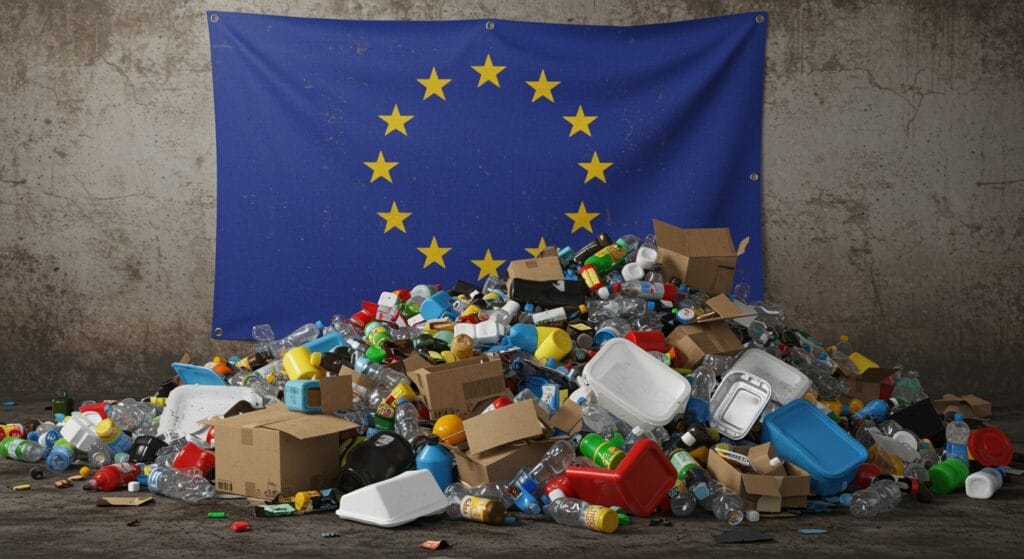
• EU packaging waste reached 178kg per person in 2023, with projections showing a 19% rise by 2030 without intervention
• New guidance aims to harmonise fragmented national rules, reducing compliance costs and strengthening the Single Market
• Measures include restrictions on single-use packaging, PFAS limits in food contact materials, and expanded producer responsibility schemes
The European Commission has released detailed guidance to support implementation of the Packaging and Packaging Waste Regulation (PPWR), aiming to bring clarity to one of the EU’s most complex and fast-evolving regulatory frameworks. The move comes as policymakers seek to curb rising waste volumes while reducing administrative friction for businesses operating across multiple Member States.
The guidance is designed to ensure consistent interpretation of the regulation, which introduces sweeping changes across packaging design, materials, reuse targets, and producer obligations. By clarifying definitions and compliance pathways, the Commission is attempting to address long-standing inefficiencies caused by divergent national rules.
For executives and investors, the stakes are both operational and strategic. Packaging sits at the intersection of supply chains, consumer regulation, and sustainability commitments, making it a focal point for both risk and opportunity.
Rising Waste Pressures Force Policy Acceleration
The urgency behind the regulation is clear. In 2023, the average European generated 178kg of packaging waste. Without policy intervention, total waste volumes are projected to rise by 19% by 2030 compared to 2018 levels. Plastic waste alone could increase by as much as 46% over the same period.
These trends present direct challenges to EU climate targets, circular economy goals, and resource security. Packaging waste has become one of the most visible indicators of consumption patterns and inefficiencies in material use.
At the same time, companies face mounting compliance complexity. Different national frameworks have created overlapping reporting requirements, inconsistent definitions, and fragmented enforcement. The Commission’s guidance attempts to resolve this by introducing clearer interpretations of key provisions.
Key Clarifications For Industry
The guidance document provides practical direction on several areas that have generated uncertainty among stakeholders. It clarifies when a company is considered a manufacturer or producer under the regulation, a distinction that carries significant compliance implications.
It also defines what constitutes packaging, a critical issue for sectors where product and packaging boundaries are less obvious. This has direct consequences for reporting, recycling obligations, and cost allocation across value chains.
Further clarity is provided on restrictions affecting single-use packaging, particularly in high-volume sectors such as food service and retail. The guidance also outlines enforcement of limits on PFAS in food contact packaging, addressing growing regulatory scrutiny around these substances.
On reuse and circularity, the Commission details how reuse targets should be applied and how companies can meet extended producer responsibility requirements. It also sets expectations for deposit and return systems, which are increasingly central to improving recycling rates across the bloc.
RELATED ARTICLE: European Commission to Withdraw Greenwashing Regulation
Implementation Tools And Next Phase Of Regulation
Alongside the guidance, the Commission has published a comprehensive FAQ document addressing operational questions raised since the regulation’s adoption. This will be updated as implementation progresses, reflecting the dynamic nature of the framework.
Importantly, the guidance does not alter the legal provisions of the PPWR. Instead, it functions as an interpretative tool to support consistent enforcement across jurisdictions.
Looking ahead, several delegated and implementing acts are in development. These will define harmonised registration and reporting formats, establish labelling requirements for waste sorting, and set criteria for recyclability and recycled content in plastic packaging.
These measures are being developed in coordination with Member States, industry stakeholders, and international partners, reflecting the global implications of EU packaging policy.
What This Means For Business And Investors
For C-suite leaders, the direction of travel is unmistakable. Packaging is shifting from a compliance function to a strategic lever tied to cost efficiency, brand positioning, and regulatory risk management.
Companies operating in the EU will need to reassess packaging portfolios, invest in recyclable and reusable formats, and align supply chains with evolving reporting standards. Those that move early may benefit from reduced compliance costs and stronger positioning in a market increasingly shaped by sustainability criteria.
From a governance perspective, the PPWR reinforces the EU’s role as a global rule-setter in environmental regulation. Its implementation will influence standards beyond Europe, particularly for multinational companies and exporters.
As the Commission advances the next phase of technical rules, the success of the framework will depend on execution. Uniform application across Member States will determine whether the regulation delivers on its dual objective: reducing waste while creating a more competitive and integrated European packaging market.
Follow ESG News on LinkedIn

The ESG News Editorial Team is comprised of veteran financial journalists and sustainability analysts dedicated to providing real-time, objective reporting on global ESG regulations, climate finance, and corporate governance. Our desk monitors daily developments from the SEC, IFRS, CSRD and international regulatory bodies to ensure our 1M+ readers receive accurate, data-driven insights into the evolving sustainable investment landscape. Follow the ESG News Editorial Team for expert reporting on global sustainability standards, ESG disclosures, and climate policy. Access over 10,000 investigative reports and real-time updates.