
Supply Chain Insights: Suppliers Are Drowning in ESG Requests Coming into 2026
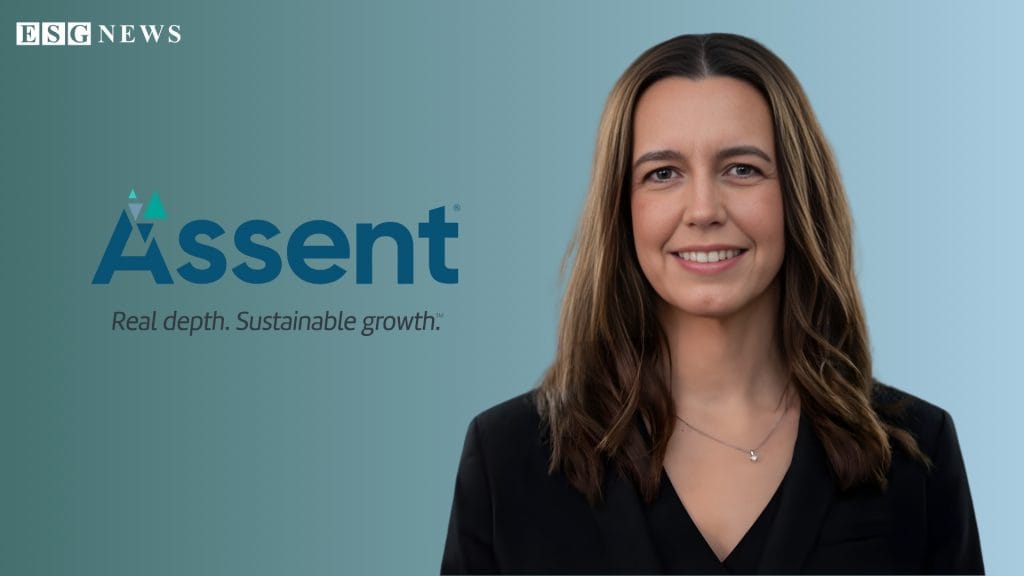
An interview with Catherine Cormier, Chief Product Officer at Assent
Global manufacturers are facing a mounting sustainability challenge that is no longer confined to compliance teams or annual reporting cycles. According to Catherine Cormier, Chief Product Officer at Assent, the volume and complexity of ESG, compliance, and supply chain data requests flowing through global manufacturing ecosystems has reached a big-data breaking point. While this surge can feel like yet another burdensome obstacle, it is, in reality, a high-class problem — one that signals progress rather than paralysis. The demand for deeper transparency, better data, and more accountable supply chains reflects how far sustainability has advanced from a niche concern to a core business expectation. In this context, the pressure facing manufacturers and suppliers is not evidence of failure, but proof that the market is finally doing what it was designed to do: push sustainable decision-making upstream, at scale.
As sustainability expectations rise, manufacturers are pushing these information requirements deeper into their supply chains — a necessary step for building more responsible products, but one that has exposed a critical weakness. Suppliers, many of whom want to demonstrate sustainability leadership, are being inundated with overlapping and inconsistent data requests from multiple customers at once. In practice, much of this work is still managed through emails, spreadsheets, and scanned documents, creating inefficiencies that slow product development and introduce real business risk for both suppliers and manufacturers, Cormier noted.
Cormier explains that this friction is not theoretical. It is already affecting the scalability of innovation, supplier relationships, and the ability of companies to respond quickly to regulatory and market pressures. Suppliers want to be responsive and competitive, but without purpose-built tools to manage sustainability and compliance data at scale, even highly sophisticated organizations are struggling to keep up. This breakdown ultimately impacts manufacturers as well, as the entire system begins to slow under the weight of fragmented data flows.
“Suppliers want to be great partners,” Catherine Cormier said. “They see sustainability as a competitive advantage. But they’re drowning in requests that all come in different formats, on different timelines, and for different regulatory purposes.”
Assent’s response to this challenge was the development of Request Manager, a solution designed to help suppliers manage the growing flood of ESG and compliance requests in a centralized and structured way. The goal is to allow suppliers to store validated data once, reuse it across multiple customers, and respond more efficiently as new requirements emerge. By reducing duplication and administrative burden, sustainability performance can become a competitive advantage rather than a reactive constraint on supplier relationships.
A key insight from Assent’s work across thousands of suppliers and manufacturers is that sustainability data must be collected in a way that is not tied to any single regulation. With new emissions and reporting rules emerging across jurisdictions — from Europe to U.S. states like New York — companies cannot afford to rebuild their data processes every time a new law comes into force. Instead, standardized, regulation-agnostic data allows organizations to assess risk, meet reporting requirements, and adapt as rules evolve without repeatedly burdening suppliers.
While compliance remains an important driver, Cormier notes a clear shift in how leading manufacturers view sustainability. Increasingly, companies see sustainable product design and responsible sourcing as drivers of innovation, resilience, and long-term competitiveness. With growing awareness of the costs associated with late-stage redesigns, supplier disruption, or regulatory exposure, many organizations are moving proactively to embed sustainability considerations earlier in product development and procurement decisions.
“The vision is regulation-agnostic data,” Catherine Cormier explained. “Suppliers shouldn’t have to re-respond every time a new rule appears. The data should already be there, ready to be assessed against evolving requirements.”
For companies still early in their sustainability journey, Cormier emphasizes the importance of focus and pragmatism. Organizations should begin by identifying the highest-risk areas in their products and supply chains, start collecting meaningful data in those areas, and work toward systems that allow information to be reused rather than repeatedly recreated. Suppliers, in turn, need tools that help them understand and respond to data requests efficiently if they want to remain relevant partners in increasingly sustainability-driven markets.
Looking ahead, Catherine Cormier believes the next phase of sustainable manufacturing will center on the supplier. As digital product passports, eco-design requirements, and more sophisticated sustainability disclosures come into view, suppliers will become the foundation upon which credible sustainability strategies are built. Empowering them with better data infrastructure, clearer expectations, and scalable tools will be essential for the market to move forward. In her view, 2026 will mark a turning point — the year when suppliers are fully recognized as the engine driving sustainable products, transparent supply chains, and resilient global manufacturing.
RELATED ARTICLE: Assent Launches Sustainability Platform, Cutting Supplier Reporting Time by 92%

Matt Bird is the Founder, CEO, and Editor-in-Chief of ESG News. He brings 25 years of experience in corporate strategy, media, fintech, and communications, including 15 years specializing in news and journalism. Matt was recognized by the United Nations as #3 of the “Top 10 Most Influential Media Executives for Impact” in 2015 during the launch of the UN SDGs.
He has advised the Sustainable Stock Exchange initiative (SSEI), UNCTAD, and the UN, and hosts event coverage at the World Economic Forum, ADFW, Climate Week NYC, EU Parliament, COP, the Vatican, NASDAQ, NYSE, and more. Matt is a founding board member of the Humanity 2.0 Foundation, a Vatican-based NGO focused on identifying and removing impediments to human flourishing.
He previously rang the NASDAQ Closing Bell in honor of his partnership with NASDAQ OMX to launch the world’s first retail investor targeting and newswire monitoring platform with the NASDAQ Financial Services Group. Matt launched ESG News in 2021, leading coverage of more than 10,000 news stories as of 2026—and truly loves what he does.