EU Approves $5.7 Billion Denmark Offshore Wind Scheme to Accelerate 2030 Renewable Targets
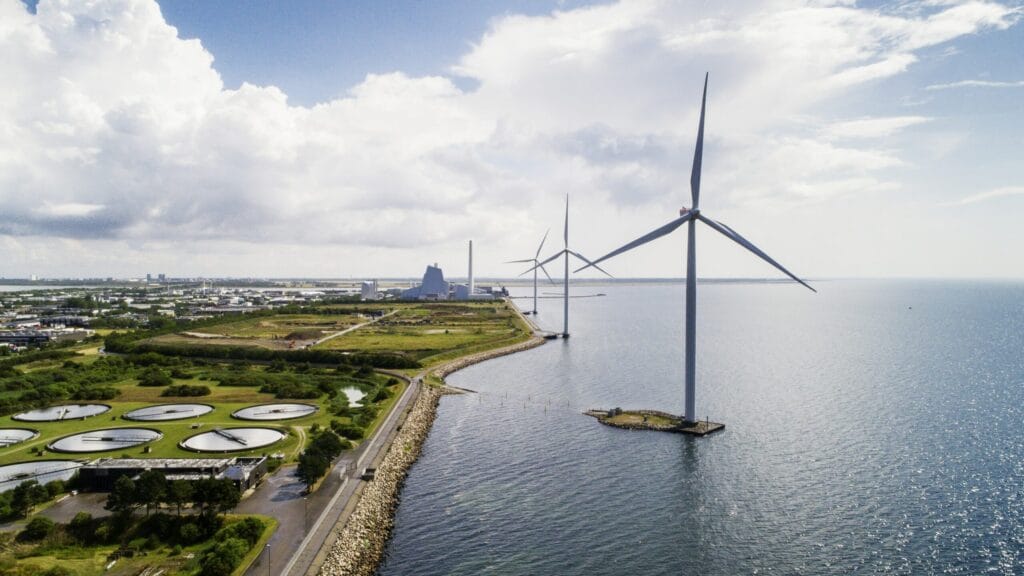
- $5.7 billion state-backed support approved under the Clean Industrial Deal State Aid Framework to fast-track offshore wind deployment
- Two projects totaling at least 1.8 GW expected to generate roughly 7.8 TWh annually, equivalent to about a quarter of Denmark’s electricity output
- Two-way contracts for difference structure balances investor certainty with market discipline and public cost control
Brussels has cleared a €5 billion ($5.7 billion) Danish state aid scheme designed to accelerate the buildout of offshore wind capacity, reinforcing the European Union’s push to meet its 2030 renewable energy targets.
The European Commission’s approval enables Denmark to proceed with two major offshore wind farms, Hesselø and North Sea I Mid, under a 20-year support framework. The decision sits within the Clean Industrial Deal State Aid Framework, which came into force in June 2025 to streamline public funding for strategic clean energy infrastructure.
For policymakers and investors, the move reflects a more assertive alignment between industrial policy and climate targets, with state aid mechanisms increasingly structured to crowd in private capital while maintaining competitive market signals.
Scale and Output Signal Strategic Shift
The projects anchor Denmark’s next phase of energy transition. Hesselø will deliver a minimum capacity of 800 MW, generating around 3.2 terawatt-hours annually. North Sea I Mid will add at least 1 GW, with an estimated 4.6 terawatt-hours of yearly production.
Combined, the two wind farms are expected to supply roughly a quarter of Denmark’s electricity consumption, based on recent national output levels. That scale places the projects among the most consequential additions to the country’s renewable portfolio in the past decade.
The expansion also strengthens Denmark’s position as a North Sea energy hub, a priority for the EU as it seeks to reduce reliance on imported fossil fuels and stabilize regional energy systems.
Financing Structure Balances Risk and Market Integrity
The scheme’s financial architecture centers on a two-way contract for difference model, a mechanism increasingly favored across Europe for large-scale renewables.
Under this structure, developers receive a variable premium based on the gap between their bid price and a reference market price, recalculated monthly. When market prices fall below the agreed level, the state compensates operators. When prices exceed it, operators return excess revenue to the government.
This approach provides predictable revenue streams for developers while limiting windfall profits during periods of high electricity prices. It also aligns public spending with actual market conditions, a key consideration for governments facing fiscal constraints.
Importantly, the European Commission confirmed that the scheme avoids subsidizing production when electricity prices turn negative, linking support to the potential value of output rather than actual generation in unfavorable market conditions.
RELATED ARTICLE: EU Chief Calls Europe’s Nuclear Phase-Down A Strategic Mistake
Governance Alignment Under EU State Aid Rules
Regulatory approval hinged on compliance with the Clean Industrial Deal State Aid Framework, which sets stricter requirements for competitive bidding and market integration.
The Commission concluded that Denmark’s scheme adheres to these principles, ensuring that support is awarded through transparent processes and remains consistent with broader electricity market design rules.
For corporate stakeholders, this signals a more standardized and predictable regulatory environment across EU member states, reducing fragmentation in how renewable projects are financed and approved.
Teresa Ribera, executive vice-president for a Clean, Just and Competitive Transition, framed the decision in operational terms: “With this €5bn scheme, Denmark will be able to deploy offshore wind capacities faster, in line with the Clean Industrial Deal.”

What This Means for Investors and Energy Leaders
For investors, the approval reinforces offshore wind as a core asset class within Europe’s energy transition, backed by long-term policy certainty and increasingly sophisticated risk-sharing mechanisms.
The contract for difference model continues to mature as a preferred instrument, offering downside protection while preserving exposure to market upside within defined limits. That balance is critical as capital-intensive projects face rising costs and tighter financing conditions.
Energy companies and utilities will also note the EU’s emphasis on scale. Large, multi-gigawatt projects are becoming central to national strategies, favoring players with the capability to execute complex offshore developments and navigate regulatory frameworks.
A Template for Europe’s Industrial Transition
Denmark’s scheme illustrates how public funding, regulatory alignment, and market-based mechanisms are converging to accelerate renewable deployment at scale.
As EU member states race to meet 2030 climate targets, similar frameworks are likely to be replicated, particularly in offshore wind where capital requirements and project timelines demand strong state backing.
The broader implication is clear. Europe is not only expanding renewable capacity but reshaping the financial and governance models that underpin its energy system.
Follow ESG News on LinkedIn

The ESG News Editorial Team is comprised of veteran financial journalists and sustainability analysts dedicated to providing real-time, objective reporting on global ESG regulations, climate finance, and corporate governance. Our desk monitors daily developments from the SEC, IFRS, CSRD and international regulatory bodies to ensure our 1M+ readers receive accurate, data-driven insights into the evolving sustainable investment landscape. Follow the ESG News Editorial Team for expert reporting on global sustainability standards, ESG disclosures, and climate policy. Access over 10,000 investigative reports and real-time updates.