
Galvanize Raises $370 Million Real Estate Fund to Turn Building Decarbonization Into Profit
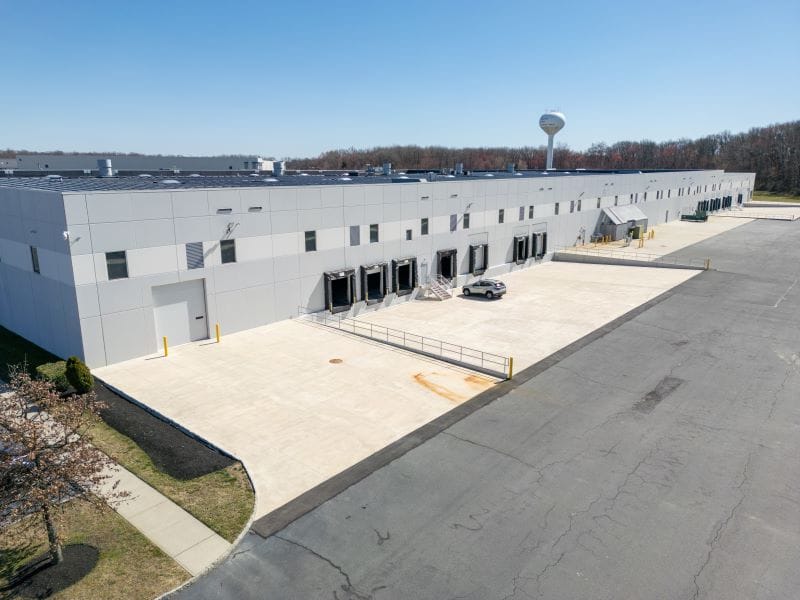
- Galvanize closed a $370 million fund targeting commercial real estate upgrades that combine emissions reductions with higher net operating income.
- Strategy focuses on undercapitalized buildings in high-growth U.S. markets, using solar, electrification, and efficiency retrofits to cut energy costs and emissions.
- Initial portfolio of 15 buildings across 11 cities could avoid an estimated 8,224 metric tons of emissions annually while improving building resilience and tenant demand.
Asset manager Galvanize has closed a $370 million real estate fund designed to turn building decarbonization into a direct driver of property value, targeting commercial assets where energy upgrades can boost both operating income and climate performance.
The fund, Galvanize Real Estate Fund I, attracted commitments from a broad base of institutional investors including pension funds, foundations, banks, registered investment advisers, and family offices. The strategy reflects a growing shift among real estate investors who increasingly view energy infrastructure and emissions reductions as financial levers rather than compliance exercises.
Galvanize Real Estate (GRE) plans to acquire and upgrade undercapitalized commercial buildings in supply constrained, high growth U.S. markets. The approach centers on improving energy systems through on site renewable power, electrification upgrades, and efficiency retrofits designed to lower operating costs while reducing building emissions.
Turning Decarbonization Into Asset Value
Commercial buildings face mounting pressure from rising electricity prices and growing tenant expectations around sustainability and energy resilience. Owners are also navigating stricter climate policies and disclosure frameworks across major markets.
Galvanize’s investment thesis positions decarbonization as a way to enhance net operating income while future proofing properties against energy price volatility.
“GRE’s strategy demonstrates a different role for sustainability, one that places it at the center of profit generation and product differentiation,” said Katie Hall, Co-Chair & CEO, Galvanize. “In an environment where the combined impact of rising electricity prices and market volatility is accelerating, there is a large and ongoing opportunity for the team to leverage decarbonization as a driver of value creation.”

By integrating renewable power generation, electrification, and energy efficiency measures directly into building operations, the strategy aims to give property owners and tenants greater control over energy supply and costs.
That control is becoming increasingly valuable as power demand rises across the United States, driven by data centers, electrification of transportation, and expanding digital infrastructure.
Energy Resilience Moves Into the Core of Real Estate Strategy
Galvanize’s approach reflects a broader transformation within the commercial property sector. Energy systems, once treated as operating expenses, are now becoming central to asset strategy and tenant attraction.
GRE investment professionals work alongside in house scientists, climate technologists, and policy specialists who evaluate the decarbonization potential of each property before acquisition and during upgrades.
A portion of the fund’s long term incentives is tied to operational performance, with the team aiming to reach net zero emissions across its portfolio within three years.
Joseph Sumberg, Managing Partner and Head of Galvanize Real Estate, said the growing focus on energy security and reliability is changing the calculus for building owners. “We are honored by the confidence such a diverse set of investors has placed in the Galvanize Real Estate team,” Sumberg said. “As the cost, reliability and resilience of energy becomes increasingly salient for commercial real estate owners and tenants, I believe GRE’s profitable decarbonization strategy is well positioned to continue generating long-term value across our growing portfolio.”

RELATED ARTICLE: Galvanize Climate Solutions Launches New Sustainable Real Estate Strategy Focused on Decarbonization
Early Investments Show Climate and Financial Potential
The fund has already deployed capital into five investments covering 15 buildings across 11 U.S. cities, representing roughly 2.4 million square feet of commercial real estate.
Galvanize estimates the initial portfolio could achieve decarbonization levels equivalent to 153 percent of baseline emissions through a combination of solar installations, electrification upgrades, and energy efficiency improvements.
Those interventions are expected to avoid approximately 8,224 metric tons of carbon emissions annually while improving operational performance and building resilience.
The strategy also targets buildings in markets where energy demand and electricity prices are rising fastest, positioning upgraded properties to deliver stronger long term returns.
What Investors Should Watch
For institutional investors, the fund illustrates how climate transition strategies are reshaping traditional asset classes such as commercial real estate.
Buildings account for nearly 40 percent of global energy related emissions, placing them squarely within the focus of climate policy, corporate net zero commitments, and investor scrutiny.
Yet much of the existing building stock remains undercapitalized and energy inefficient, creating opportunities for investors willing to combine infrastructure expertise with property management.
Galvanize’s model treats decarbonization technologies as revenue drivers rather than compliance costs. If successful, it could provide a blueprint for institutional capital seeking climate aligned returns in a sector responsible for a significant share of global emissions.
As energy prices fluctuate and governments tighten climate regulations, the financial case for retrofitting existing buildings is likely to strengthen, placing decarbonization strategies at the center of real estate investment decisions worldwide.
Follow ESG News on LinkedIn

The ESG News Editorial Team is comprised of veteran financial journalists and sustainability analysts dedicated to providing real-time, objective reporting on global ESG regulations, climate finance, and corporate governance. Our desk monitors daily developments from the SEC, IFRS, CSRD and international regulatory bodies to ensure our 1M+ readers receive accurate, data-driven insights into the evolving sustainable investment landscape. Follow the ESG News Editorial Team for expert reporting on global sustainability standards, ESG disclosures, and climate policy. Access over 10,000 investigative reports and real-time updates.