

Nordic Development Fund, Partners Develop Climate and Peace Investment Fund
- Five development and investment organisations are collaborating to develop a new impact investment strategy targeting climate resilience and peacebuilding in lower-income and conflict-affected countries.
- The Climate and Peace Investment Fund (CPIF) aims to expand financing for entrepreneurs creating jobs, strengthening local economies and addressing climate-related vulnerabilities.
- Public, philanthropic and private investors will be brought together to mobilise capital, with country-specific assessments guiding investment decisions and managing conflict-related risks.
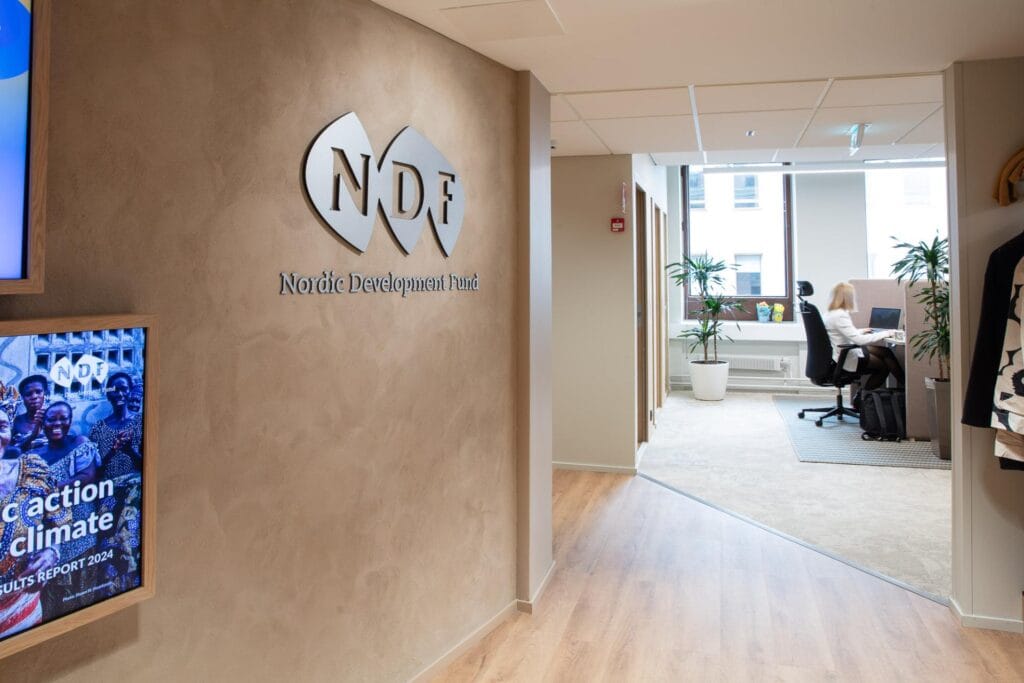
The Nordic Development Fund (NDF), Incofin Investment Management, the Peace Dividend Initiative (PDI), the United Nations Development Programme (UNDP) and Switzerland’s development cooperation agency are developing a new investment strategy linking climate finance with peacebuilding.
The proposed Climate and Peace Investment Fund (CPIF) will target entrepreneurs operating in lower-income countries and conflict-affected regions. Its objective is to expand access to capital for businesses that strengthen climate resilience while supporting economic stability and social cohesion.
The initiative comes as rising conflict and worsening climate pressures place growing strain on vulnerable communities. Food insecurity, water scarcity and displacement are increasing competition for resources, particularly in regions already facing political instability.
Mobilising Climate Finance in Conflict-Affected Markets
CPIF seeks to address a persistent financing gap in markets where climate vulnerability and conflict overlap.
Entrepreneurs in these regions often face significant barriers to investment, despite operating businesses that provide employment, essential services and economic opportunities.
The fund’s proposed strategy will support enterprises that contribute to climate adaptation while helping communities build more stable livelihoods.
For investors, the initiative introduces an approach that considers both environmental outcomes and the economic conditions needed to sustain peace.
Isabel Leroux, Program Manager at Nordic Development Fund, said: “One of NDF’s priorities is to ensure that climate finance reaches the communities most vulnerable to climate change, which are too often underserved by existing financing models. By supporting CPIF from an early stage and working alongside our partners, we are helping to build the foundations for a credible investment strategy that can unlock capital at scale in lower-income countries and conflict-affected contexts, where access to climate finance remains far too limited.”

The collaboration reflects growing interest in directing climate investment towards fragile markets that conventional financing mechanisms frequently overlook.
Country-Level Assessments to Guide Investment Strategy
Over the coming months, the five organisations will undertake a comprehensive design process to develop CPIF into an investable strategy.
Country-specific assessments will identify opportunities where private enterprise can advance climate action while contributing to peacebuilding and social cohesion.
These analyses will also examine potential investment risks, including unintended consequences that could worsen existing tensions.
Such safeguards are particularly important in conflict-affected environments, where unequal access to resources and economic opportunities can intensify local grievances.
The partners intend to incorporate these considerations into the fund’s investment approach before capital deployment.
A broader coalition of public, philanthropic and private investors will also be assembled to support the initiative.
The organisations have not disclosed a target fund size, initial capital commitments or an investment launch date.
RELATED ARTICLE: IFAD Raises $72 Million Through Sustainable Bond to Fund Rural Development
Supporting Entrepreneurs as Drivers of Economic Stability
The proposed fund places local entrepreneurship at the centre of its climate and peacebuilding strategy.
Businesses operating in fragile markets can provide employment, maintain essential economic activity and create alternatives to displacement.
Their ability to adapt to climate pressures also has implications for regional food security, resource management and long-term economic resilience.
Liam Foran, CEO of the Peace Dividend Initiative, said: “PDI’s experience is that local entrepreneurs have innovative solutions to adapt to climate change, what they often lack is capital. This is especially the case in countries emerging from conflict. By working with our partners to launch the CPIF, PDI aims to harness capital at scale to support entrepreneurs in frontier markets.”
The initiative aims to connect these enterprises with financing sources that have historically struggled to reach fragile and underserved economies.
Implications for Global Climate and Impact Investors
CPIF’s development raises broader questions about how climate finance can operate effectively in politically unstable environments.
For institutional and impact investors, the proposed strategy could provide a framework for assessing climate outcomes alongside conflict sensitivity and social impact.
Its success will depend on attracting sufficient capital, identifying commercially viable enterprises and establishing credible safeguards against unintended harm.
The approach also aligns with international efforts to improve climate finance access for vulnerable developing economies.
By combining development finance expertise, private investment management and peacebuilding experience, the partners aim to expand the range of investable opportunities in frontier markets.
For global investors, CPIF could offer a model for financing climate resilience in regions where environmental vulnerability and political instability increasingly intersect. Its eventual scale and effectiveness will depend on the investment structure that emerges from the design process.

The ESG News Editorial Team is comprised of veteran financial journalists and sustainability analysts dedicated to providing real-time, objective reporting on global ESG regulations, climate finance, and corporate governance. Our desk monitors daily developments from the SEC, IFRS, CSRD and international regulatory bodies to ensure our 1M+ readers receive accurate, data-driven insights into the evolving sustainable investment landscape. Follow the ESG News Editorial Team for expert reporting on global sustainability standards, ESG disclosures, and climate policy. Access over 10,000 investigative reports and real-time updates.
