
Banks Lend $595 Billion to Companies Linked to Tropical Deforestation
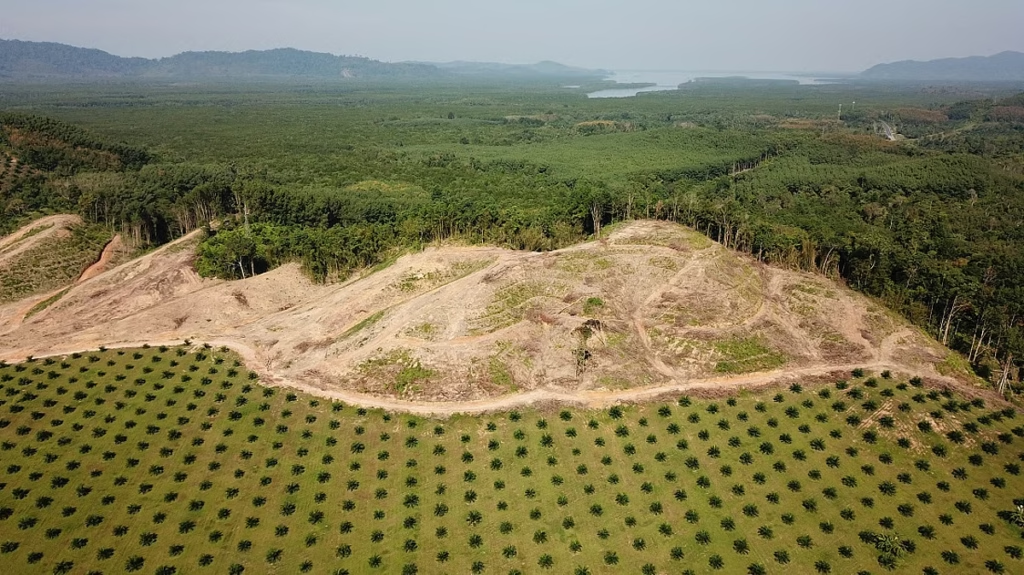
- $595 billion in financing: Banks provided $351 billion to high-risk agricultural commodity companies and $244 billion to mining firms between 2020 and 2025.
- Forest-risk lending accelerates: Annual agricultural commodity financing increased 71% since 2016, while mining finance rose 55%, driven partly by lithium and nickel demand.
- Biodiversity safeguards fall short: Environmental groups warn that major lenders lack adequate protections as governments face mounting pressure to meet global conservation targets.
Banks have provided nearly $600 billion in financing to companies associated with tropical deforestation and ecosystem destruction since 2020, according to new research.
The findings expose growing financial exposure to industries linked to forest loss, land degradation and biodiversity decline. They also raise questions about banks’ environmental risk management as governments prepare to assess progress toward global conservation commitments.
The Forests & Finance coalition published the findings in its annual Banking on Biodiversity Collapse report.
Between 2020 and 2025, banks extended $351 billion in credit to high-risk agricultural commodity companies and another $244 billion to mining firms.
“These sectors are the primary drivers of deforestation, land degradation and community conflict across the tropical forest basins of South America, Southeast Asia and Central and West Africa,” the coalition said.
Forest-Risk Financing Continues to Accelerate
Despite expanding corporate sustainability commitments, financing for industries associated with tropical forest destruction has increased substantially over the past decade.
Annual lending and underwriting to mining companies operating in tropical forest-rich countries rose 55% between 2016 and 2025.
Financing increased from $23.7 billion to $36.7 billion, with lithium and nickel accounting for some of the largest increases.
Both minerals are critical inputs for electric vehicles, batteries and clean energy infrastructure.
Their growing financing needs create a challenge for financial institutions seeking to support decarbonisation while protecting biodiversity.
Mining projects can introduce environmental risks through land clearing, habitat fragmentation and pressure on local communities.
Agricultural commodity financing has expanded even faster.
Annual forest-risk financing increased 71% since 2016, climbing from $37.9 billion to $64.7 billion.
Within that increase, financing for beef production rose more than 50%. Soy financing expanded 137%, while lending to pulp and paper companies increased 157%.
These industries remain major sources of pressure on tropical forests, particularly where agricultural expansion intersects with weak land-use enforcement.
Indonesia Faces Growing Environmental and Financial Risks
Indonesia illustrates the consequences of continued financing for forest-intensive industries.
According to the coalition, banks provided $67.1 billion to Indonesia’s pulp and palm oil sectors between 2020 and 2025.
The report links these activities to deforestation and peatland drainage, particularly across Kalimantan and Sumatra.
Peatlands store substantial quantities of carbon. Draining them increases emissions and makes surrounding landscapes more vulnerable to fires.
Forest degradation can also worsen flooding by reducing the landscape’s ability to absorb rainfall.
Indonesia is experiencing its most intense El Niño-fuelled wildfire season in 11 years.
Smoke from the fires has contributed to deteriorating air quality across Southeast Asia, including Singapore and Malaysia.
The resulting haze has increased respiratory illnesses and exposed the regional consequences of forest degradation.
For banks, these developments create potential exposure to physical climate risks, regulatory intervention and reputational damage.
RELATED ARTICLE: EU Deforestation Law Could Reshape Global Coffee Trade
Banks Face Scrutiny Over Biodiversity Safeguards
The coalition argues that existing environmental policies have failed to keep pace with financing activity.
Banks “issuing the most high-risk credit still do not have adequate safeguards to mitigate the risks of serious environmental and social harm,” it said.
The findings raise questions about how lenders assess biodiversity impacts across corporate lending portfolios.
For financial institutions, stronger due diligence could include reviewing deforestation exposure, land-use practices and environmental compliance before extending credit.
Investors also face growing pressure to examine whether sustainability commitments translate into effective financing restrictions.
The distinction matters as biodiversity loss increasingly enters financial risk assessments alongside climate-related exposures.
Global Biodiversity Talks Increase Pressure on Finance
The report arrives as governments gather in Yerevan, Armenia, on October 19 for another round of international biodiversity negotiations.
A planned assessment of progress toward 2030 conservation targets is expected to reveal substantial implementation gaps.
The discussions take place against the backdrop of the Kunming-Montreal Global Biodiversity Framework, which calls for greater alignment between financial flows and biodiversity protection.
For banks and institutional investors, the central challenge is increasingly financial as well as environmental.
Continued lending to forest-risk industries could expose portfolios to tightening regulation, supply chain disruption and rising ecosystem-related losses.
The findings also highlight a broader contradiction in sustainable finance: capital supporting economic development and the energy transition can simultaneously accelerate nature loss.
How financial institutions address that tension will influence biodiversity outcomes across tropical forest regions and the credibility of global conservation commitments.

The ESG News Editorial Team is comprised of veteran financial journalists and sustainability analysts dedicated to providing real-time, objective reporting on global ESG regulations, climate finance, and corporate governance. Our desk monitors daily developments from the SEC, IFRS, CSRD and international regulatory bodies to ensure our 1M+ readers receive accurate, data-driven insights into the evolving sustainable investment landscape. Follow the ESG News Editorial Team for expert reporting on global sustainability standards, ESG disclosures, and climate policy. Access over 10,000 investigative reports and real-time updates.