Air Liquide, Holcim Target 1.1 Million Tons of Annual CO₂ Capture at Belgium Cement Plant
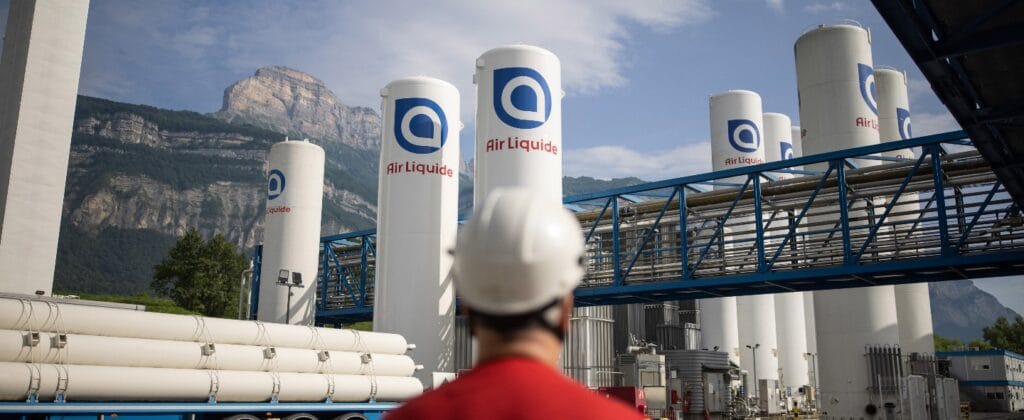
- Project aims to capture 1.1 million tons of CO₂ annually from Holcim’s Obourg cement plant in Belgium
- Captured CO₂ to be transported to Antwerp@C for shipment and permanent offshore storage in the North Sea
- Final Investment Decision contingent on infrastructure regulation and public derisking support
Air Liquide and Holcim have signed a strategic agreement to deploy a large scale carbon capture solution at Holcim’s near zero cement plant, pushing one of Europe’s most emissions-intensive sectors closer to structural decarbonization.
The agreement formalizes the next stage of collaboration between the two companies and centers on integrating Air Liquide’s proprietary Cryocap OXY technology into Holcim’s oxyfuel-ready clinker production line. Air Liquide will also supply the oxygen required for the process, a critical input for oxyfuel combustion systems designed to produce concentrated CO₂ streams suitable for capture.
If executed as planned, the project is designed to capture up to 1.1 million tons of CO₂ per year. That would position the Obourg facility as one of Europe’s most advanced cement plants in terms of emissions performance and a flagship case for carbon capture in hard-to-abate industries.
Technology and Infrastructure Alignment
At the core of the initiative is Air Liquide’s Cryocap OXY technology, which enables high-efficiency capture of CO₂ from oxy-combustion processes. By replacing air with oxygen in combustion, flue gases become significantly richer in CO₂, reducing separation costs and improving capture performance.
Captured emissions are intended to be transported via pipeline to a CO₂ Export Hub, such as Antwerp@C. From there, the CO₂ would be shipped to permanent offshore storage sites in the North Sea. This integrated approach links capture, transport and storage into a single cross-border value chain, reflecting the growing role of shared infrastructure in Europe’s carbon management strategy.
The Final Investment Decision remains conditional. The companies have made clear that additional partnerships across the value chain are required, along with public sector backing. Regulatory clarity on transport infrastructure and state-supported derisking mechanisms will be decisive in determining whether the project proceeds at full scale.
RELATED ARTICLE: Air Liquide Advances Climate Action with New CO2 Capture Project in Rotterdam
Cement Sector Under Policy Pressure
Cement accounts for roughly 7 to 8 percent of global CO₂ emissions, driven by both fuel combustion and the chemical process of clinker production. Electrification alone cannot eliminate these emissions, making carbon capture a central pillar of any credible net zero pathway for the sector.
Holcim’s Obourg initiative forms part of its broader GO4ZERO investment program, which is intended to enable the company to achieve carbon neutrality in Belgium by the end of the decade. At the European level, the project aligns with the European Union’s 2050 net zero target and the bloc’s expanding carbon pricing framework under the EU Emissions Trading System.
For industrial operators, the financial case increasingly hinges on carbon price trajectories, access to shared CO₂ infrastructure, and state support mechanisms that mitigate early-stage risk. Without these elements, large-scale CCS projects face high capital intensity and uncertain revenue streams.
Executive Perspective
Émilie Mouren-Renouard, member of Air Liquide’s Executive Committee, notably in charge of supervising operations in Europe, stated: “The transition toward a low-carbon industry is a long-term endeavor that requires steady collaboration and public support in its initial phase. For many years, Air Liquide has been committed to decarbonize industrial sectors such as the cement industry, with the development of its visionary and advanced carbon capture technologies. Alongside our partner Holcim, we share the same ambition and this new milestone agreement for the pioneering GO4ZERO project is a powerful signal for Belgium’s industrial decarbonization and energy transition.”

Her comments reflect a broader reality for executives: industrial decarbonization at scale will not be driven by technology alone. It requires regulatory alignment, cross-sector partnerships and capital structures capable of absorbing risk during early deployment.
What Leaders Should Watch
For C-suite leaders and investors, the Obourg project illustrates how heavy industry decarbonization is moving from pilot concepts to infrastructure-backed execution models. The integration of capture technology with regional CO₂ hubs and offshore storage suggests that Europe is building the physical backbone required for industrial net zero.
The remaining variables are political and financial. Clear regulation of transport networks, bankable storage solutions in the North Sea, and structured public support will determine whether first-mover projects reach financial close.
As carbon pricing tightens and climate disclosure standards sharpen, projects like Obourg are likely to become reference points for how industrial firms reconcile competitiveness with climate commitments. The outcome in Belgium will be watched closely across Europe’s manufacturing base and beyond.
Follow ESG News on LinkedIn

The ESG News Editorial Team is comprised of veteran financial journalists and sustainability analysts dedicated to providing real-time, objective reporting on global ESG regulations, climate finance, and corporate governance. Our desk monitors daily developments from the SEC, IFRS, CSRD and international regulatory bodies to ensure our 1M+ readers receive accurate, data-driven insights into the evolving sustainable investment landscape. Follow the ESG News Editorial Team for expert reporting on global sustainability standards, ESG disclosures, and climate policy. Access over 10,000 investigative reports and real-time updates.