
Vietnam–China Agricultural Partnership Expands Trade to $20 Billion
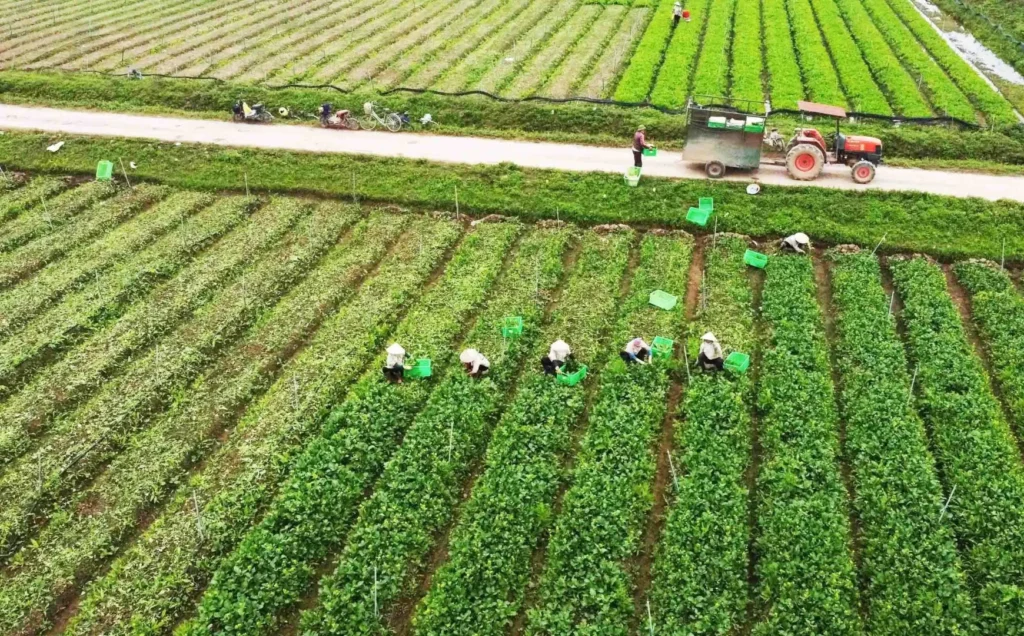
- Bilateral agricultural trade reached $20.94 billion in 2025, with Vietnam exports to China rising 41.1% year-on-year
- 33 agreements and protocols signed, accelerating market access, regulatory alignment, and supply chain integration
- Cooperation targets high-tech agriculture, cold chain logistics, and standardized production to meet global food safety benchmarks
A state visit by Vietnamese leader To Lam to China this week places agriculture at the center of one of Asia’s most consequential bilateral economic relationships.
Invited by Xi Jinping, the visit is designed to operationalize commitments under the Vietnam-China Comprehensive Strategic Cooperative Partnership. Both governments are prioritizing agriculture as a core pillar for deepening economic integration and safeguarding long-term food security.
Officials describe the initiative within the broader framework of building a “China-Vietnam Community with a Shared Future of Strategic Significance.” The emphasis is practical. Agricultural cooperation is expected to deliver measurable gains across trade, investment, and rural development, while reinforcing political trust between the two countries.
“This constitutes a diplomatic event of paramount significance, aimed at concretizing high-level common understandings and further enriching the substance of the Vietnam-China Comprehensive Strategic Cooperative Partnership.”
Trade Growth Reflects Structural Complementarity
Agriculture has emerged as one of the fastest-growing segments of bilateral trade, driven by complementary supply and demand dynamics. Vietnam’s tropical agricultural output continues to meet rising demand in China for diversified and higher-quality food imports.
China remains Vietnam’s largest export market for agro-forestry-fishery products, while Vietnam is China’s largest trading partner within ASEAN. Trade volumes reflect sustained policy coordination and improved logistics connectivity.
In 2024, bilateral agricultural trade reached $17.8 billion, up 14.6% year-on-year. Growth accelerated in 2025, with total trade climbing to $20.94 billion, a 17.6% increase. Vietnam’s exports to China surged to $15.97 billion, marking a 41.1% jump.
“These outcomes clearly demonstrate the efficacy of trade promotion policies and the concerted efforts of both sides to facilitate customs clearance and market connectivity.”
For investors and supply chain operators, the trajectory signals a rapidly scaling cross-border food system anchored in predictable demand and expanding infrastructure.
Regulatory Alignment Unlocks Market Access
A central focus of the partnership is the removal of technical barriers and the harmonization of regulatory frameworks. To date, the two sides have signed 33 agreements and protocols governing agricultural trade.
These frameworks have enabled Vietnam to standardize export procedures across 15 fruit and vegetable categories, with nine products already managed under formal protocols. Five additional protocols were concluded in 2025 alone, expanding the list of approved exports.
In fisheries, Chinese authorities have licensed hundreds of Vietnamese exporters, broadening product diversity and boosting trade volumes.
“To date, the two sides have signed 33 Agreements and Protocols, establishing an increasingly synchronized and favorable legal corridor for the trade of agricultural, forestry, and aquatic products.”
Negotiations are ongoing to open additional product categories, with both governments pushing to translate political agreements into commercial outcomes.
Shift to Quality and Traceability
Vietnam’s agricultural strategy is undergoing a structural shift, moving away from volume-driven production toward quality, traceability, and compliance with international standards.
The government is implementing stricter oversight of planting area codes and packaging facility codes, ensuring full traceability across supply chains. Exporters must comply with China’s food safety regulations, including Orders 248 and 249, which impose stringent requirements on foreign suppliers.
“This represents a strategic pivot, shifting the development paradigm from a focus on ‘quantity’ to one prioritizing ‘quality and value.’”
For global buyers and ESG-focused investors, this transition reduces risk across food safety, transparency, and regulatory compliance, aligning Vietnam’s agricultural exports with international benchmarks.
RELATED ARTICLE: Microsoft, Land O’Lakes Launch AI Partnership to Cut Farm Costs and Strengthen U.S. Agricultural Resilience
Investment Push Targets Modern Supply Chains
Foreign direct investment is expected to play a defining role in the next phase of cooperation. Vietnam is positioning itself as a regional hub for high-tech agriculture and agri-processing, supported by tax incentives, land policies, and access to more than 16 free trade agreements.
Logistics is a critical focus area. The development of “smart border gate” systems is already reducing transit times and costs. Further investment in cold chain infrastructure and post-harvest preservation is expected to cut losses and increase value capture.
“Investment cooperation in cold chain logistics infrastructure and post-harvest preservation technology is anticipated to be a critical factor in reducing losses, enhancing value addition, and bolstering the competitiveness of agricultural products from both nations.”
For Chinese investors, Vietnam offers a strategic base to expand exports into global markets under preferential trade terms. For Vietnam, the partnership accelerates modernization across its agricultural value chain.
Strategic Implications for Global Markets
The Vietnam-China agricultural corridor is evolving into a key node in global food supply chains. Its scale, regulatory alignment, and investment pipeline position it as a model for regional integration in emerging markets.
With political backing at the highest level and measurable trade expansion already underway, the partnership carries implications beyond bilateral ties. It reinforces Asia’s role in shaping future food systems, while offering investors a clearer pathway into sustainable agriculture and logistics infrastructure.
As both countries deepen cooperation, the focus will remain on execution: turning agreements into flows of goods, capital, and technology that reshape how food moves across borders in a more regulated, transparent, and resilient system.

The ESG News Editorial Team is comprised of veteran financial journalists and sustainability analysts dedicated to providing real-time, objective reporting on global ESG regulations, climate finance, and corporate governance. Our desk monitors daily developments from the SEC, IFRS, CSRD and international regulatory bodies to ensure our 1M+ readers receive accurate, data-driven insights into the evolving sustainable investment landscape. Follow the ESG News Editorial Team for expert reporting on global sustainability standards, ESG disclosures, and climate policy. Access over 10,000 investigative reports and real-time updates.