
BTG Pactual Raises $1.2 Billion for Record Reforestation Fund Targeting 660,000 Acres in Latin America

- $1.24 billion fund sets a new benchmark for large-scale natural capital and reforestation investing
- Strategy targets 660,000 acres with combined commercial forestry, restoration, and conservation
- Model links carbon markets, biodiversity recovery, and rural employment to long-term financial returns
BTG Pactual Timberland Investment Group has closed a $1.24 billion reforestation fund, the largest of its kind, positioning Latin America at the center of scalable, investable nature-based climate solutions.
The strategy combines commercial timber production with ecosystem restoration across degraded land. It aims to deliver financial returns while restoring biodiversity, strengthening rural economies, and generating carbon removal credits.
Backed by a global investor base and supported by Conservation International as Impact Adviser, the fund reflects growing institutional demand for high-integrity natural capital assets aligned with climate and biodiversity goals.
“Achieving this milestone reflects both an innovative strategy and TIG’s ability to execute at scale, and we are honored to have reached it in partnership with this group of leading institutional investors,” said Gerrity Lansing, Head of BTG Pactual TIG. “We designed this strategy to demonstrate that restoration at landscape scales can deliver both environmentally and commercially.”

Scaling Restoration Across Critical Ecosystems
The fund targets approximately 660,000 acres across Latin America. Half of that land will be conserved or restored native ecosystems. The remaining area will support sustainably managed commercial forests.
A significant share of activity focuses on Brazil’s Cerrado, one of the world’s most biodiverse and threatened ecosystems. More than half of its original vegetation has already been cleared.
Early progress is tangible. Nearly 29 million trees have been planted across more than 64,000 acres. Over 53,000 acres are under conservation, while restoration efforts now exceed 50,000 acres.
The strategy also connects fragmented habitats. Restoration plans aim to link more than 100,000 acres of natural ecosystems, strengthening biodiversity corridors and water systems.
“We have always sought innovative solutions to protect the world’s most vital and at-risk ecosystems, and few are more threatened than the Brazilian Cerrado – more than half of its original land cover has been cleared over decades,” said Deborah Spalding, Global Head of Nature Finance at Conservation International. “This restoration effort represents the kind of forward-thinking approach that conservation needs.”

Finance Meets Climate and Biodiversity Outcomes
The fund’s structure integrates multiple revenue streams. These include sustainable timber production, land value appreciation, and carbon credit generation.
It is designed to produce millions of high-integrity carbon removal credits. In 2026, its first project became the first globally to issue credits under Verra’s VM0047 afforestation and reforestation methodology.
This alignment with emerging global carbon standards addresses a core concern for investors: quality and credibility in voluntary carbon markets.
“High quality natural capital projects can strengthen long term member outcomes while delivering measurable real-world benefits,” said Ben Squires, Chief Investment Officer, NGS Super.

Public finance institutions have also played a catalytic role. Brazil’s development bank approved up to R$300 million, around $55 million, to support restoration and reforestation.
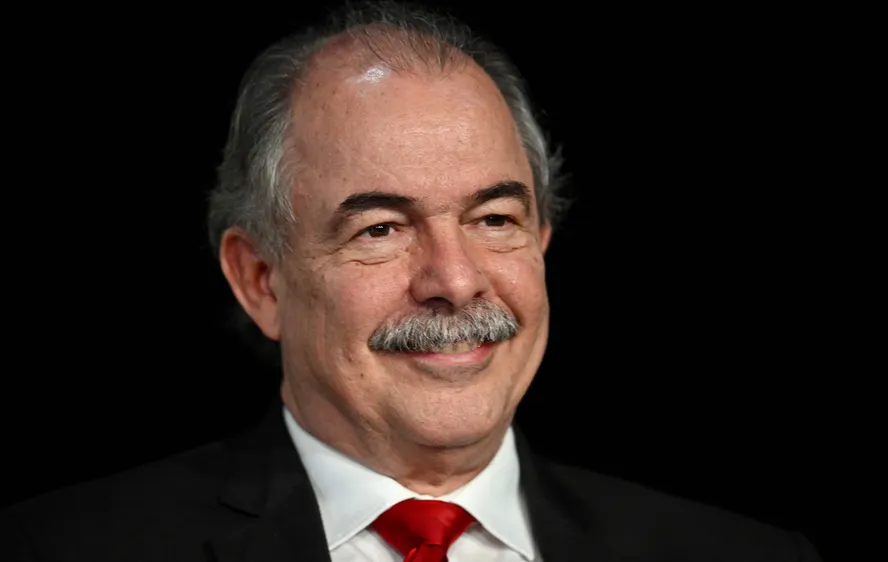
“BNDES approved an investment of up to R$300 million to support this reforestation project and the restoration of degraded areas in Brazil. This initiative aligns with the directive of President Lula’s government to support environmental and climate projects,” said Aloizio Mercadante, President of BNDES.
RELATED ARTICLE: Microsoft Purchases 8 Million Carbon Credits From BTG Pactual in Largest-ever Sale
Jobs, Communities and Local Economies
The strategy places strong emphasis on rural development. At full scale, it is expected to support around 2,700 jobs, a sharp increase compared with traditional land uses such as cattle ranching.
In 2025, it supported 518 full-time equivalent roles. Community programs are also expanding income opportunities.
A native seed collection initiative has trained local workers and generated income equivalent to roughly 20 percent of average regional household earnings per participant.
“The strategy demonstrates how sustainable production can provide an enduring economic engine to power climate resilience, biodiversity conservation, and rural economies,” said Mark Wishnie, Chief Sustainability Officer at BTG Pactual TIG.

Science, Governance and Replication Potential
A long-term research partnership with the Federal University of Viçosa supports continuous improvement. A 200-acre field experiment compares restoration methods including direct seeding and natural regeneration.
“This innovative project represents one of the largest ecological restoration research initiatives in the Cerrado,” said Professor Sebastião Venâncio Martins. “The data will allow for the identification of the most effective restoration techniques.”
Governance frameworks also play a central role. The strategy applies IFC Performance Standards across operations, reinforcing environmental and social safeguards.
For investors, the model offers a rare combination. It aligns regulatory expectations, scientific validation, and commercial viability.
A Blueprint for Natural Capital at Scale
The fund’s close reflects a broader shift in capital allocation. Institutional investors are moving beyond pilot projects toward scalable, performance-driven nature investments.
“Latin America’s degraded landscapes represent one of the most significant restoration opportunities on Earth,” said Hoon Ling Min, Investment Director at GenZero. “The strategy offers a credible, replicable model for unlocking the huge potential in the region.”

As climate targets tighten and biodiversity loss accelerates, demand for investable solutions continues to grow. This strategy provides a framework for integrating restoration into mainstream portfolios.
Its success will depend on execution and replication. If it delivers as intended, it could redefine how capital flows into forests, ecosystems, and rural economies worldwide.

The ESG News Editorial Team is comprised of veteran financial journalists and sustainability analysts dedicated to providing real-time, objective reporting on global ESG regulations, climate finance, and corporate governance. Our desk monitors daily developments from the SEC, IFRS, CSRD and international regulatory bodies to ensure our 1M+ readers receive accurate, data-driven insights into the evolving sustainable investment landscape. Follow the ESG News Editorial Team for expert reporting on global sustainability standards, ESG disclosures, and climate policy. Access over 10,000 investigative reports and real-time updates.