Maersk Advances Shipping Decarbonization With First 100% Ethanol Voyage
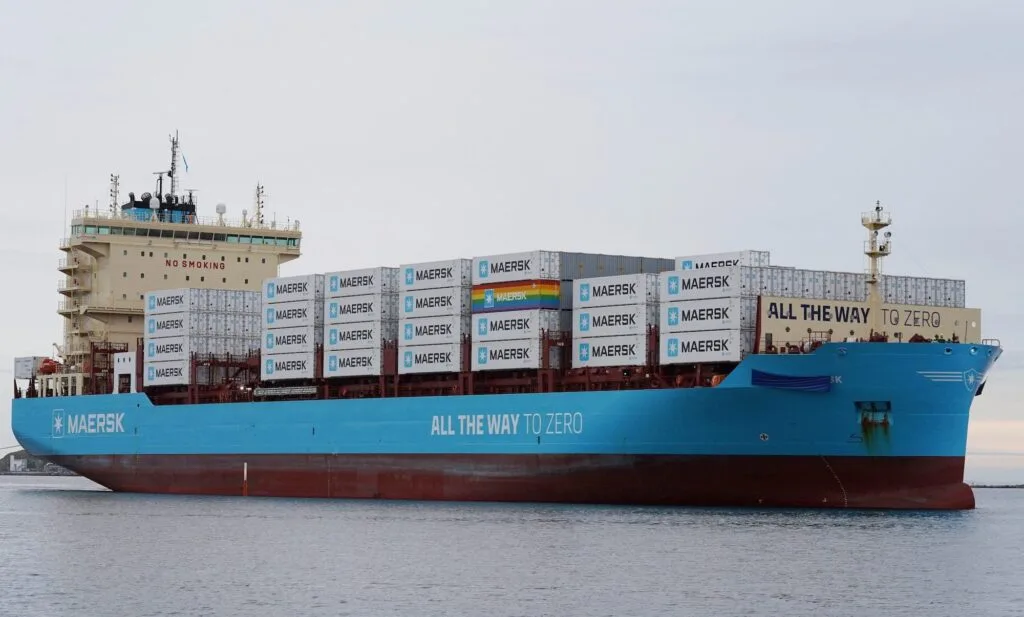
- Maersk completes its first vessel voyage powered entirely by ethanol, marking a new milestone in maritime decarbonisation
- The successful trial expands fuel optionality for Maersk’s dual-fuel fleet as shipping races to meet global emissions targets
- Ethanol could emerge as a scalable low-emission marine fuel, though supply chain and environmental concerns remain
The global shipping industry is searching for scalable alternatives to fossil fuels as pressure mounts to decarbonise one of the world’s most emissions-intensive sectors.
Maersk has now taken a significant step in that transition after completing its first voyage powered entirely by ethanol during the first quarter of 2026.
The company described the operation as successful, saying the fuel performed reliably throughout the sailing and generated operational insights that could support broader deployment across its fleet.
The milestone builds on Maersk’s expanding push into alternative marine fuels as the company works toward its target of achieving carbon neutrality by 2040 — a decade ahead of the International Maritime Organization’s 2050 industry-wide net-zero timeline.
Ethanol Expands Marine Fuel Options
Maersk began testing ethanol-methanol fuel blends in its dual-fuel vessels last year.
The company initially trialed a 10% ethanol blend before moving to a 50-50 ethanol-methanol mix. According to Maersk, those earlier tests confirmed that ethanol could be integrated safely and effectively into marine fuel operations.
The latest voyage marks the first successful deployment using 100% ethanol.
“The supply of ethanol offers another scalable, low-emission fuel option for decarbonization,” the company said. Maersk added that the successful test “marks the potential to create optionality for Maersk’s methanol dual-fuel fleet.”
The vessels involved in the trials can operate on conventional bunker fuel as well as methanol and ethanol-based fuels. That flexibility is becoming increasingly valuable as shipping companies attempt to balance fuel availability, infrastructure constraints, and tightening emissions regulations.
Shipping Faces Intensifying Climate Pressure
Maritime transport currently accounts for roughly 2% to 3% of global greenhouse gas emissions.
Under new International Maritime Organization rules, shipping companies must fully neutralize greenhouse gas emissions by 2050 while reducing emissions by at least 20% by 2030.
Consequently, the sector is accelerating investment into lower-emission fuels including bio-methanol, e-methanol, biodiesel, ammonia, and now ethanol.
Maersk has already ordered 45 dual-fuel vessels, with 14 currently in operation.
The successful ethanol voyage adds another potential pathway for decarbonisation at a time when the shipping industry remains divided over which fuel technologies will ultimately scale commercially.
Supply Chain And Sustainability Questions Remain
Despite the successful trial, major supply chain questions remain.
Market estimates suggest that if the global shipping sector adopted a 10% ethanol blend across fleets, annual demand could reach 50 billion liters. That would exceed Brazil’s current total ethanol production.
The world’s two largest ethanol producers — the United States and Brazil — currently account for roughly 80% of global output.
However, Brazil still faces logistical limitations because ships do not currently refuel with ethanol along much of the country’s coastline.
At the same time, environmental concerns continue to surround biofuel expansion. Critics warn that rising ethanol demand could intensify land-use pressures and contribute indirectly to deforestation, even where production complies with existing legal frameworks.
What Executives And Investors Should Watch
The Maersk ethanol trial highlights how rapidly the shipping industry is broadening its search for commercially viable low-emission fuels.
For investors, the development reinforces the growing importance of maritime fuel infrastructure, renewable fuel supply chains, and dual-fuel vessel technology within the broader energy transition.
For fuel producers, successful marine deployment could unlock a major new source of long-term demand.
And for policymakers, the trial underscores a central challenge facing global shipping decarbonisation: scaling cleaner fuels fast enough to meet climate targets without creating new environmental and supply chain risks.
Subscribe & Follow for Daily ESG Insights
Stay Informed: Subscribe to the ESG News Daily Snapshot for the latest updates in ESG Investing, sustainable finance, policy, events, and corporate strategy delivered directly to your inbox.
Join the Conversation: Follow ESG News on LinkedIn to engage with our global community of 50K+ sustainability leaders and C-suite executives.

The ESG News Editorial Team is comprised of veteran financial journalists and sustainability analysts dedicated to providing real-time, objective reporting on global ESG regulations, climate finance, and corporate governance. Our desk monitors daily developments from the SEC, IFRS, CSRD and international regulatory bodies to ensure our 1M+ readers receive accurate, data-driven insights into the evolving sustainable investment landscape. Follow the ESG News Editorial Team for expert reporting on global sustainability standards, ESG disclosures, and climate policy. Access over 10,000 investigative reports and real-time updates.