McCormick Faces Investor Pressure To Preserve Unilever ESG Standards In $65 Billion Food Deal
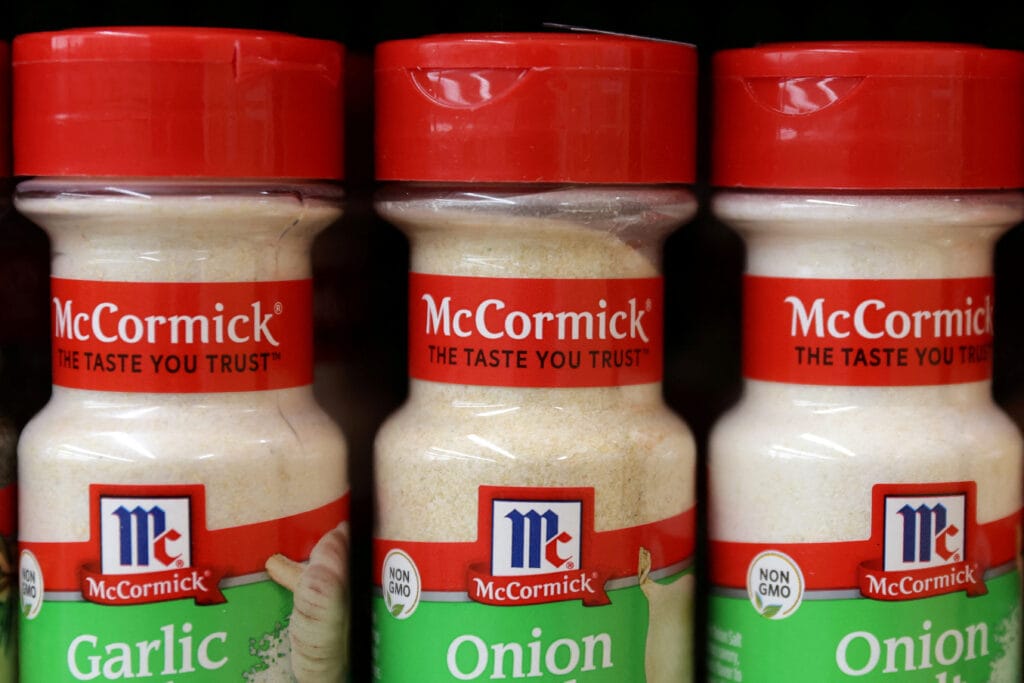
- McCormick’s $65 billion deal with Unilever will create one of the world’s largest food entities, combining brands including Hellmann’s mayonnaise and Cholula hot sauce.
- Investors are seeking assurances that the combined company will maintain Unilever’s standards on deforestation-free sourcing, traceability, and sustainability governance.
- The deal raises disclosure questions as McCormick operates under U.S. rules, while Unilever has faced more detailed European sustainability reporting expectations.
Investors Push For ESG Continuity In Major Food Merger
London and Hunt Valley, Maryland, are now tied by one of the largest food deals ever struck. McCormick’s $65 billion combination with Unilever’s food business will create a global food company with household brands, broad retail reach, and a more complex sustainability profile.
The transaction, announced in March, will combine Unilever’s food division with McCormick’s business. The new entity will include brands such as Hellmann’s mayonnaise and Cholula hot sauce. It also places McCormick in charge of a business nearly twice its current size.
For investors, the issue is not only scale. It is governance.
McCormick will inherit a larger global supply chain with deeper exposure to agriculture, commodities, and small-scale farming. Those areas carry direct ESG risks, especially around forest protection, land conversion, traceability, and human rights in sourcing regions.
Some Unilever shareholders now want formal reassurance that the new company will preserve the standards long associated with Unilever’s sustainability approach.
Deforestation-Free Sourcing Comes Under Scrutiny
Unilever has historically held a leading position among consumer goods companies on sustainability. That record has made the McCormick deal a test case for whether ESG standards survive large corporate restructuring.
“We will be seeking assurances about the intention of the combined company to uphold and build upon best practice with regard to deforestation-free sourcing of commodities,” said Vemund Olsen, senior analyst at Norwegian asset manager Storebrand, a top-100 investor in Unilever and a McCormick shareholder according to LSEG data.

The concern centers on agricultural commodities. Food companies often depend on supply chains linked to palm oil, soy, spices, packaging materials, and other inputs that may carry deforestation or conversion risks.
According to Olsen, best practice should include a clear commitment not to source from deforested or converted land across the supply chain. It should also include full traceability of commodities to plantations, alongside a public complaints system.
Those details matter because food supply chains often involve many intermediaries. Without traceability, investors struggle to assess whether companies are meeting sustainability targets or simply shifting risk down the chain.
RELATED ARTICLE: McCormick & Company Ranked No. 1 in Food on the Corporate Knights 2023 Global 100 Sustainability Index
Disclosure Gap Raises Governance Questions
The deal also places a spotlight on the gap between U.S. and European reporting rules.
McCormick is based in Hunt Valley, Maryland. Under U.S. rules, it is not required to disclose the same level of detailed sustainability information that Unilever faces in Europe. That difference creates a governance challenge for global investors who compare companies across markets.
Companies with significant European operations are expected to comply with EU-level sustainability reporting rules. However, full compliance may take years. During that transition, disclosure quality may depend heavily on company commitments, board oversight, and investor pressure.
A spokesperson for Frankfurt-based Union Investment, a top-40 investor in both companies, according to LSEG data, said it would seek transparency “about how it integrates sustainable practices moving forward”.
That demand reflects a broader market concern. Investors increasingly want sustainability standards to remain intact through mergers, carve-outs, and spin-offs. They also want clarity on who is accountable once ownership and governance structures change.
What Executives And Investors Should Watch
For C-suite leaders, the McCormick-Unilever deal shows how ESG expectations now follow assets through major transactions. A company cannot assume that sustainability commitments reset when business lines move into a new corporate structure.
For investors, the key question is whether McCormick can manage a larger, more exposed supply chain without weakening standards. That will require clear targets, transparent sourcing policies, credible complaint mechanisms, and traceability systems that can withstand scrutiny.
The deal also arrives at a sensitive time for global sustainability reporting. Europe continues to push companies toward more structured disclosure, while U.S. requirements remain more limited. Multinational companies operating across both systems may face pressure to meet the higher standard, even when regulation does not require it.
For the food sector, the stakes extend beyond one transaction. Agriculture remains central to climate, nature, and social risk. As global food companies consolidate, investors will be watching whether scale improves oversight or dilutes accountability.
McCormick’s next steps will therefore carry wider significance. The company must integrate a major food portfolio while convincing investors that growth will not come at the expense of forest protection, supply chain transparency, or sustainability governance.

The ESG News Editorial Team is comprised of veteran financial journalists and sustainability analysts dedicated to providing real-time, objective reporting on global ESG regulations, climate finance, and corporate governance. Our desk monitors daily developments from the SEC, IFRS, CSRD and international regulatory bodies to ensure our 1M+ readers receive accurate, data-driven insights into the evolving sustainable investment landscape. Follow the ESG News Editorial Team for expert reporting on global sustainability standards, ESG disclosures, and climate policy. Access over 10,000 investigative reports and real-time updates.