Heineken Appoints Simon Henzell-Thomas To Lead Sustainability Strategy As Net Zero, Circular Targets Accelerate
- Heineken hires former IKEA Head of Climate and Nature to lead global sustainability strategy at scale
- Company targets net zero operations by 2030 and full value chain decarbonisation by 2040
- Circular packaging, water stewardship, and responsible sourcing priorities intensify under new leadership
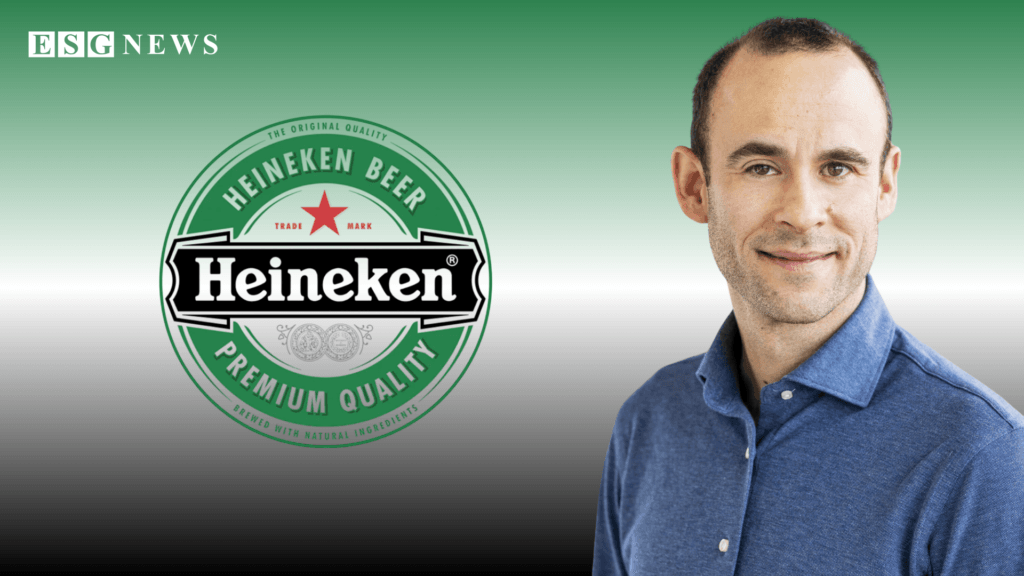
Heineken has appointed Simon Henzell-Thomas as Global Sustainability Director, placing a seasoned climate and stakeholder engagement leader at the centre of its next phase of ESG execution.
The move comes as the brewer accelerates delivery of its “Brew a Better World” strategy, a programme that ties emissions reduction, circular packaging, and social governance targets directly to long-term business resilience.
Henzell-Thomas joins after 14 years at IKEA, where he most recently served as Head of Climate and Nature. His tenure spanned climate strategy, human rights, and public affairs, positioning him as one of the more experienced sustainability operators moving between consumer-facing multinationals.
Leadership Shaped By Crisis And Culture
In announcing his departure from IKEA, Henzell-Thomas reflected on a period defined by global disruption and shifting corporate expectations.
“The hardest thing about leaving a place you love is realising that the time is right.” “I learned what it really means to lead through uncertainty. From Covid to the war in Ukraine and everything in between, staying calm, focused and human during chaos is a muscle we all need to keep building.”
His emphasis on human-centred leadership and organisational culture aligns with a growing investor focus on governance quality as a determinant of ESG performance.
“I learned that values only matter when they’re lived. Principles need the oxygen of pragmatism. Progress happens in the grey.”
That perspective carries particular weight as companies move from target-setting to execution, where trade-offs across cost, supply chains, and policy exposure become unavoidable.
Scaling Sustainability In A Carbon-Intensive Sector
For Heineken, the appointment comes at a critical juncture. Brewing remains energy-intensive and resource-dependent, with emissions embedded across agriculture, packaging, logistics, and retail.
The company has committed to reaching net zero across Scope 1 and 2 emissions by 2030, with full value chain decarbonisation targeted by 2040. Alongside emissions, it aims for 50 percent recycled content in bottles and cans and 99 percent of packaging to be recyclable by design.
Water usage, ingredient sourcing, and product portfolio shifts, including expansion of low- and no-alcohol offerings, are also embedded in the strategy. These targets reflect mounting regulatory pressure across Europe and key emerging markets, as well as rising expectations from institutional investors.
Execution risk remains high. Achieving Scope 3 reductions will depend on supplier alignment, agricultural transitions, and infrastructure investment, areas where governance and partnership strategy are decisive.
RELATED ARTICLE: Simon Henzell-Thomas Global Head of Public Affairs with IKEA Group Interview with Matt Bird at Humanity 2.0
A Listening Mandate
Henzell-Thomas has signalled a measured approach as he steps into the role.
“I’m very aware I’m joining a team that has been building and driving the agenda long before I arrived. My focus now is to listen, learn and support the work already underway.” “Moving somewhere new can feel surprisingly like going home. That’s how this first week has felt as I step into a new role, leading sustainability at HEINEKEN.” “What stood out immediately was the warmth and how much pride people have in both the history and the future of the business.”
The emphasis on continuity rather than reset suggests Heineken is prioritising execution stability over strategic overhaul, a signal that its sustainability roadmap is largely set and entering a delivery phase.
What This Means For Executives And Investors
The appointment highlights a broader trend: sustainability leadership is increasingly being sourced from executives with cross-functional experience in policy, stakeholder engagement, and operational delivery, rather than purely technical backgrounds.
For C-suite leaders, the message is clear. Sustainability strategy is now inseparable from governance capability and organisational culture. Leaders must navigate regulatory complexity, supply chain transformation, and reputational risk simultaneously.
For investors, the hire provides a degree of continuity and credibility. IKEA’s sustainability framework has been widely regarded as one of the more operationally embedded among global consumer brands. Translating that discipline into a brewing context will be closely watched.
Ultimately, Heineken’s next phase will be judged less on ambition and more on delivery. The combination of clear targets, sector exposure, and leadership experience places the company at a decisive point in its ESG trajectory, one where execution will determine whether sustainability commitments translate into measurable financial and environmental outcomes.

The ESG News Editorial Team is comprised of veteran financial journalists and sustainability analysts dedicated to providing real-time, objective reporting on global ESG regulations, climate finance, and corporate governance. Our desk monitors daily developments from the SEC, IFRS, CSRD and international regulatory bodies to ensure our 1M+ readers receive accurate, data-driven insights into the evolving sustainable investment landscape. Follow the ESG News Editorial Team for expert reporting on global sustainability standards, ESG disclosures, and climate policy. Access over 10,000 investigative reports and real-time updates.