Green Sky Capital Backs Egypt Biofuels Facility With 200,000-Ton SAF Plan
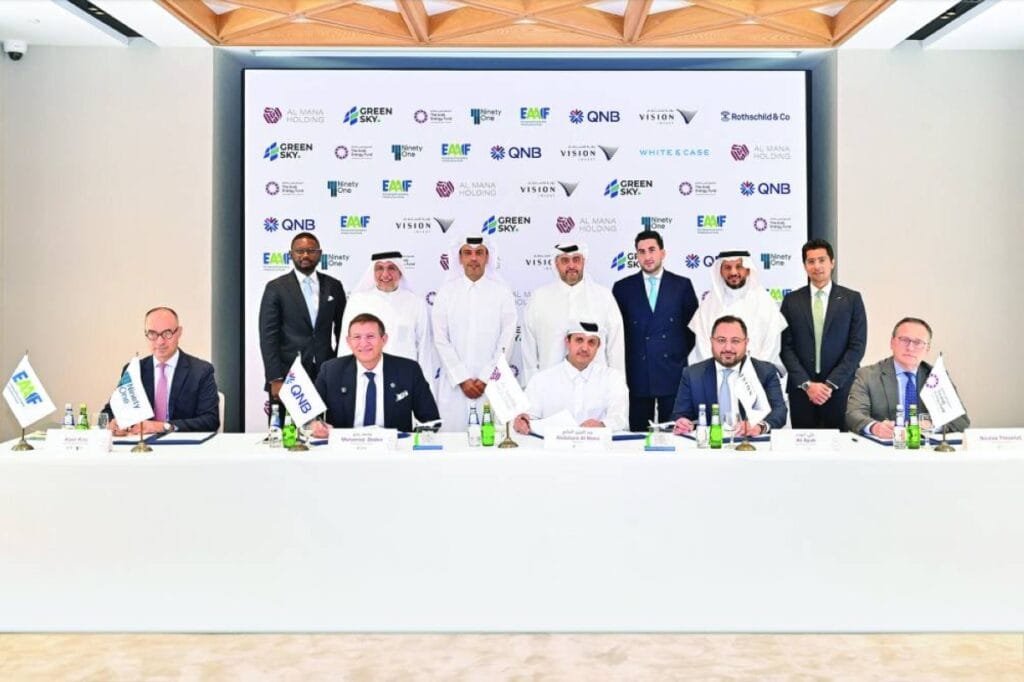
- Green Sky Capital has signed financing for a sustainable fuel facility in Egypt’s Suez Canal Economic Zone, with planned output of up to 200,000 tons of biofuels a year.
- The project is backed by Qatari Al Mana Holding and Saudi Vision Invest, with Qatar announcing a $200 million investment late last year.
- The facility is expected to produce sustainable aviation fuel, hydro-treated vegetable oil, bio propane and bio naphtha, with commercial operations targeted by the end of 2027.
Egypt Positions Suez Canal Zone For Cleaner Aviation Fuel
Green Sky Capital has signed financing for a sustainable fuel facility in Egypt’s Suez Canal Economic Zone, placing the country closer to a fast-growing but still constrained market for lower-carbon transport fuels.
The facility is expected to produce up to 200,000 tons of biofuels a year. Its planned product slate includes sustainable aviation fuel, hydro-treated vegetable oil, bio propane and bio naphtha. For airlines, refiners and investors, the project lands at a critical point.
Aviation remains one of the hardest sectors to decarbonize. Aircraft have limited near-term options for replacing liquid fuels at scale. As a result, sustainable aviation fuel has become central to the industry’s 2050 climate pathway. Yet supply remains limited, production costs remain high, and offtake markets are still forming.
That gap is creating a major opportunity for fuel producers and infrastructure investors. It is also putting pressure on governments to build local and regional supply chains before regulation tightens further.
Gulf Capital Backs Regional Fuel Infrastructure
The Egypt project is backed by Qatari Al Mana Holding and Saudi Vision Invest. Qatar announced a $200 million investment in the project late last year, adding further Gulf capital to a sector where demand is expected to rise sharply over the next two decades.
The facility also signed an agreement with Shell Plc about five months ago. That connection gives the project a link to a major global energy company as it moves toward expected commercial operations by the end of 2027.
Green Sky Capital is a sustainable aviation fuel platform developing renewable fuel projects across the Middle East and North Africa. Its backers include sponsors with experience in infrastructure, energy and industrial development.
That mix matters. Sustainable fuel projects require more than climate ambition. They need feedstock security, industrial execution, long-term offtake, supportive policy and credible financing. Without those elements, many announced projects struggle to move from concept to production.
For Egypt, the location adds strategic weight. The Suez Canal Economic Zone sits at one of the world’s most important trade corridors. A biofuels facility there could serve regional transport demand while supporting Egypt’s wider industrial and energy-transition ambitions.
RELATED ARTICLE: Comcast Fully Allocates $1 Billion Green Bond to Sustainability Projects
Airlines Face Rising Fuel Pressure
The aviation sector’s fuel challenge is becoming more urgent. Airlines have committed to long-term decarbonization goals, but the path remains difficult. Sustainable aviation fuel is widely viewed as the most practical near-term tool for cutting lifecycle emissions from flights. However, it still accounts for only a small share of global jet fuel use.
Cost is the central obstacle. Alternative fuels are often far more expensive than conventional kerosene. Airlines already face thin margins, volatile demand cycles and rising pressure from regulators and customers. Fuel is also one of their largest single expenses.
Geopolitical shocks can intensify that pressure. The war in Iran has added concern over traditional fuel costs, giving alternative fuel investment new urgency. When kerosene prices rise, the economics of diversification become more relevant for airlines and investors.
Still, the market cannot scale on price pressure alone. Producers need long-term buyers. Airlines need reliable supply. Governments need to create policy frameworks that reward cleaner fuel use without placing unsustainable cost burdens on carriers.
What Executives And Investors Should Watch
For C-suite leaders, the Green Sky Capital project is about more than one facility. It points to a broader shift in how aviation fuel security, climate policy and industrial investment are starting to converge.
Investors will watch whether the Egypt facility can secure feedstock, meet its construction timeline and convert partnerships into long-term commercial demand. Airlines will watch pricing and availability. Policymakers will watch whether regional production can reduce dependence on imported fuels while supporting emissions goals.
The project also adds to the Middle East and North Africa’s role in the global energy transition. The region has long been central to fossil fuel markets. Now, governments and investors are trying to position parts of the region for future fuel supply chains as well.
If Green Sky Capital’s Egypt facility reaches commercial operations by the end of 2027, it could become a reference point for sustainable aviation fuel development in emerging markets. Its real test will be whether it can turn capital commitments and industrial partnerships into scalable, competitive supply.

The ESG News Editorial Team is comprised of veteran financial journalists and sustainability analysts dedicated to providing real-time, objective reporting on global ESG regulations, climate finance, and corporate governance. Our desk monitors daily developments from the SEC, IFRS, CSRD and international regulatory bodies to ensure our 1M+ readers receive accurate, data-driven insights into the evolving sustainable investment landscape. Follow the ESG News Editorial Team for expert reporting on global sustainability standards, ESG disclosures, and climate policy. Access over 10,000 investigative reports and real-time updates.