
Bangladesh Farmers to Earn Carbon Revenue From First Verra Agroforestry Credits
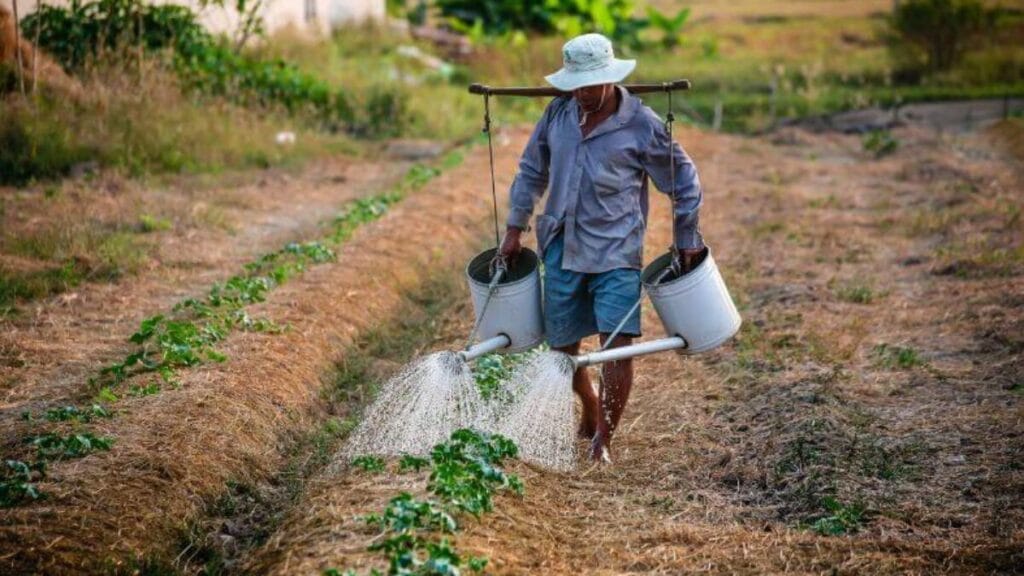
- Bangladesh has issued its first agroforestry carbon credits under Verra’s Verified Carbon Standard, creating a new carbon finance pathway for smallholder farmers.
- More than 60,000 credits have been issued across 160 demonstration farms using high-density mango-based agroforestry systems.
- The project is expected to channel hundreds of thousands of dollars to participating farmers in 2026, with further payments tied to future credit vintages.
Bangladesh Opens New Carbon Market Pathway for Smallholder Farmers
Bangladesh has issued its first agroforestry carbon credits under Verra’s Verified Carbon Standard. The move gives smallholder farmers direct access to carbon revenue. It rewards work to restore degraded land and adopt climate-resilient farming systems.
The credits were issued under VCS Project 4456, developed by Varaha ClimateAg Private Limited and Sustainable Agriculture Foundation Bangladesh. The project has generated more than 60,000 carbon credits from 160 demonstration farms.
For Bangladesh, the issuance is more than a carbon market entry point. It brings climate finance into one of the country’s most important economic sectors and links smallholder agriculture with global carbon standards.
Farmers in the project are restoring degraded land, improving water use, and shifting to high-density mango-based agroforestry systems. The model was designed to prove a practical point. Higher-value perennial crops can work for subsistence farmers when technical support and new financing are in place.
Carbon Finance Bridges A Four-Year Income Gap
The project addresses one of the central barriers facing smallholder farmers: the time it takes for perennial crops to generate income.
High-density mango plantations can deliver stronger long-term returns. However, the four-year gestation period has often made them unrealistic for subsistence farmers. Many cannot absorb several years of reduced income while waiting for crops to mature.
Carbon finance changes that equation. According to the project developers, the issuance is expected to channel hundreds of thousands of dollars in carbon revenue share to participating farmers in 2026 alone. Further payments are expected as additional vintages are sold.
That revenue could help farmers manage the transition period, reduce financial risk, and invest in more resilient land-use practices. It also gives carbon markets a more direct link to rural livelihoods, which remains a key test for nature-based climate finance.
RELATED ARTICLE: H&M Group CEO in Bangladesh to Jointly Work on Climate Solutions
World Bank-Backed Support Helped Build The Model
The network of demonstration farms was technically facilitated and supported by 2030WRG, part of the World Bank Group.
The initiative was designed to prove that water-efficient, high-density mango plantations could be adapted for smallholder conditions in Bangladesh. It created a model that project developers say did not previously exist in the country.
SAF Bangladesh then used its long experience working with smallholders to help design, improve, and prepare the prototype for broader deployment. With carbon finance now in place, the project has grown from proof of concept to a 30,000-hectare target.
That scale matters for investors and policymakers. If implemented effectively, the model could support land restoration, higher farm incomes, and a stronger agricultural export base. It could also help Bangladesh position smallholder agriculture inside global climate finance frameworks.
“Seeing the country’s first agroforestry carbon credits issued under Verra is deeply meaningful — not just as a milestone for our partnership with 2030 WRG, but as a tangible step forward for the smallholder farmers whose work is at the heart of this project,” said Md. Farhad Zamil, Executive Director at SAF Bangladesh.“

Why It Matters For Climate Finance
For executives and investors, the project points to a wider shift in carbon markets. Buyers are under growing pressure to support credits with clear climate value, strong governance, and measurable community benefits.
Agroforestry projects can meet that demand when they combine verified carbon outcomes with farmer income, water efficiency, and land restoration. However, credibility depends on transparent measurement, fair revenue sharing, and long-term project oversight.
Bangladesh’s first issuance under Verra’s VCS gives the country a practical case study. It shows how carbon finance can move beyond corporate offsetting and into agricultural transformation.
The next test will be scale. Expanding from 160 demonstration farms to 30,000 hectares will require strong governance, farmer trust, buyer demand, and consistent technical support.
Still, the early issuance gives Bangladesh a foothold in a market that could become more important for climate-vulnerable economies. If the model holds, it could offer a blueprint for other developing countries seeking to pair smallholder resilience with verified carbon finance.

The ESG News Editorial Team is comprised of veteran financial journalists and sustainability analysts dedicated to providing real-time, objective reporting on global ESG regulations, climate finance, and corporate governance. Our desk monitors daily developments from the SEC, IFRS, CSRD and international regulatory bodies to ensure our 1M+ readers receive accurate, data-driven insights into the evolving sustainable investment landscape. Follow the ESG News Editorial Team for expert reporting on global sustainability standards, ESG disclosures, and climate policy. Access over 10,000 investigative reports and real-time updates.