DHL To Invest $186 Million In France Logistics And Clean Energy Shift

- DHL Group will invest around €160 million, about $186 million, in France between 2026 and 2027.
- The funding will expand logistics capacity, electrify fleets, upgrade infrastructure, and support low-emissions operations.
- DHL’s total investment in France from 2018 to 2027 will reach nearly €900 million, about $1.05 billion.
DHL Deepens Its French Logistics Footprint
DHL Group will invest around €160 million in France between 2026 and 2027, strengthening one of its largest European markets as logistics companies face rising pressure to cut emissions and build more resilient supply chains.
The investment will support logistics capacity, infrastructure upgrades, fleet electrification, and decarbonization projects across DHL’s French operations. It also lifts the company’s total investment in France to nearly €900 million over the 10 years from 2018 to 2027.
The announcement was made alongside the 9th Choose France Summit, the French government’s flagship event for attracting global business investment. For France, the commitment adds weight to its pitch as a European logistics, industrial, and clean economy hub.
DHL said the new funding forms part of its wider strategy to support sustainable economic growth in France and across Europe. The move also comes as shippers, manufacturers, and e-commerce companies reassess supply chain risk, carbon exposure, and service reliability.
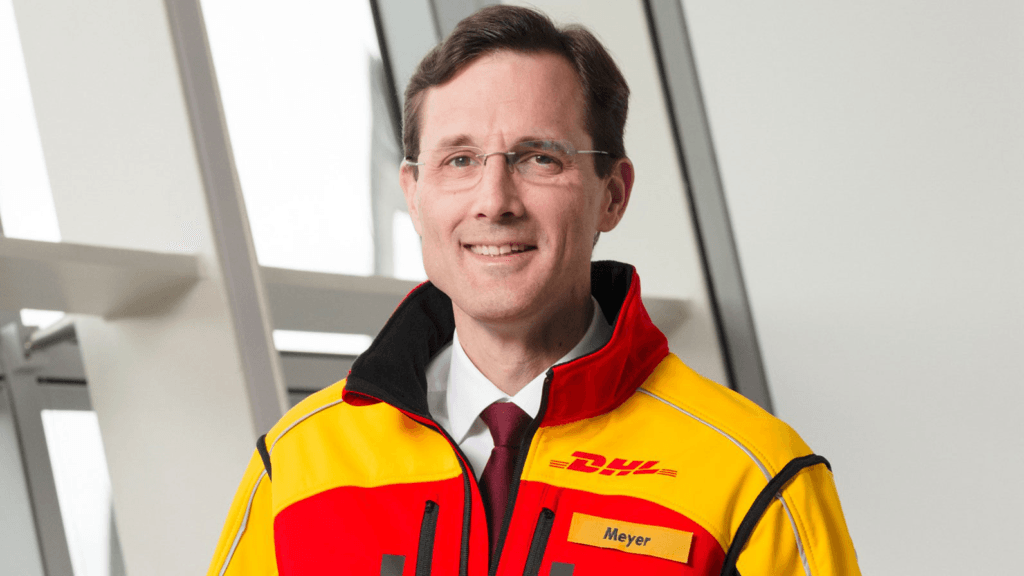
“France is a vital logistics hub at the heart of Europe and a key market for DHL Group,” said Tobias Meyer, CEO of DHL Group. “With this investment, we are strengthening our infrastructure, growing our capabilities, and accelerating our transition toward low-emissions logistics. This enables us to better support our customers’ growth while contributing to France’s competitiveness and sustainability ambitions. For customers who are serious about service and sustainability, DHL is the obvious choice. We have by far the highest share of sustainable aviation fuel and electric delivery vehicles in our industry.”
Infrastructure Spending Across DHL Divisions
The investment will run across all DHL business units in France.
DHL Express will focus on fleet modernization, electric vehicles, charging infrastructure, operational equipment, and network expansion. Since 2018, the division has completed 20 real estate projects in France. These include the Paris Charles de Gaulle Hub, opened in 2021, and the Lyon-Saint Exupéry Gateway, opened in 2025.
DHL Global Forwarding will invest in alternative fuel vehicles, handling equipment, and warehouse infrastructure. The goal is to lower the environmental footprint of freight and forwarding operations.
DHL Freight will continue to fund alternative fuel vehicles and facilities. Since 2018, it has completed six real estate projects in France. Another six projects are expected by 2030.
DHL Supply Chain will expand warehouse capacity in key locations, including southern Paris, Orléans, and Lyon. The division is responding to growing demand for third-party logistics services in life sciences, healthcare, manufacturing, technology, and e-commerce.
The group will also strengthen fourth-party logistics capabilities through its Toulouse control tower. That facility helps coordinate complex supply chains across multiple partners and networks.
RELATED ARTICLE: DHL, Henkel Expand Sustainable Marine Fuel Use in 2025
Clean Energy Transition Moves Into Operations
A significant share of the €160 million investment will support DHL’s decarbonization work in France.
Planned initiatives include more electric delivery vehicles, wider charging infrastructure, and greater use of sustainable aviation fuel. DHL will also deploy solar energy across logistics sites and increase the use of low-carbon fuels such as biodiesel for heavier goods vehicles.
The company will continue to electrify warehouse equipment and invest in energy-efficient building technologies. These measures support DHL Group’s goal of reaching net-zero greenhouse gas emissions from logistics activities by 2050.
For corporate customers, the investment could carry commercial value beyond delivery performance. Logistics emissions are a material part of many Scope 3 inventories. As disclosure rules tighten, transport partners with lower-carbon services may become more important to procurement and sustainability teams.
Strategic Sectors Drive Demand
DHL is also expanding in sectors where logistics reliability and regulatory compliance carry higher business risk.
The company is growing its work in life sciences and healthcare, aerospace, advanced manufacturing, SMEs, and e-commerce. Recent activity includes new pharmaceutical and industrial contracts, as well as expanded fulfillment and specialized logistics services.
These sectors rely on complex delivery networks, temperature control, customs expertise, and supply chain visibility. For executives, DHL’s investment points to a broader trend in European logistics. Infrastructure, emissions performance, and resilience are now linked more closely than before.
Why It Matters For Executives And Investors
For France, DHL’s investment supports regional development, industrial competitiveness, and trade capacity. It also aligns with state priorities around clean transport, logistics modernization, and foreign direct investment.
For DHL, the move strengthens its position in a high-value European market. It also gives the group more capacity to serve customers seeking faster logistics with lower emissions.
The broader significance reaches beyond France. Logistics networks are becoming part of the climate transition. Companies that move goods across borders are under pressure to prove they can deliver growth without locking in higher emissions.
DHL’s latest commitment shows how capital is shifting toward cleaner fleets, smarter infrastructure, and more resilient supply chains. In Europe, that combination is becoming central to competitiveness.

The ESG News Editorial Team is comprised of veteran financial journalists and sustainability analysts dedicated to providing real-time, objective reporting on global ESG regulations, climate finance, and corporate governance. Our desk monitors daily developments from the SEC, IFRS, CSRD and international regulatory bodies to ensure our 1M+ readers receive accurate, data-driven insights into the evolving sustainable investment landscape. Follow the ESG News Editorial Team for expert reporting on global sustainability standards, ESG disclosures, and climate policy. Access over 10,000 investigative reports and real-time updates.