
CDP Says Extreme Weather Risks Could Cost Companies $898 Billion
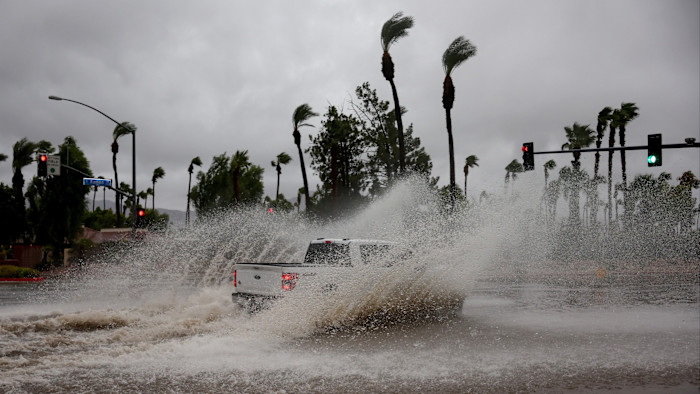
- Companies disclosed nearly $3 billion in real extreme weather losses in 2025, yet only 35% identified the threat as a material financial risk.
- Future corporate exposure could reach $898 billion, led by flooding, cyclones and heavy rain.
- The median cost of mitigation is nearly 13 times lower than the median financial impact of climate-related risks.
Extreme weather is no longer a distant climate scenario for boards, investors and city leaders. It is already cutting into production, shutting down operations and damaging assets across the global economy.
New analysis from CDP, the independent environmental disclosure system, shows a widening gap between recognized risk and real financial exposure. Of the 11,261 companies that disclosed full environmental data through CDP in 2025, only 35% identified extreme weather as a material financial risk.
Yet companies reported nearly $3 billion in actual losses from extreme weather in 2025 alone. Heavy rain was the largest single driver, accounting for $1.5 billion in losses across disclosing companies. Firms also reported higher direct costs of $309 million and operational shutdowns worth $266 million.
The figures point to a governance challenge for executives. Many companies still treat physical climate risk as episodic or local. However, CDP’s findings show that extreme weather is becoming a current financial planning issue.
Future Losses Could Reach $898 Billion
The projected exposure is far larger. Companies anticipate $898 billion in future financial impacts from extreme weather. Flooding accounts for the largest share, at $528 billion. Cyclones add $161 billion, while heavy rain represents $86 billion.
Nearly half of disclosed extreme weather risks are expected to materialize within the next two years. That places them inside current investment, insurance, procurement and operational planning cycles.
The expected losses are not limited to damaged buildings or isolated sites. Companies expect reduced production capacity to drive $326 billion in impacts. Asset impairment or early retirement could add another $218 billion.
For investors, this shifts the discussion from climate ambition to asset quality. Physical risk can affect earnings, insurance access, supply reliability and capital allocation. It can also expose weak governance where boards have not integrated climate hazards into enterprise risk systems.
Adaptation Costs Are Lower Than Losses
CDP’s 2025 Disclosure Dividend report found that the median cost of risks per company stood at $39.4 million. By comparison, the median cost to mitigate those risks was $3.1 million.
That gap changes the finance case for adaptation. It suggests that resilience investments may protect enterprise value at a lower cost than delayed action. For companies with exposed assets or supply chains, the risk is no longer just environmental. It is operational, financial and fiduciary.
The findings also have implications for lenders and insurers. As physical hazards intensify, uninsured or underpriced risk could move through credit portfolios, public balance sheets and local economies.
RELATED ARTICLE: CDP and EFRAG Strengthen ESRS Alignment to Ease Corporate Reporting
Cities And Regions Face The Same Pressure
CDP’s analysis also covers 1,005 cities, states and regions across 80 countries reporting through CDP-ICLEI Track and CDP’s States and Regions questionnaire in 2025. Among them, 62% said they are already significantly affected by extreme weather.
More than 60% expect hazards such as extreme heat, urban flooding and drought to increase in intensity, frequency, or both. Close to a quarter identified financial and insurance activities as highly exposed to these climate hazards.
Local governments are moving from climate pledges to adaptation projects. Still, funding remains a barrier. More than 60% have at least one adaptation project that needs additional funding. CDP estimates the global investment gap at no less than $34 billion. Almost half of subnational governments also report budget constraints that limit their ability to adapt.
Shared Systems Need Shared Risk Management
Amir Sokolowski, Global Director of Climate at CDP said: “Extreme weather is already a financial risk. It has a dangerous domino effect, disrupting operations, reducing production and driving losses today, with far greater impacts lying ahead. This is a systemic challenge that no single actor can manage alone. Our report highlights that efforts to address this risk coherently are not sufficiently coordinated and that the gaps in collaboration are significant risk in their own right. By aligning investment, strengthening shared systems and scaling adaptation – with disclosure as a guide to enable better decisions – businesses and governments can not only reduce risk, but accelerate the transition to an earth-positive, resilient economy.”
CDP is calling for companies to treat extreme weather as a system-exposed business risk. That means looking beyond individual assets and assessing dependence on infrastructure, utilities, logistics and public services.
It also urges subnational governments to disclose where hazard exposure, infrastructure risks and service disruption intersect. National governments, meanwhile, need to align fiscal, adaptation and risk-management policies around shared economic exposure.
For regulators and central banks, the message is direct. Physical climate risk is entering financial systems through uninsured losses, stranded assets and disrupted economic activity. The global adaptation agenda is no longer just a climate priority. It is becoming a core test of economic resilience.

The ESG News Editorial Team is comprised of veteran financial journalists and sustainability analysts dedicated to providing real-time, objective reporting on global ESG regulations, climate finance, and corporate governance. Our desk monitors daily developments from the SEC, IFRS, CSRD and international regulatory bodies to ensure our 1M+ readers receive accurate, data-driven insights into the evolving sustainable investment landscape. Follow the ESG News Editorial Team for expert reporting on global sustainability standards, ESG disclosures, and climate policy. Access over 10,000 investigative reports and real-time updates.