
Day 2 at Climate Week NYC: Energy Transition Enters Delivery Era
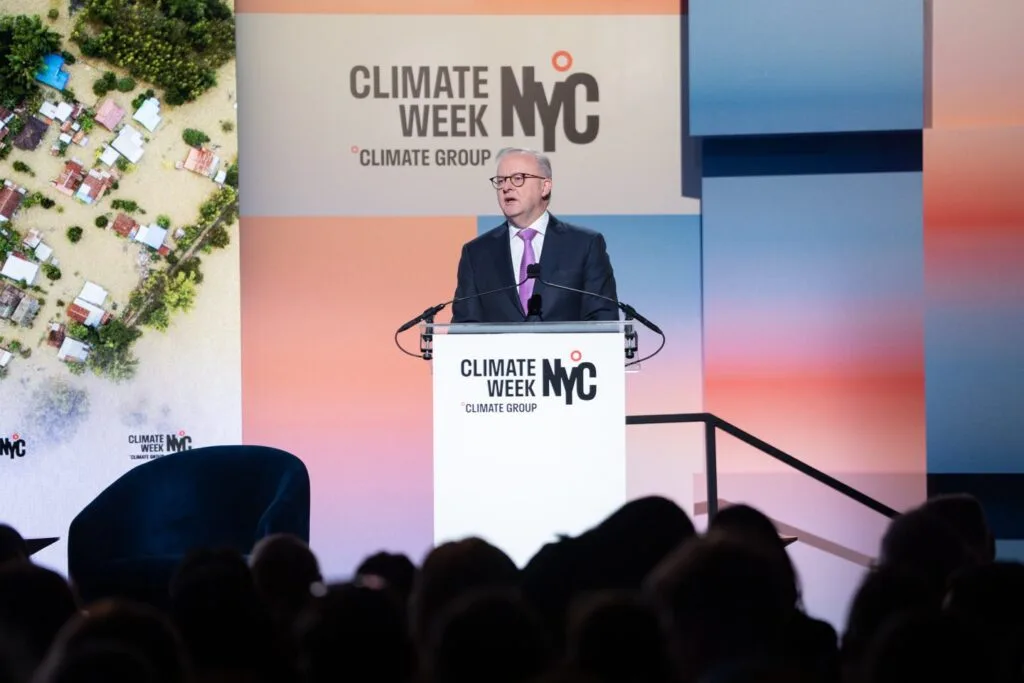
- Energy and investment: Leaders called for faster electrification, renewable deployment and efficiency as electricity demand rises from AI, data centres and industrial growth.
- Industry and supply chains: Steel, cement, food and manufacturing discussions shifted toward procurement, traceability and creating demand for lower-carbon materials.
- Climate governance: Governments, companies and investors face growing pressure to turn targets into projects, financing and infrastructure that deliver benefits locally.
Climate Week NYC discussions moved beyond whether the global transition will happen and focused increasingly on how quickly governments and businesses can deliver it.
Energy, industry, food systems, artificial intelligence and climate finance dominated conversations. Across them ran a common theme: technologies increasingly exist, but deployment, capital and policy are struggling to keep pace.
Dr. Fatih Birol, Executive Director of the International Energy Agency, described the world as entering an age of electricity. Yet the pace of change needs to double.
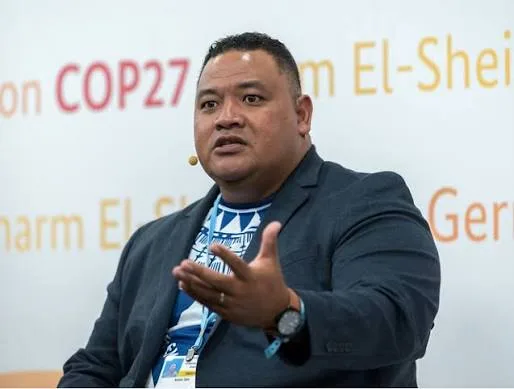
For climate-vulnerable countries, that timeline carries much higher stakes. Dr. Maina Vakafua Talia, Climate Minister of Tuvalu, put the consequences plainly. “For us, it’s a matter of life and death.”
Investment moves from targets to projects
Several announcements showed the scale of capital now being sought for the transition.
Lagos State unveiled a $25 billion to $50 billion pipeline containing more than 300 investment-ready projects. Five governments also backed the new Blend Better Cement campaign.
L’Oréal opened the second cohort of its €100 million L’AcceleratOR program to 13 companies. AstraZeneca launched CARESA, a free tool designed to measure the environmental footprint of patient care.
Industrial decarbonisation featured heavily. Steel buyers and suppliers discussed how procurement standards can create demand for cleaner production. Cement discussions focused on blended products that reduce clinker use and can support more localised supply chains.
The message for investors was increasingly practical. Capital needs credible standards, transparent supply-chain data and sufficient demand to make lower-carbon production commercially viable.
AI puts electricity demand under scrutiny
Artificial intelligence emerged as both a climate tool and a new source of infrastructure pressure.
Manufacturers are already applying AI to energy management, equipment and building systems. Trane Technologies said autonomous building controls can generate substantial efficiency improvements from existing equipment.
The larger debate concerned data centres. Their rapid expansion is increasing scrutiny of electricity use, grid capacity, water demand and relationships with host communities.
Speakers argued that efficiency must develop alongside new generation. Waste heat could also become a resource where cities, data centres and nearby buildings can establish the infrastructure needed to reuse it.
RELATED ARTICLE: Day 1 at Climate Week NYC: Leaders Shift Focus to Delivery
Kate Gallego, Mayor of Phoenix, captured the growing expectations facing developers. “Cities are open for business, but not for sale.”

For executives, the implication is that access to power alone may no longer determine where digital infrastructure gets built. Water, grid resilience, community impact and local economic benefits are becoming part of the investment equation.
Food and materials move up the climate agenda
Food systems were another major focus. Speakers estimated they account for roughly one-third of greenhouse gas pollution, while debates ranged from regenerative agriculture to traceability and consumer behaviour.
The discussion challenged the idea that sustainable consumption depends mainly on individual choice. Price, availability, agricultural subsidies and government policy all influence what consumers ultimately buy.
Similar questions surfaced around steel and cement. Buyers increasingly want supplier-specific emissions information rather than broad industry averages. Public procurement can reinforce that demand through specifications and environmental product declarations.
The broader challenge is creating markets where lower-carbon production is rewarded rather than penalised by higher upfront costs.
Climate strategy enters a harder phase
The closing discussions reflected a transition that is becoming more economically and politically complex.
Former Australian Prime Minister Kevin Rudd pointed to renewables, electrification, AI and China as four areas central to the next phase of climate action.
Meanwhile, International Energy Agency analysis presented at the event placed electricity at the centre of the changing global energy system.
The question for corporate leaders is therefore shifting. Setting a target is increasingly only the starting point.
The next phase will depend on securing power, financing infrastructure, strengthening supply chains and demonstrating value to the communities hosting new investment.
As governments and businesses compete for capital in that transition, the dividing line may increasingly be execution: who can convert climate ambition into investable projects, resilient infrastructure and measurable economic outcomes fastest.

The ESG News Editorial Team is comprised of veteran financial journalists and sustainability analysts dedicated to providing real-time, objective reporting on global ESG regulations, climate finance, and corporate governance. Our desk monitors daily developments from the SEC, IFRS, CSRD and international regulatory bodies to ensure our 1M+ readers receive accurate, data-driven insights into the evolving sustainable investment landscape. Follow the ESG News Editorial Team for expert reporting on global sustainability standards, ESG disclosures, and climate policy. Access over 10,000 investigative reports and real-time updates.