

Navitas Solar Plans $1 Billion Clean Energy Expansion
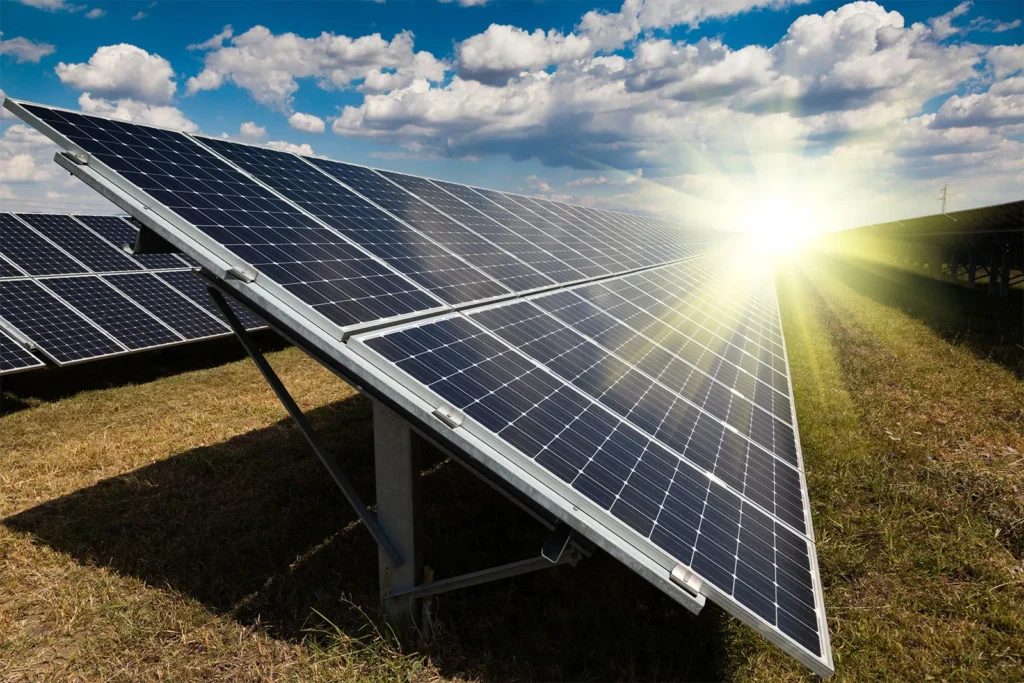
- Navitas Solar plans to invest $1.04 billion over five years across Gujarat and Maharashtra, expanding from solar modules into cells, wafers, ingots, storage and power generation.
- A 2.4 GW solar cell facility is already under development in Gujarat, with its first phase expected to begin operations by July 2027.
- The expansion also includes a 5 GWh battery storage facility and two solar parks, strengthening Navitas Solar’s position across the clean energy value chain.
Navitas Solar plans to invest $1.04 billion over the next five years to build a more integrated clean energy business across Gujarat and Maharashtra.
The privately owned Indian solar manufacturer will expand beyond its existing module operations into upstream manufacturing, battery storage and renewable power generation. The investment covers solar ingots, wafers, cells and modules, alongside new energy storage and generation capacity.
The strategy would give Navitas greater control across the solar supply chain at a time when India is pushing to expand domestic clean energy manufacturing.
Building an integrated solar supply chain
Navitas currently has 3 GW of annual solar module manufacturing capacity. Its next phase will move the company further upstream into the components required to manufacture those modules.
A major part of that expansion is already underway in Sisodara, Gujarat. Navitas is developing a 2.4 GW solar cell manufacturing facility there.
The first phase will involve approximately $125 million of investment and is targeted to begin operations by July 2027.
Adding cell production creates a more vertically integrated manufacturing structure. Planned investments in ingots and wafers would extend that integration further upstream.
For solar manufacturers, greater control over these production stages can reduce exposure to external suppliers and improve oversight of costs, quality and availability. It can also support India’s wider effort to build more domestic manufacturing capacity across the renewable energy supply chain.
The scale of the Navitas investment also reflects how manufacturers are broadening their strategies as India’s renewable energy market grows. Companies increasingly face demand not only for generation equipment, but also for technologies that can support grid reliability.
Battery storage joins the expansion
Navitas plans to add battery energy storage to its portfolio through a 5 GWh facility in Vadodara, Gujarat.
The move takes the company beyond solar manufacturing and into one of the technologies increasingly viewed as critical to renewable power systems.
Battery storage can absorb electricity when renewable generation is high and release it when required. That capability becomes increasingly important as grids integrate larger volumes of variable solar and wind power.
For Navitas, the planned facility creates another business line alongside its solar manufacturing operations. It also positions the company across both renewable energy production and the infrastructure needed to manage that electricity.
RELATED ARTICLE: Navitas Drives GaN Sustainability Benefits at Deutsche Bank Conference
Maharashtra projects extend into generation
The five-year strategy also includes direct renewable power generation.
In Maharashtra, Navitas is developing two solar parks with capacities of 200 MW and 25 MW. These projects extend the company’s presence beyond manufacturing into renewable energy assets.
Taken together, the investments create a business spanning several stages of the clean energy value chain. Navitas would have exposure to upstream solar materials, cells, modules, battery storage and electricity generation.
That breadth could become increasingly relevant as India’s power system expands renewable capacity and seeks stronger domestic supply chains.
India’s clean energy manufacturing race accelerates
India has been working to increase domestic production of solar equipment while reducing reliance on imported components. Expanding local manufacturing has become closely tied to the country’s industrial, energy security and climate priorities.
For investors and corporate energy buyers, the growth of integrated domestic manufacturers could influence equipment availability, project economics and supply-chain risk.
The addition of storage is equally significant. Renewable deployment increasingly depends on investment in grids, storage and other flexibility technologies alongside new generation capacity.
Navitas Solar’s $1.04 billion plan brings those elements together under one expansion strategy. If delivered as planned, the company will move from a primarily module-focused manufacturer toward a broader clean energy platform.
That shift reflects a wider transformation underway across India’s renewable energy sector. Manufacturing scale remains important, but the next phase of competition is increasingly about controlling more of the value chain while building the infrastructure needed to support a larger, more flexible clean power system.

The ESG News Editorial Team is comprised of veteran financial journalists and sustainability analysts dedicated to providing real-time, objective reporting on global ESG regulations, climate finance, and corporate governance. Our desk monitors daily developments from the SEC, IFRS, CSRD and international regulatory bodies to ensure our 1M+ readers receive accurate, data-driven insights into the evolving sustainable investment landscape. Follow the ESG News Editorial Team for expert reporting on global sustainability standards, ESG disclosures, and climate policy. Access over 10,000 investigative reports and real-time updates.


