

Day 4 at Climate Week NYC: Governments and Business Focus on Climate Delivery
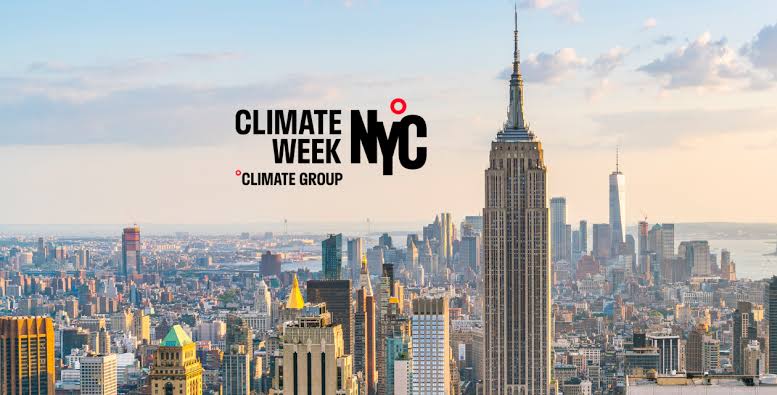
- Governments pushed cross-border climate delivery: Governors and ministers from across the Americas focused on electrification, resilience, clean industry and investment through the Under2 Coalition.
- Buildings moved to the centre of implementation: The Empire State Building provided a live case study for energy efficiency, electrification and lower-carbon retrofits in existing urban assets.
- Climate communication widened its audience: Insurance costs, sport and information integrity emerged as ways to connect climate risk with everyday economic and social concerns.
By Day 4 of Climate Week NYC, one theme was cutting across boardrooms, government meetings and public forums: climate action increasingly depends on how effectively institutions can turn existing solutions into practical delivery.
Across New York, discussions moved from solar investment and building efficiency to sport, insurance and public trust. The breadth reflected a climate agenda expanding beyond emissions targets alone.
For executives and investors, the focus was increasingly practical. Capital, policy coordination, credible communication and implementation capacity are becoming central to whether climate commitments translate into economic change.
Governments look beyond borders
The Under2 Coalition and the Government of Québec brought governors and ministers from across the Americas together to examine cross-border climate cooperation.
Electrification, resilience, clean industry and investment were central to the discussion. The meeting reflected the growing role of subnational governments in climate implementation, particularly where national politics or regulatory systems move at different speeds.
Elsewhere, the Indonesia Solar Investment Forum put financing at the centre of the energy transition.
Government, investors and industry representatives examined what Indonesia needs to finance solar deployment at scale. Participants included RE100, the Indonesia Solar Energy Association, S&P Global and the Columbia Center on Sustainable Investment.
The discussion highlighted a challenge facing many emerging markets. Renewable technologies are increasingly established, but deployment still depends on bankable projects, supportive regulation and access to capital.
Buildings become a test of climate execution
Inside the Empire State Building, Climate Group’s Smart Energy team turned attention to the built environment.
Its Global Policy Working Group examined energy-efficiency policy, including Minimum Energy Performance Standards. The discussion focused on how governments can strengthen efficiency requirements and accelerate improvements across existing building stock.
The building itself provided the case study.
The Empire State Building has undergone extensive work around efficiency and electrification while remaining an occupied, landmarked property. Corgan’s office on the 54th floor offers another example. Its renovation sought to reduce material use and select products with lower global warming potential.
The office is also pursuing Zero Carbon Certification from the International Living Future Institute.
For property owners and corporate occupiers, the implications extend beyond operational emissions. Building performance increasingly intersects with asset value, regulation, energy costs and corporate climate targets.
RELATED ARTICLE: Day 3 at Climate Week NYC: AI, Energy and Climate Delivery
Climate risk becomes personal
At the Associated Press offices, discussions shifted from climate technology to climate communication.
Eric Asche of the Potential Energy Coalition argued that communicators should begin with concerns people already share. Insurance offered a particularly immediate example as climate-related risks increasingly intersect with household finances.
“I don’t want my neighbors’ insurance cost to go up, and I certainly don’t want my insurance to go up.”

Another session examined why climate communications can struggle to connect with wider audiences. Participants pointed to moral framing, excessive emphasis on distant future impacts and a reluctance to experiment with approaches that could fail.
The broader question is becoming more important as climate policy reaches deeper into daily economic life. Public support can influence the durability of regulation, infrastructure spending and corporate transition strategies.
Sport brings climate to new audiences
At the Nest Campus, athletes and health experts examined how rising temperatures, air pollution and extreme weather are changing sport.
Former professional athletes joined Alan Dangour, Director of Climate and Health at Wellcome Trust, to discuss adaptation and communication. Their involvement highlighted the ability of voices outside traditional climate institutions to reach audiences that policymakers and businesses may not.
Across Day 5, that same challenge appeared repeatedly.
The technologies needed for lower-carbon cities, buildings and power systems increasingly exist. The harder work lies in financing them, regulating their deployment, coordinating across jurisdictions and building public support.
For C-suite leaders and investors, Climate Week’s message is moving closer to execution. Climate strategy is no longer confined to targets and disclosures. It is becoming a question of capital allocation, asset performance, policy exposure and the ability to communicate why the transition matters to people now.

The ESG News Editorial Team is comprised of veteran financial journalists and sustainability analysts dedicated to providing real-time, objective reporting on global ESG regulations, climate finance, and corporate governance. Our desk monitors daily developments from the SEC, IFRS, CSRD and international regulatory bodies to ensure our 1M+ readers receive accurate, data-driven insights into the evolving sustainable investment landscape. Follow the ESG News Editorial Team for expert reporting on global sustainability standards, ESG disclosures, and climate policy. Access over 10,000 investigative reports and real-time updates.
