
ADM Plans 800,000-Ton Carbon Removal Credit Offering from Nebraska CCS
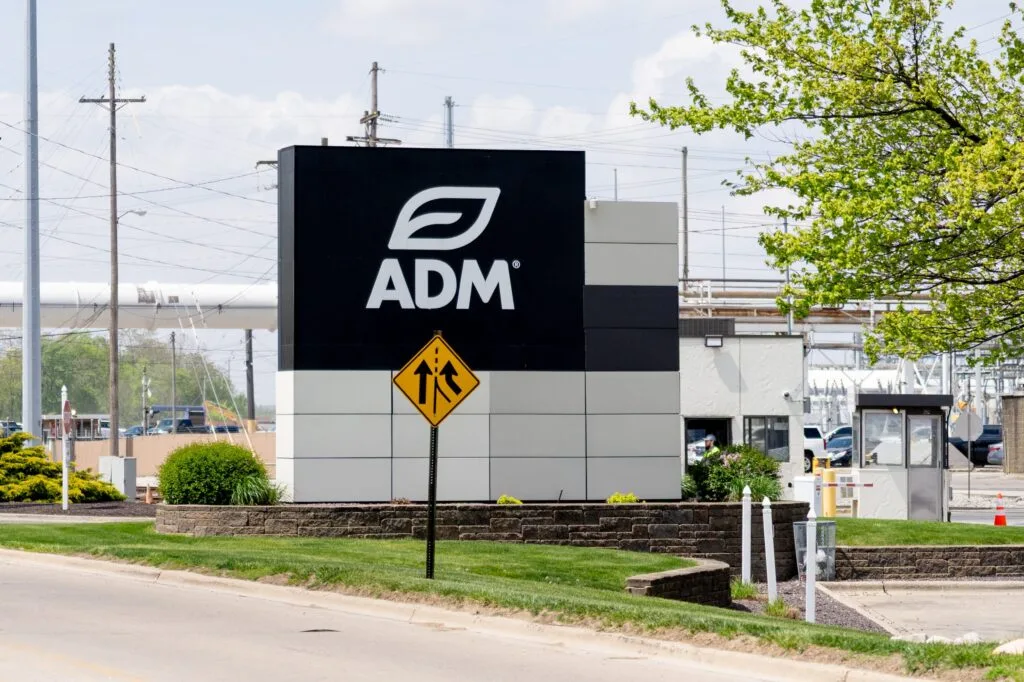
- ADM plans to enter the voluntary carbon removal market with more than 800,000 tons of annual removal capacity from its Columbus, Nebraska, facility.
- Puro.earth is certifying the credits under its Geologically Stored Carbon methodology, with initial issuance expected by year-end pending audit completion.
- A 15-year crediting period could create one of the largest engineered carbon removal offerings to date, targeting buyers across technology, finance, aviation and pharmaceuticals.
ADM is preparing to enter the voluntary carbon dioxide removal market at significant scale. The agricultural commodities group plans to generate credits from its carbon capture operations in Columbus, Nebraska.
The facility has capacity to remove more than 800,000 tons of biogenic CO2 annually. ADM describes it as the world’s largest bioethanol carbon capture facility.
Puro.earth is currently overseeing certification and issuance under its Geologically Stored Carbon methodology, Edition 2024. Initial credits are expected by the end of 2026, subject to completion of the audit and verification process.
From Ethanol Production to Carbon Removal Credits
The project connects agricultural processing with permanent geological carbon storage.
ADM captures biogenic CO2 produced during ethanol fermentation at its Columbus corn processing complex. The company then purifies and compresses the CO2 before it enters Tallgrass’ transportation network.
Tallgrass transports the captured carbon to its Eastern Wyoming Sequestration Hub. There, operators inject it underground for permanent storage through carbon capture and storage wells.
The project operates under a Wyoming Department of Environmental Quality Class VI permit. ADM and Tallgrass inaugurated carbon capture and storage operations at Columbus in 2025.
“ADM has more than a decade of experience supporting carbon capture and geologic storage, including operating Class VI wells at our Decatur, Illinois, facility. That experience, together with Tallgrass’ CO2 transportation and sequestration system and the capabilities of other project participants, positions us to connect agricultural production with growing carbon removal markets at scale,” said Kris Lutt, ADM’s vice president of Innovation & Growth. “We’re already working with customers in our own value chains to help them meet their ambitious goals. This substantial carbon removal offering will allow us to expand our efforts to new customers across multiple industries, from technology and finance to aviation and pharmaceuticals.”

15-Year Carbon Credit Pipeline
If certification is completed successfully, ADM will begin a 15-year crediting period. That could create a substantial long-term supply of engineered carbon removal credits for corporate buyers.
The scale is notable for a market still working to expand the supply of durable removals. Buyers increasingly require robust measurement, verification and evidence of long-term storage when assessing carbon removal procurement.
RELATED ARTICLE: Whirlpool Builds Diversified Carbon Removal Portfolio
Jan-Willem Bode, President, Puro.earth, commented, “We are delighted to be working with ADM on this very exciting project. Certifying carbon removal at this scale demands real rigor, and we believe ADM has approached every stage – from measurement and data collection through to third-party audit – with the discipline and transparency that an investment-grade market requires. The audit process has run exceptionally smoothly, which is testament to the team ADM has built around this asset, and the hard work of the Puro.earth team coordinating with them. That partnership is what turns one of the world’s largest bioethanol carbon capture facilities into verified, investable carbon removal, and it sets a replicable benchmark for this sector worldwide.”

Agriculture Expands Its Role in Carbon Markets
The Columbus project also broadens ADM’s lower-carbon strategy beyond its existing agricultural supply chains.
The company employs more than 650 people in Nebraska. Its Columbus complex includes wet and dry mills that process corn into food ingredients, fuels and animal feed products.
ADM is also investing in regenerative agriculture, renewable natural gas and carbon capture. The company sees those businesses as opportunities to connect agricultural infrastructure with growing demand for lower-carbon products and carbon management.
“Our growth strategy is predicated on smart investments that build on our world-class footprint, and carbon capture is a great example of that. More broadly, we view agriculture as a powerful engine to lower carbon, and our capabilities uniquely position us to help deliver for stakeholders across value chains,” Lutt added. “From our leadership in regenerative agriculture, to our expanding capabilities in renewable natural gas, to our innovative work in CCS, we’re working to advance new ways in which agriculture can drive business results and power emerging lower-carbon solutions.”
For corporate buyers and investors, the project will test whether large existing industrial assets can deliver durable carbon removals at commercial scale. Successful certification would also add significant supply to a voluntary market where credibility increasingly depends on rigorous accounting, independent verification and permanent storage.

The ESG News Editorial Team is comprised of veteran financial journalists and sustainability analysts dedicated to providing real-time, objective reporting on global ESG regulations, climate finance, and corporate governance. Our desk monitors daily developments from the SEC, IFRS, CSRD and international regulatory bodies to ensure our 1M+ readers receive accurate, data-driven insights into the evolving sustainable investment landscape. Follow the ESG News Editorial Team for expert reporting on global sustainability standards, ESG disclosures, and climate policy. Access over 10,000 investigative reports and real-time updates.