

Germany Sets 2045 Deadline to Phase Out Fossil Fuels
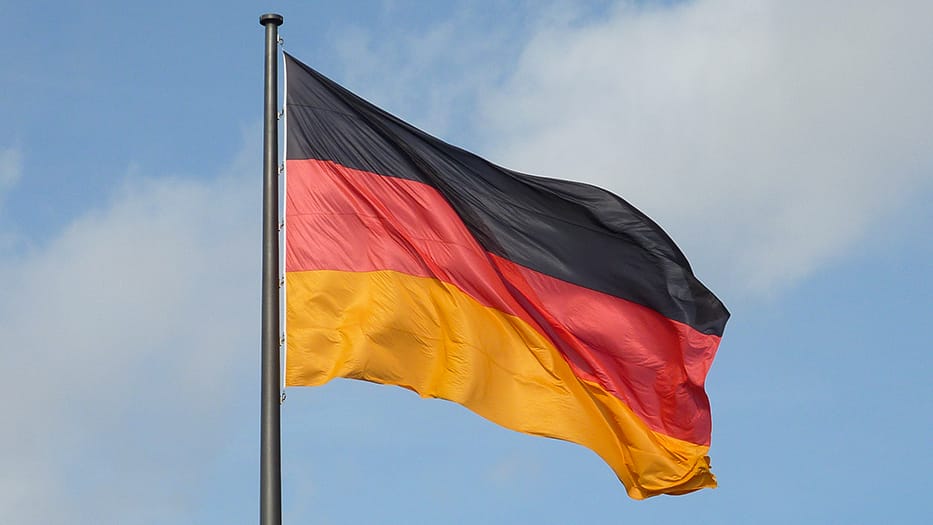
- Germany has explicitly committed to transitioning away from fossil fuels by 2045, moving beyond its previous climate-neutrality pledge.
- Renewables are targeted to reach at least 80% of electricity consumption by 2030, supported by additional wind capacity and continued solar expansion.
- The roadmap puts electrification, grid investment and industrial decarbonisation at the centre of Europe’s largest economy’s energy transition.
Germany has committed to transitioning away from fossil fuels by 2045, setting an explicit national deadline for ending reliance on coal, oil and gas.
The roadmap, presented by Federal Environment Minister Carsten Schneider at the United Nations in New York, moves Germany beyond its previous commitment to climate neutrality. It sets out how Europe’s largest economy intends to remove fossil fuels from power, transport, heating and industry.
Germany becomes the third country, after France and the Netherlands, to publish such a roadmap. The move follows the COP28 agreement in Dubai, where governments committed to accelerating the transition away from fossil fuels.
Renewables Take a Larger Role
Electricity is central to Germany’s strategy. Renewable energy currently supplies about 55% of gross electricity consumption. The government wants that share to reach at least 80% by 2030.
The plan includes an additional 12 GW of onshore wind capacity. Germany is also pursuing continued solar expansion, alongside investment in electricity grids needed to support higher renewable generation.
Coal is scheduled to leave the power system no later than 2038. Meanwhile, additional dispatchable gas-fired power stations are expected to become capable of switching to green hydrogen. The government aims for climate-neutral, fossil-free power generation by 2045.
Germany has also committed to cutting methane emissions by 30% by 2030 under the Global Methane Pledge.
Transport and Heating Remain Critical
Delivering the roadmap will depend heavily on sectors where decarbonisation has proved more difficult.
Transport and heating continue to lag behind the electricity sector in cutting emissions. Electrification is therefore becoming increasingly important to Germany’s climate strategy.
By August 2026, about one-third of newly registered passenger cars were fully electric. The government is supporting adoption through means-tested incentives while expanding charging infrastructure.
Heating is also shifting. Heat pumps and district heating are intended to replace oil and gas systems. More heat pumps than gas central heating systems were sold in Germany for the first time in 2025, according to the government.
Yet the transition has faced political resistance. Germany’s heating rules became a prominent political issue after legislation sought to restrict new fossil-fuel heating systems.
Former German climate envoy Jennifer Morgan said faster implementation would be essential.
“Accelerating the shift from coal, oil and gas to clean renewables will bolster energy independence and insulate consumers from price shocks at a critical moment,” she said. “However, a roadmap is only the starting line.”
RELATED ARTICLE: Germany’s Institute for Ecological Economic Research
Industry Faces a New Investment Cycle
For German industry, the roadmap centres on electrification and modernisation. Public funding will support decarbonisation investments, while the EU Emissions Trading System will continue putting a price on carbon-intensive production.
The EU Carbon Border Adjustment Mechanism will provide another layer of policy support as European manufacturers compete with imports from jurisdictions with different carbon costs.
For executives and investors, implementation will matter more than the 2045 headline. Grid expansion, renewable deployment, electrification and hydrogen infrastructure will determine how quickly capital shifts away from fossil-dependent assets.
Andreas Sieber, head of global political strategy at 350.org, called the explicit phaseout commitment a “notable shift,” while criticising continued government support for gas.
“The economic ministry keeps sabotaging the transition away from fossil fuels,” he said. “This year has shown in the starkest terms that fossil-fuel dependence is a risk for everyone as it exposes households and businesses in Germany and around the world to price shocks, volatility and geopolitical insecurity.”
Germany Adds Weight to Global Phaseout Push
Germany’s roadmap arrives as fossil-fuel dependence, energy security and climate policy remain closely linked to geopolitical risk.
The government is also extending its approach internationally. Its energy transition partnership with South Africa focuses on coal phaseout, renewable deployment and electricity-grid expansion.
Germany’s commitment gives the global fossil-fuel transition another national implementation test. For governments, companies and investors, the central question is now whether policy, infrastructure and capital spending can move quickly enough to turn a 2045 deadline into an investable transition pathway.

The ESG News Editorial Team is comprised of veteran financial journalists and sustainability analysts dedicated to providing real-time, objective reporting on global ESG regulations, climate finance, and corporate governance. Our desk monitors daily developments from the SEC, IFRS, CSRD and international regulatory bodies to ensure our 1M+ readers receive accurate, data-driven insights into the evolving sustainable investment landscape. Follow the ESG News Editorial Team for expert reporting on global sustainability standards, ESG disclosures, and climate policy. Access over 10,000 investigative reports and real-time updates.

