
Google Backs Stegra Green Steel Through EAC Deal

- Google will purchase environmental attribute certificates tied to up to 91,000 tonnes of Stegra steel in the first year, with scope to increase volumes.
- The certificates will help Google address steel-related emissions from operations, including data center construction, without requiring direct physical procurement.
- The book-and-claim model gives Stegra additional early-stage cash flow as it ramps production, offering a potential financing tool for hard-to-abate industrial technologies.
Google has agreed to purchase environmental attribute certificates linked to Stegra’s near-zero emission steel production in Boden, Sweden. The deal brings a model already used in electricity and aviation into one of industry’s hardest sectors to decarbonize.
The agreement covers certificates associated with up to 91,000 tonnes of steel during the first year. Both companies intend to explore additional volumes over the life of the agreement.
For Google, the certificates provide another route to address emissions associated with steel used across its operations. That includes the construction of data centers, an increasingly important source of materials demand as global digital infrastructure expands.
Bringing book and claim to green steel
Near-zero emission steel remains scarce and geographically concentrated. That creates a problem for companies seeking lower-carbon materials but unable to procure them directly because of location or supply-chain constraints.
The EAC structure separates the environmental benefit of Stegra’s steel from the physical material itself. Known as “book and claim,” the approach allows one buyer to purchase the steel while another purchases its associated environmental attributes.
Google has already used similar market mechanisms in other areas of its decarbonization strategy.
“Decarbonizing the most challenging sectors requires every tool in our toolbox. Alongside physical procurement, certificates are another vital mechanism. Having proven this model with clean electricity and expanded it to other areas like sustainable aviation fuel, we see green steel EACs as another promising lever to address industrial emissions and scale the clean technologies of the future.” Adam Elman, Director of Sustainability for Google in Europe, the Middle East and Africa.

The agreement could help test whether book-and-claim systems can stimulate demand for lower-emission industrial products where physical procurement remains difficult.
Stegra gains support during production ramp-up
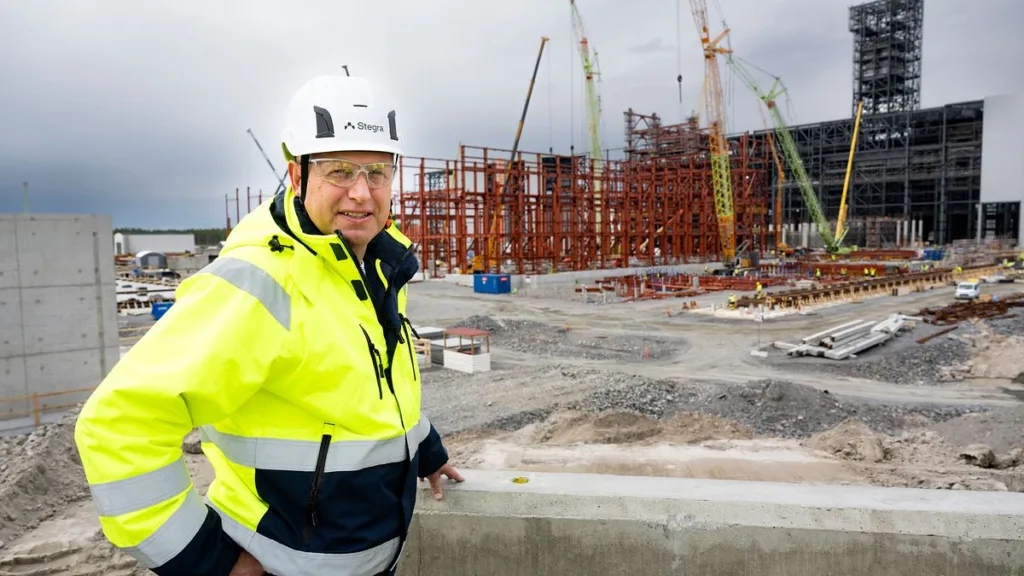
For Stegra, the transaction provides more than demand for environmental attributes. It generates additional cash flow during the early years of its operations and production ramp-up in Boden.
The company plans to apply the book-and-claim mechanism to its non-prime steel. Steel mills routinely produce material that falls outside prime specifications. New facilities typically generate a higher proportion during their initial production period.
Stegra says this material is produced through the same process as the rest of its steel, using green hydrogen and renewable electricity.
RELATED ARTICLE: Google Backs Near-Zero Emissions Steel Plant
“There are some players globally that can help move markets towards decarbonized products in an impactful way. Google is naturally one such player. Beyond the call to action to increase the supply of sustainably produced steel, we are also grateful that the team at Google chose to work with Stegra and support our first years of operations in this way.” Henrik Henriksson, CEO, Stegra.
Guardrails will matter for corporate climate claims
Avoiding double counting is central to the model. The physical steel linked to the certificates will be sold without its environmental attributes. Buyers of that steel must commit not to make green claims associated with those attributes.
That separation is critical as companies face greater scrutiny over the quality and accounting of environmental claims. For corporate buyers, EACs could provide greater flexibility when lower-emission materials are unavailable within their immediate supply chains.
For producers, the mechanism could create an additional revenue stream that supports investment and scaling during capital-intensive industrial transitions.
The wider question is whether green steel certificates can develop the credibility and market infrastructure achieved by similar instruments in renewable electricity. Clear accounting rules and robust safeguards against double counting will be essential.
For executives and investors, the Google-Stegra agreement offers an early test of how corporate climate demand can be converted into financing for heavy-industry decarbonization. If the model scales, environmental attributes could help bridge the gap between limited near-zero emission steel supply and growing global demand for lower-carbon materials.

The ESG News Editorial Team is comprised of veteran financial journalists and sustainability analysts dedicated to providing real-time, objective reporting on global ESG regulations, climate finance, and corporate governance. Our desk monitors daily developments from the SEC, IFRS, CSRD and international regulatory bodies to ensure our 1M+ readers receive accurate, data-driven insights into the evolving sustainable investment landscape. Follow the ESG News Editorial Team for expert reporting on global sustainability standards, ESG disclosures, and climate policy. Access over 10,000 investigative reports and real-time updates.