

Hilton Launches Zero Emission Hotel Prototype
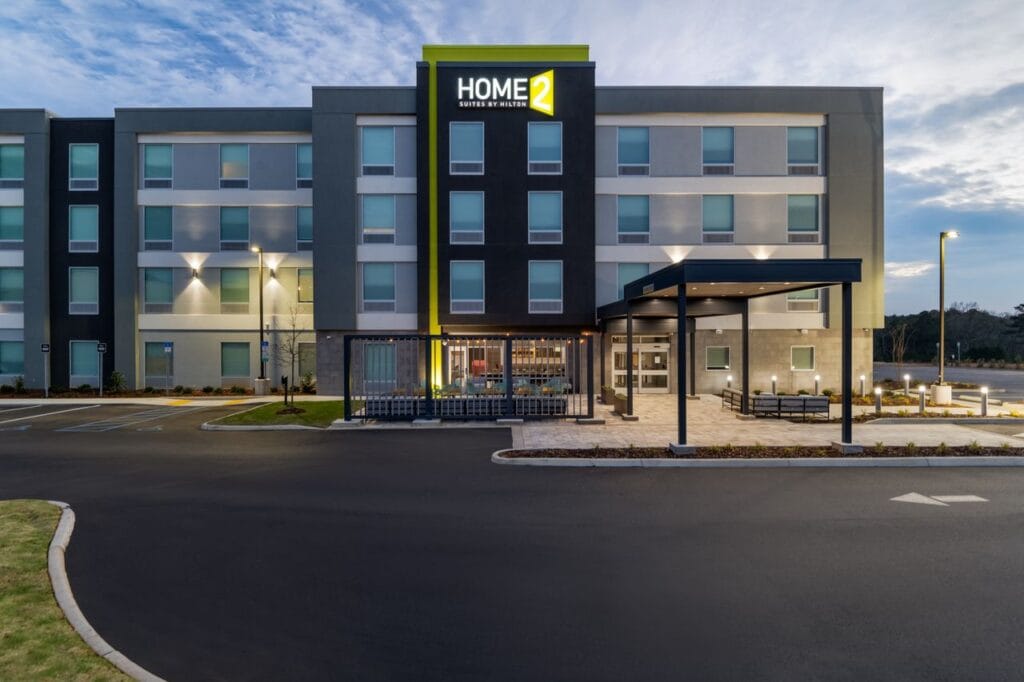
- Hilton’s new Home2 Suites Clean Energy Prototype targets 30% higher energy efficiency and annual energy cost reductions of 18% to 40%.
- The all-electric design could cut operational carbon emissions by 440 metric tons per hotel, based on modeling across 13 U.S. cities.
- Hilton is positioning energy efficiency as an owner economics strategy as U.S. hotel utility costs rise sharply.
Hilton has introduced its first widely available hotel prototype designed for zero operational emissions, giving U.S. owners an optional pathway to lower energy use, utility costs and carbon emissions.
The Home2 Suites by Hilton Clean Energy Prototype combines all-electric building systems, renewable energy and an enhanced building envelope. Hilton designed the turnkey package for hotel owners and developers seeking stronger long-term operating economics without changing the core guest experience.
The launch comes as hotel operators face growing pressure from energy costs. U.S. hotel operating costs rose four times faster than revenue over the past five years, according to the American Hotel & Lodging Association and utility costs increased 28% in the same time frame
For owners, that changes the economics of building efficiency. Energy performance is increasingly tied to operating margins, asset resilience and long-term property value.
Hilton Targets Lower Costs Through Clean Energy
Hilton developed the prototype as its most energy-efficient hotel design package to date.
The model combines all-electric systems with on-site and off-site renewable energy. Improvements to the building envelope further reduce energy demand.
Modeling across 13 U.S. cities found that the prototype could increase energy efficiency by 30% compared with a traditional Home2 Suites design. Hilton expects annual energy costs to fall between 18% and 40%, depending on market conditions.
The company also estimates that each property could reduce operational carbon emissions by 440 metric tons. Hilton said the design could support higher property valuations while improving returns over the building’s lifetime.
“At Hilton, we know that sustainability solutions are most impactful when they are scalable, practical and make strong business sense to help power the future of responsible travel,” said Jean Garris Hand, Vice President and Global Head, Sustainability & Responsible Business, Hilton. “Our owners, many of whom operate small businesses, are facing rising energy costs and are looking for a turnkey option to lower operating expenses, improve energy efficiency and reduce emissions. With the Home2 Suites Clean Energy Prototype, Hilton is working to demonstrate that sustainable innovation can also be a driver of long-term business value.”

RELATED ARTICLE: Hilton’s Hotel Marcel: A Net-Zero Transformation Reshapes Hospitality Industry – Video
A Platform for Scaling Hotel Efficiency
Hilton operates more than 9,400 hotels globally, making standardized building designs an important lever within its Travel with Purpose sustainability strategy.
Home2 Suites already incorporates measures including energy-efficient roofing, water-conscious landscaping and ENERGY STAR-rated appliances. Properties also use LED lighting, reusable dishware and other efficiency measures.
The brand’s development pipeline gives Hilton another advantage: the ability to introduce efficiency measures before hotels are built rather than retrofit them later.
“Since its launch, Home2 Suites has been built on a foundation of innovation, efficient solutions and flexible design. That innovative spirit remains at the core of the brand today, shaping everything from our flexible prototype and operational efficiencies to the amenities and experiences designed for extended stay travelers. This optional prototype represents the natural next step in that commitment,” said Talene Staab, brand leader, Home2 Suites by Hilton. “As the brand continues to grow across the country, Home2 Suites gives Hilton a powerful platform and opportunity to lead a forward-looking solution that can help owners reduce energy use and operating costs at scale, while continuing to deliver the reliable, extended stay experience guests know and love.”

Energy Procurement Extends the Business Case
Hilton is also targeting energy costs at existing properties through Hilton Supply Management.
Its energy procurement program helps participating hotels manage energy expenses and improve budget predictability. Owners can also evaluate renewable and lower-carbon energy options where available.
In 2025, Hilton said the program helped participating owners reduce energy costs by approximately 17%. It also avoided more than 102,130 metric tons of CO₂.
For hotel investors and operators, the prototype reflects a broader shift in the business case for decarbonization. Energy efficiency can reduce emissions while insulating properties from volatile utility expenses.
That connection between carbon performance and operating costs is becoming increasingly relevant across commercial real estate. For Hilton, its scale offers an opportunity to test whether standardized clean-energy hotel designs can translate those benefits across a large U.S. development pipeline.

The ESG News Editorial Team is comprised of veteran financial journalists and sustainability analysts dedicated to providing real-time, objective reporting on global ESG regulations, climate finance, and corporate governance. Our desk monitors daily developments from the SEC, IFRS, CSRD and international regulatory bodies to ensure our 1M+ readers receive accurate, data-driven insights into the evolving sustainable investment landscape. Follow the ESG News Editorial Team for expert reporting on global sustainability standards, ESG disclosures, and climate policy. Access over 10,000 investigative reports and real-time updates.


