

India Targets 604 Million Tons of Steel Capacity by 2047 Under New Policy
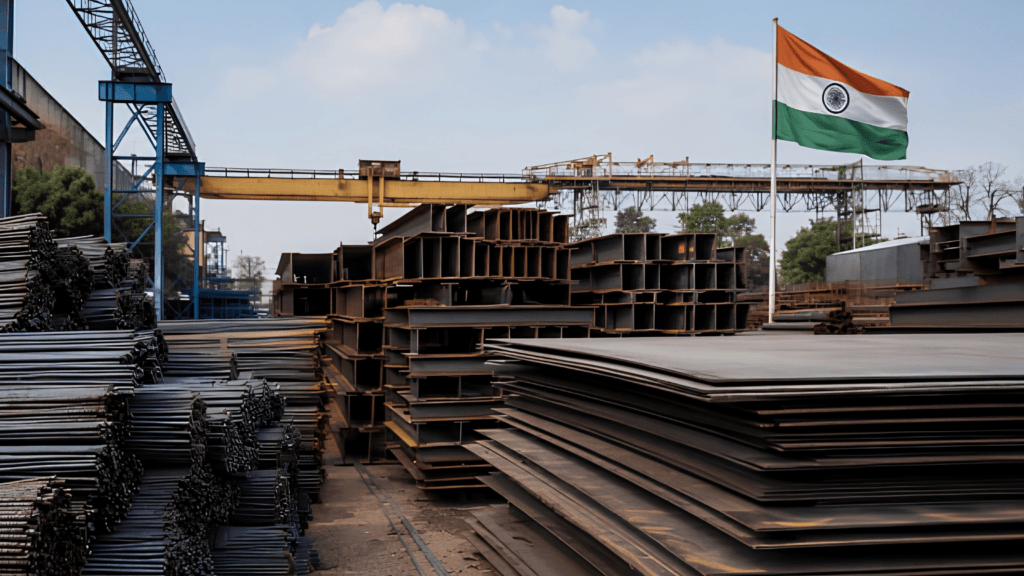
- Major capacity expansion: India aims to increase steel production capacity from approximately 220 million metric tons to 604 million by 2047, supporting industrial growth and infrastructure demand.
- Industrial decarbonisation: The draft policy targets a reduction in carbon emission intensity from 2.54 to 1.54 tons of CO₂ per ton of crude steel by 2047.
- Raw material security: Projected demand of 772 million tons of iron ore and 236 million tons of coking coal is driving plans for overseas acquisitions, joint ventures, and diversified supply chains.
India Sets Out Long-Term Steel Expansion Strategy
India has released a draft national steel policy targeting 604 million metric tons of production capacity by 2047, nearly tripling current levels.
The Steel Ministry published the proposal for public consultation over the weekend. It outlines a strategy to expand domestic manufacturing, secure critical raw materials, and reduce the industry’s carbon footprint.
India currently has approximately 220 million tons of steelmaking capacity. The proposed expansion reflects expectations of sustained demand from infrastructure development, construction, manufacturing, and industrial investment.
The policy also addresses growing pressure to decarbonise one of India’s most emissions-intensive industries.
Steel remains essential to the country’s economic development. However, expanding production while reducing emissions presents a substantial challenge for policymakers, manufacturers, and investors.
The draft seeks to balance these competing priorities through long-term capacity planning, emissions targets, and international resource partnerships.
Carbon Intensity Targets Put Decarbonisation at the Centre
The government aims to reduce average carbon-emission intensity to approximately 1.54 tons of carbon dioxide per ton of crude steel by 2047.
Current emissions intensity stands at roughly 2.54 tons of CO₂ per ton.
The proposed target represents a reduction of approximately 39% in emissions per unit of steel produced.
It also aligns with India’s broader commitment to achieve net-zero emissions by 2070.
However, the distinction between emissions intensity and absolute emissions remains critical.
Even with substantial efficiency improvements, the planned expansion in steelmaking capacity could increase the sector’s total carbon footprint.
Actual emissions will depend on production volumes, technology adoption, energy sources, and the pace of industrial decarbonisation.
For steel producers, the policy creates a longer-term framework for evaluating investments in cleaner manufacturing technologies.
These could include energy efficiency improvements, greater scrap utilisation, and lower-carbon steelmaking processes. The draft details provided do not specify funding commitments or technology deployment requirements.
Raw Material Security Drives Overseas Investment Plans
Securing sufficient iron ore and coking coal will be central to India’s steel expansion.
The Steel Ministry projects iron ore demand will reach 772 million metric tons by 2047.
To meet these requirements, the government plans to pursue overseas mineral assets and joint ventures that provide access to high-grade reserves.
Coking coal presents another strategic challenge.
Demand is projected to reach 236 million metric tons, creating significant exposure to international commodity markets and supply disruptions.
The government intends to diversify procurement through “strategic global outreach” and overseas asset acquisitions.
RELATED ARTICLE: India Backs Steel Sector As EU Carbon Border Tax Pressures Exports, Trade Strategy
These measures could expand India’s influence in international mining markets while strengthening supply relationships with resource-rich economies.
For mining companies and commodity investors, the strategy creates potential opportunities in resource development, cross-border partnerships, and long-term supply agreements.
However, overseas acquisitions also carry geopolitical, environmental, and financing risks.
Competition for high-quality mineral resources could intensify as other industrial economies pursue their own supply security strategies.
Investors Face Expanding Capacity and Climate Risks
India’s proposed steel expansion creates a complex investment landscape.
Higher production capacity could support infrastructure growth, industrial employment, and domestic manufacturing competitiveness.
Yet the scale of planned development will require substantial capital investment across steelmaking facilities, logistics networks, energy infrastructure, and raw material supply chains.
The draft does not provide a financing requirement or identify specific government funding allocations.
For institutional investors and corporate executives, the central question is how India will reconcile rapid industrial expansion with increasingly demanding climate expectations.
International steel buyers are also facing greater scrutiny over supply-chain emissions.
The European Union’s Carbon Border Adjustment Mechanism adds another consideration for exporters serving European markets.
India’s ability to lower steel emissions intensity could therefore influence future trade competitiveness, investment decisions, and access to international customers.
India’s Steel Strategy Carries Global Implications
The draft policy remains subject to public consultation, with implementation measures and investment commitments still to be determined.
Its ambitions nevertheless extend beyond India’s domestic industrial sector.
A near-tripling of steelmaking capacity would reshape demand for raw materials, influence global commodity trade, and increase the importance of cleaner industrial technologies.
For global investors, the decisive issue will be whether capacity expansion is accompanied by credible emissions reductions and resilient supply chains.
India’s approach could become an important test of how rapidly industrialising economies pursue economic growth while managing their long-term climate commitments.

The ESG News Editorial Team is comprised of veteran financial journalists and sustainability analysts dedicated to providing real-time, objective reporting on global ESG regulations, climate finance, and corporate governance. Our desk monitors daily developments from the SEC, IFRS, CSRD and international regulatory bodies to ensure our 1M+ readers receive accurate, data-driven insights into the evolving sustainable investment landscape. Follow the ESG News Editorial Team for expert reporting on global sustainability standards, ESG disclosures, and climate policy. Access over 10,000 investigative reports and real-time updates.


