AIIB Report Highlights Declining Water Investment, Rising Economic Risk
- Water related investment has dropped from roughly 30% of development finance in 2000 to about 10% in 2020, widening a critical funding gap
- Rising water stress is linked to declining sovereign credit ratings, particularly across agriculture-dependent emerging markets
- Global trade is shifting water risk toward developing exporters, exposing economies like India, Indonesia, and Pakistan to systemic pressure
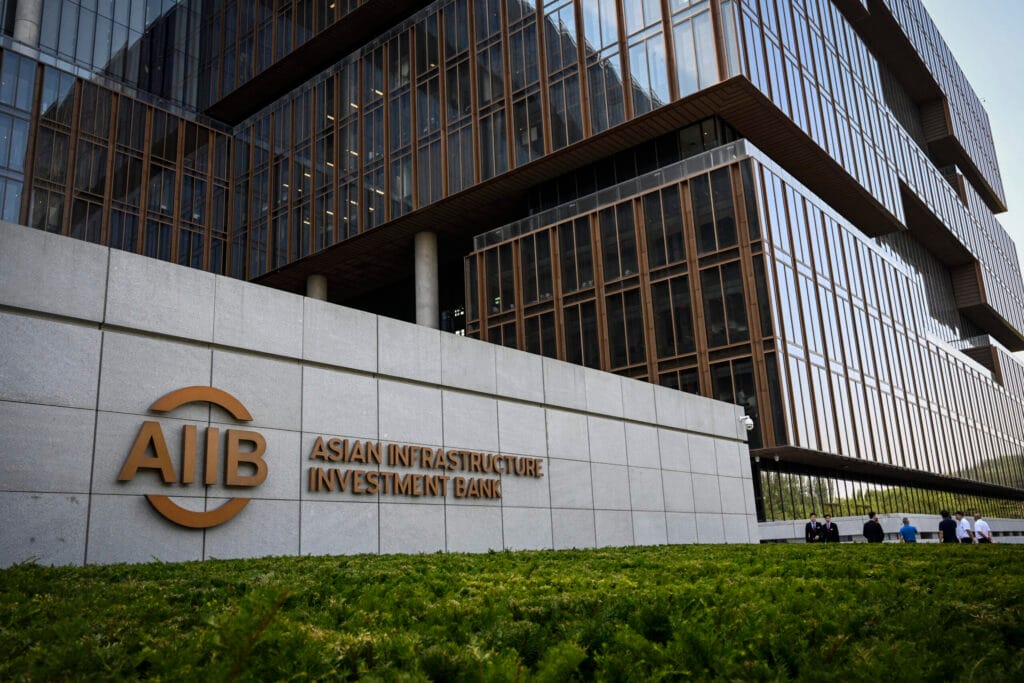
A new report from the Asian Infrastructure Investment Bank (AIIB) warns that the global economy is entering an era of “water bankruptcy,” as climate disruption and declining investment destabilize the hydrological systems underpinning growth, food security, and financial stability.
The 2026 Asian Infrastructure Finance report, Where the Water Flows, reframes the water cycle as critical infrastructure rather than a passive natural process. It argues that water systems function as a transboundary economic engine, storing, moving, and renewing resources across borders. Yet governance frameworks and capital allocation have failed to keep pace with escalating climate risks.
“Water underpins biodiversity and ecological resilience, economic performance and social stability, yet it is rarely understood and managed as the interconnected system it is,” said Zou Jiayi, President of AIIB. “As climate change continues to reshape the water cycle, more attention must be given to generate investment for mitigation and adaptation measures.”

Investment Decline Signals Structural Risk
The report identifies a sharp decline in water-related financing as a central concern for policymakers and investors. Water projects accounted for approximately 30% of development finance in 2000. By 2020, that share had fallen to around 10%, even as climate-related water risks intensified.
This contraction comes amid broader pressure on climate finance and official development assistance. Multilateral development banks are now positioned as critical intermediaries, tasked with mobilizing private capital and structuring blended finance solutions to close the gap.
For institutional investors, the shift signals both risk and opportunity. Water systems, long underpriced and underfunded, are emerging as investable infrastructure assets with direct links to economic resilience.
Credit Markets Begin To Reflect Water Stress
The report draws a direct line between water scarcity and sovereign creditworthiness. In lower-middle-income countries, a one percentage point increase in water stress correlates with a roughly 0.1 percentage point decline in sovereign credit ratings.
The implications are particularly acute for economies reliant on agriculture. Water scarcity reduces productivity, increases volatility in food systems, and strains fiscal stability, all of which feed into sovereign risk assessments.
As climate volatility accelerates, water risk is moving from an environmental concern into a core financial metric. Credit markets are beginning to price in hydrological instability, creating new pressures for governments to invest in resilience.
RELATED ARTICLE: AIIB Publishes First Sustainability Report Applying ISSB Standards
Unequal Burden In Global Trade
The report also highlights structural imbalances in “virtual water trade,” the embedded water used in producing traded goods such as crops and manufactured products.
Water-intensive exports are disproportionately concentrated in developing economies, including India, Indonesia, and Pakistan. These countries effectively export their limited water resources while bearing the environmental and economic costs.
In contrast, high-income economies such as the United States, Japan, Germany, and the United Kingdom increasingly import water-intensive goods, externalizing water risk across global supply chains.
This imbalance introduces systemic vulnerabilities into trade flows and raises governance questions around resource allocation, pricing, and long-term sustainability.
Reframing Water As Infrastructure
AIIB’s central thesis positions the hydrological cycle as a form of natural infrastructure that must be actively managed and financed alongside traditional engineered systems.
“The hydrological cycle acts as a powerful environmental pump, with forests transpiring moisture and replenishing giant atmospheric rivers of freshwater. It is a global thermostat, regulating climate through evaporation and cloud formation,” said Erik Berglof, AIIB Chief Economist. “We now urgently need scientists, policymakers and the financial world to come together to safeguard our critical global life-support system.”

The report calls for coordinated investment in both natural infrastructure, such as forests and wetlands that regulate water flows, and engineered systems that manage storage, distribution, and protection.
What Executives And Investors Need To Know
For C-suite leaders and investors, the message is clear. Water is no longer a background variable. It is a systemic risk factor with direct implications for supply chains, credit markets, and long-term asset performance.
Governments face increasing pressure to integrate water governance into economic planning, while financial institutions must reassess exposure to water-stressed regions and sectors.
The transition from “water bankruptcy” to “water bankability” will depend on aligning policy, capital, and technology at scale. Those who move early to price, manage, and invest in water systems are likely to gain a strategic advantage as climate pressures intensify.
At stake is not only environmental stability, but the resilience of the global economic system itself.

The ESG News Editorial Team is comprised of veteran financial journalists and sustainability analysts dedicated to providing real-time, objective reporting on global ESG regulations, climate finance, and corporate governance. Our desk monitors daily developments from the SEC, IFRS, CSRD and international regulatory bodies to ensure our 1M+ readers receive accurate, data-driven insights into the evolving sustainable investment landscape. Follow the ESG News Editorial Team for expert reporting on global sustainability standards, ESG disclosures, and climate policy. Access over 10,000 investigative reports and real-time updates.