
Persefoni Launches AI Agent To Speed Emissions Analysis And Net Zero Reporting
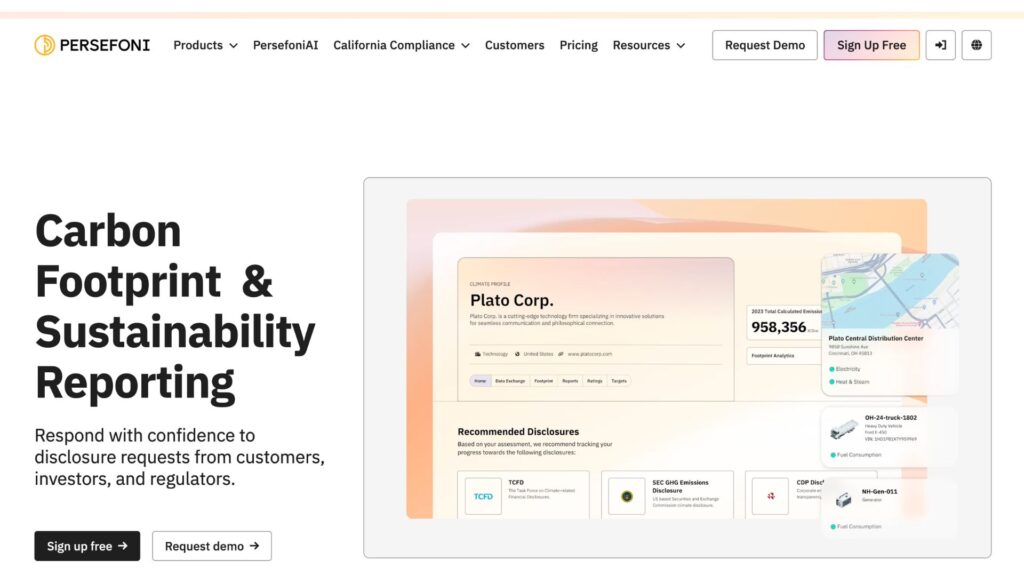
- Persefoni Analytics Agent lets companies query emissions data in plain language, helping sustainability, finance, and compliance teams move faster from question to insight.
- The tool is built on Persefoni’s CO2e Activity Ledger, keeping outputs tied to traceable, auditable carbon data.
- Persefoni has supported more than 9,000 organizations across its products, serves over 500 enterprise customers, and has raised $179 million from institutional investors.
AI Moves Deeper Into Carbon Accounting
Persefoni has launched a new agentic AI tool to help companies analyze emissions data faster as climate reporting demands grow more complex across major markets.
The Persefoni Analytics Agent lets users ask questions about carbon data through plain language prompts. Because it sits directly inside the company’s carbon accounting and sustainability reporting platform, teams can move beyond static dashboards, spreadsheets, and predefined reports.
For companies facing new disclosure rules, investor scrutiny, and internal net zero targets, the timing matters. Sustainability data now reaches far beyond annual reporting. It increasingly informs finance, compliance, procurement, operations, and board-level risk oversight.
Persefoni says the new agent helps users explore large volumes of emissions data in depth. As a result, teams can ask targeted questions, compare performance across business units, and review changes over time without leaving the platform.
From Static Dashboards To Targeted Analysis
The new agent gives sustainability, finance, and compliance teams a faster way to answer detailed questions about emissions performance.
Instead of relying on default dashboards, users can request specific cuts of data. They can also generate charts, structured analytical tables, and tailored visualizations on demand. In practice, this helps teams identify what drives changes in a company’s footprint.
That matters as climate reporting moves from broad carbon estimates to more granular, auditable data. Companies must increasingly show how they calculate emissions, where figures come from, and how the numbers connect to business decisions.
Persefoni said the agent’s outputs are grounded in its CO2e Activity Ledger. Therefore, results draw from the same traceability, transparency, and control framework used across the wider platform. For executives, this is central. AI-generated insights can move quickly, but they still need to hold up under audit, assurance, and regulatory review.
The core capabilities include natural language questions against emissions data, on-demand visualizations, deeper data analysis beyond default views, and faster movement from question to insight.
RELATED ARTICLE: Persefoni Welcomes Visa’s Former Sustainability Leader, Douglas Sabo to Advisory Board
Kim Stroh, CTO and Co-founder, said: “As agentic AI rapidly transforms the world of work, its introduction into carbon accounting represents a critical shift. By enabling faster, deeper analysis of emissions data, our new agent will help surface insights that may not have been visible before – and encourage teams to ask more meaningful questions.
“It will provide greater clarity into what’s driving changes in an organization’s footprint – ultimately enabling a much faster path to net zero.”

Reporting Pressure Raises The Bar For ESG Data
Corporate climate reporting requirements continue to evolve. At the same time, regulators, investors, lenders, customers, and internal leadership expect companies to respond with greater speed and precision.
For many organizations, data collection is only part of the challenge. Interpretation creates the harder bottleneck. Teams need to know why emissions moved, which regions or business units changed the most, and what operational decisions could alter the pathway to net zero.
Agentic AI could reduce that friction. If companies deploy it well, it can help non-technical teams work more directly with complex datasets. It can also help finance and sustainability leaders prepare for questions that fall outside standard reporting templates.
Persefoni’s positioning reflects a wider shift in ESG technology. Carbon accounting platforms are moving from record-keeping systems into decision-support tools. However, the next test will be whether these platforms can combine speed with governance.
That balance is critical for C-suite leaders. Faster analysis has limited value if it creates inconsistent outputs or weak audit trails. Therefore, Persefoni is trying to address that concern by embedding the agent inside its existing platform and linking analysis to controlled emissions data.
Persefoni Expands Its AI Platform
Persefoni was founded to help companies manage growing sustainability reporting obligations through AI-driven carbon accounting. Today, the company says it serves more than 500 enterprise customers globally and supports more than 9,000 organizations across its products. It has raised $179 million from institutional investors.
For investors and executives, the takeaway is clear. Carbon data is becoming a management system, not just a reporting output. As a result, tools that turn emissions records into fast, traceable analysis may shape how companies manage climate risk, capital allocation, and transition planning.
Persefoni’s launch adds to that momentum. As regulation tightens and stakeholder questions become more detailed, ESG software providers will face a higher bar. The strongest platforms will help companies act on climate data with speed, confidence, and governance discipline.

The ESG News Editorial Team is comprised of veteran financial journalists and sustainability analysts dedicated to providing real-time, objective reporting on global ESG regulations, climate finance, and corporate governance. Our desk monitors daily developments from the SEC, IFRS, CSRD and international regulatory bodies to ensure our 1M+ readers receive accurate, data-driven insights into the evolving sustainable investment landscape. Follow the ESG News Editorial Team for expert reporting on global sustainability standards, ESG disclosures, and climate policy. Access over 10,000 investigative reports and real-time updates.