Siemens, Vulcan Energy Advance Europe’s Lithium Independence With Integrated Battery Supply, Renewable Energy Project
- Lionheart project targets 24,000 tons of lithium hydroxide annually, supporting around 500,000 EV batteries per year
- Integrated model combines lithium production with 275 GWh of renewable power and 560 GWh of heat annually
- Strategic financing and technology partnership aligns with EU Critical Raw Materials Act to strengthen supply chain resilience
Europe’s push to secure critical raw materials for its energy transition is accelerating as Siemens and Vulcan Energy formalize a long-term partnership to develop the Lionheart lithium and renewable energy project.
The agreement positions Siemens as the preferred supplier of automation and digitalization technology through 2035, extending beyond the initial Lionheart phase to future developments. It also establishes Siemens as both a strategic investor and a core technology provider, embedding industrial capabilities into one of Europe’s most ambitious battery supply chain projects.
At full scale, Lionheart is designed to produce 24,000 tons of lithium hydroxide monohydrate annually. That volume is sufficient to support roughly 500,000 electric vehicle batteries each year, a meaningful contribution to Europe’s efforts to localize supply and reduce reliance on imports.
Integrated Energy And Resource Model
What distinguishes Lionheart is its integrated approach. The project combines lithium extraction with renewable energy generation and heat production, creating a closed-loop system aligned with European decarbonization goals.
Alongside lithium output, the project is expected to deliver 275 GWh of renewable electricity and 560 GWh of heat annually for local use. This dual-output model addresses both industrial demand and regional energy needs, reinforcing the role of infrastructure projects in broader energy system resilience.
The operational backbone will rely on advanced automation and digital systems. Siemens will deploy end-to-end technologies, including distributed control systems, digital twin capabilities, industrial networks, and cybersecurity infrastructure. These tools are intended to streamline operations from resource extraction through to final lithium processing, reducing inefficiencies and enabling scalable production.
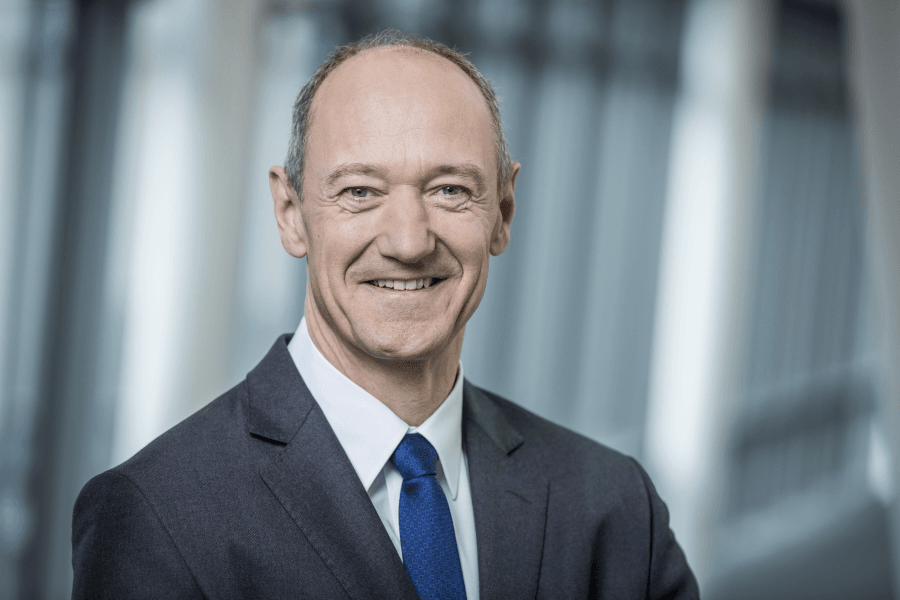
“As both a strategic investor and a key technology partner, we are helping Vulcan Energy establish Europe’s first major sustainable source of lithium,” said Roland Busch, President and CEO of Siemens AG. “With our technology – from advanced automation and digitalization to smart building solutions – we help to ramp-up production faster. This is essential to create a local lithium supply for our energy transition and a more competitive, resilient and sustainable European industry. It is a powerful example of strengthening growth and competitiveness in line with the Made for Germany initiative.”
RELATED ARTICLE: Siemens Reports Strong Progress Toward 2030 Sustainability Goals
Financing Structure Signals Long-Term Commitment
The partnership is not limited to technology deployment. Siemens Financial Services will take a minority equity position in Lionheart upon transaction close, joining a broader investor consortium that includes infrastructure and sustainable investment partners.
The financing structure also incorporates international capital. Siemens introduced the Export and Investment Fund of Denmark into the project’s debt consortium, broadening access to funding and reducing execution risk for a capital-intensive development.
This layered financing approach reflects a broader shift in energy transition projects, where industrial players increasingly combine operational expertise with capital commitments to de-risk large-scale infrastructure.
“The agreement reflects the growing strength of our partnership with Siemens and reinforces our confidence in delivering the objectives of Vulcan’s Lionheart Project. This partnership is an important step in unlocking future opportunities for growth, as we progress toward our goal of decarbonizing Europe’s battery supply chain,” said Cris Moreno, Vulcan’s Managing Director and CEO.

Policy Alignment And Strategic Positioning
Lionheart has been classified as a Strategic Project under the EU Critical Raw Materials Act, placing it at the center of Europe’s policy agenda to secure domestic access to essential minerals.
The EU has identified lithium as a cornerstone resource for electrification, particularly as electric vehicle adoption accelerates. Current supply chains remain heavily concentrated outside Europe, exposing manufacturers to geopolitical and pricing risks.
By anchoring lithium production within Germany and integrating renewable energy into the process, the project directly supports EU objectives around resource independence, industrial competitiveness, and emissions reduction.
What Leaders Should Watch
For executives and investors, Lionheart illustrates the evolving structure of energy transition investments. Projects are no longer single-asset developments but integrated systems combining resource extraction, energy generation, and digital infrastructure.
The partnership also highlights the growing role of industrial technology providers in shaping supply chains. Control over automation, data, and system integration is becoming as critical as access to raw materials themselves.
More broadly, Europe’s strategy is shifting from securing supply through trade to building domestic capacity. Lionheart provides a template for how policy, capital, and industrial capability can align to accelerate that transition.
As global competition for critical minerals intensifies, projects like Lionheart will play a defining role in determining which regions can sustain electrification at scale while maintaining economic and strategic autonomy.

The ESG News Editorial Team is comprised of veteran financial journalists and sustainability analysts dedicated to providing real-time, objective reporting on global ESG regulations, climate finance, and corporate governance. Our desk monitors daily developments from the SEC, IFRS, CSRD and international regulatory bodies to ensure our 1M+ readers receive accurate, data-driven insights into the evolving sustainable investment landscape. Follow the ESG News Editorial Team for expert reporting on global sustainability standards, ESG disclosures, and climate policy. Access over 10,000 investigative reports and real-time updates.